Posts tagged ‘synthesis’
21. The Skin I’m In by Sharon G. Flake
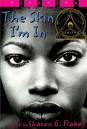 Retell: Every day students tease Maleeka Madison. Whether it be her good grades, her homemade clothes or her dark skin, it seems like the world is against Maleeka. She does others’ homework in exchange for friendship. That is until Miss Saunders, a new teacher from the business world, challenges Maleeka to think for herself.
Topics: self-esteem, confidence, body image, race, middle school, peer pressure, money issues, assault, clothing, status, taking a stand, arson, bullying
Units of Study: Character, Social Issues, Historical Fiction (Writing), Literary Essay, Talking and Writing About Books
Tribes: appreciations/no put-downs, right to pass
Reading Skills: inference, interpretation, synthesis, making connections
Writing Skills: keeping journals, writing poetry
My Thoughts: This is a fantastic text to read aloud in a middle school classroom. I’m not sure that I would read the text as a whole to everyone in an upper elementary grade classroom. I would encourage certain fifth grade book clubs to read and discuss this book. I plan to read certain sections from this book. For example, Maleeka keeps a journal which she writes from the perspective of an African girl aboard a slave ship. There are several scenes throughout the book where Maleeka’s historical fiction writing parallel’s her own life. This would be a great way to show how writers of historical fiction create characters who struggle with similar issues to their own. This is an excellent cautionary tale detailing what can happen if you refuse to let others force you into situations that you know are wrong.
14. There’s a Boy in the Girls’ Bathroom by Louis Sachar
 Retell: It is easy to dislike Bradley Chalkers. He beats up other students, lies about everything, and refuses to do his homework. Bradley’s life begins to change when he meets Carla, the school counselor who inspires him to be a gold star student.
Topics: school, counseling, disagreeing, lying, making excuses, power, trust, friendship, homework, imaginary friends, partnerships, fights, confidence, putdowns, name-calling, safety, sibling issues, self-esteem, rewards, gold stars, asking for help, just right books, love of reading, affirmations, trust
Units of Study: Character, Literary Essay, Talking and Writing about Texts
Tribes: mutual respect, appreciations/no putdowns, right to pass, personal best
Reading Skills: inference, interpretation, empathy, making connections, synthesis
My Thoughts: My heart still aches after reading this book. It’s not a depressing book it’s just that I spent the book fearful that Bradley was going to keep digging himself into holes (not literal holes that’s Sachar’s other book). As you can see from this post’s tags, there are so many ways that one could use this book during interactive read aloud. The book lends itself very well to examining character relationships. Many of the secondary characters make significant changes that affect Bradley. I think many students will be able to make connections to Bradley’s complex relationship with his sister, Claudia. Sachar encourages his readers to try and understand the bully rather than demonize him/her. Bradley reminds me of one of my former students. I think I’m going to buy this book and send it to him.
6. The Wall by Eve Bunting
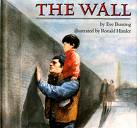 Retell: A father and son visit the Vietnam Memorial in Washington D.C. The young son describes what he sees and hears on the day of his visit.
Topics: family, Memorial Day, Vietnam War
Units of Study: Personal Narrative, Social Issues
Tribes: Mutual Respect, Right to Pass
Reading Skills: inference, synthesis
Writing Skills: writing sensory details, writing small moments
My Thoughts: The Wall is one of those books that may be difficult to read aloud with a dry eye. I can see reading this book duing the beginning of the year during the Personal Narrative unit and then rereading it during the Social Issues unit. I could even reread it yet again right before Memorial Day. The Wall provides a good example of how a writer can zoom in on a small moment. The entire book takes place in one location and does not span more than a few hours. Each line of the book encourages readers to question and infer: “That couple seems like they’ve lost someone. Who did they lose?” You could also reread this book with a Tribes lens. You could encourage your students to discuss how the boy solved a problem, not by yelling at the crowd of noisy school girls, but by standing next to his reverent father, supporting his moment of silence in a show of solidarity.
 Teachable Texts