Posts tagged ‘social issues’
35. One Green Apple by Eve Bunting
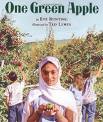 Retell: One Green Apple is the story of Farah, a Muslim immigrant, who struggles to fit in. Despite the language barrier she manages to make friends and participate during the field trip to the apple orchard.
Topics: immigration, language barrier, dupatta, field trips, friendship, Muslim characters
Units of Study: Social Issues, Talking and Writing About Texts, Realistic Fiction
Tribes: mutual respect, right to pass
Reading Skills: interpretation, inference, empathy
Writing Skills: including metaphors, using sensory details
My Thoughts: I wish I knew about this book last year. I had two students who recently came from China. Other students were having difficulty communicating with them. They got frustrated when the Chinese students didn’t understand their rapid speech. The Chinese students got frustrated when people spoke too loud to them and ‘dumbed material down’. I intend to use this book to address language issues. In the story Farah thinks to herself, “I understand. It’s not that I am stupid. It is just that I am lost in this new place.” I can see using this book as a mentor text for teaching about metaphors. You could discuss Eve Bunting’s decision to make Farah choose a green apple rather than a red apple like the others.
30. A Young People’s History of the United States by Howard Zinn
 Retell: Like the title suggests, this is a young people’s version of his famous book, A People’s History of the United States. Together with Rebecca Stefoff, Zinn manages to tell a version of history that attempts to include the perspectives of groups that are usually left out (women, people of color, Native people, children, etc.)
Topics: United States, history, exploration, racism, slavery, colonialism, rights, justice, revolution, war, emancipation, industrialization, immigration, empire, protests, terrorism, resistance, freedom of speech
Units of Study: Content Area, Nonfiction, Social Issues, Personal Essay, Historical Fiction
Tribes: mutual respect, personal best
Reading Skills: questioning, synthesis, prediction, determining importance, inference, interpretation
Writing Skills: using evidence to support a thesis or main idea, inserting anecdotes and quotations
My Thoughts: I was so thrilled to find this book on the shelves. I read A People’s History of the United States several years ago and often reread sections before embarking on Social Studies units. Though I thought this book was going to present a child’s perspective of historical events, Zinn does manage to tuck in a few stories of young people working to make a difference. For example, he includes the story about how children started the first milll strike in Paterson, New Jersey. I intend to read aloud exerpts from this book to support and/or challenge what they may be reading in their own nonfiction texts. This book is also available in two volumes. Volume I covers Columbus to the Spanish-American War. Volume II covers World War I to the wars in Iraq and Afghanistan.
26. Emily’s Art by Peter Catalanotto
 Retell: Emily loves to paint. She enters her painting of her dog Thor in the school art contest. After narrowly losing the contest, Emily vows never to paint again. With her help from her friend Emily realizes that she should continue doing what makes her happy.
Topics: art, contests, friendship, school, painting, self-esteem
Units of Study: Realistic Fiction, Talking and Writing About Texts, Social Issues
Tribes: attentive listening, appreciations, personal best
Reading Skills: inference, making connections, interpretation
My Thoughts: I feel like I’m coming across a lot of books about young artists lately (see post on Ish). I’m a big fan of books with illustrations that not only support the text but enhance it. At the beginning of the book the illustrations of Emily are vivid and opaque. However, as soon as she loses the contest, the illustrations of Emily are transparent, conveying the idea that she feels alone and invisible. Another cool feature about Emily’s Art is how the book begins. It reminds me of the Harry Potter films. The story begins with a scene that draws the reader into the story and then like the opening credits in a movie, the title page appears. I plan on using this book early in the year when we do a lot of community-building. It’s a great book for showing how far appreciations can go.
23. Mr. George Baker by Amy Hest
 Retell: Hundred-year-old George Baker and his young neighbor Harry are friends. Each day they wait for the school bus that brings them both to school.
Topics: friendship, reading, literacy, growing old, learning, music, small moments, friendship
Units of Study: Personal Narrative, Social Issues
Tribes: personal best, mutual respect
Reading Skills: envisionment, inference, interpretation
Writing Skills: zooming in on small moments, alliteration, onomatopoeia, using sensory details
My Thoughts: This is a slow-paced story that easily lends itself to teaching small moments. Though you could also read this book aloud with a social issues lens, the author spends most of the story describing the moments just before going to school. It would be a good mentor text for paying attention to how authors incorporate sound into their writing.
21. The Skin I’m In by Sharon G. Flake
 Retell: Every day students tease Maleeka Madison. Whether it be her good grades, her homemade clothes or her dark skin, it seems like the world is against Maleeka. She does others’ homework in exchange for friendship. That is until Miss Saunders, a new teacher from the business world, challenges Maleeka to think for herself.
Topics: self-esteem, confidence, body image, race, middle school, peer pressure, money issues, assault, clothing, status, taking a stand, arson, bullying
Units of Study: Character, Social Issues, Historical Fiction (Writing), Literary Essay, Talking and Writing About Books
Tribes: appreciations/no put-downs, right to pass
Reading Skills: inference, interpretation, synthesis, making connections
Writing Skills: keeping journals, writing poetry
My Thoughts: This is a fantastic text to read aloud in a middle school classroom. I’m not sure that I would read the text as a whole to everyone in an upper elementary grade classroom. I would encourage certain fifth grade book clubs to read and discuss this book. I plan to read certain sections from this book. For example, Maleeka keeps a journal which she writes from the perspective of an African girl aboard a slave ship. There are several scenes throughout the book where Maleeka’s historical fiction writing parallel’s her own life. This would be a great way to show how writers of historical fiction create characters who struggle with similar issues to their own. This is an excellent cautionary tale detailing what can happen if you refuse to let others force you into situations that you know are wrong.
19. Those Shoes by Maribeth Boelts
 Retell: It seems like everyone in school has a pair of black high tops with white stripes–everyone but Jeremy. Jeremy’s grandmother only has enough money for a pair of boots. When they spot a pair of “those shoes” at a thrift shop, Jeremy buys them with his own money, only to find out that they’re too small. He is then faced with a difficult decision–does he keep his blister-causing shoes or give them to a friend.
Topics: shoes, needs and wants, fads, money, grandparents, decisions, friendship, generosity
Units of Study: Character, Talking and Writing About Texts, Literary Essay, Realistic Fiction, Social Issues
Tribes: mutual respect, personal best, community building
Reading Skills: inference, prediction, making connections
Writing Skills: using dashes, transitional phrases, incorporating a balance of dialogue and summary
My Thoughts: My fabulous student teacher introduced this book to me last year. Every year it seems there is some sort of expensive fad: Tech decks, sidekicks, iphones, sneakers, smencils. My heart breaks when I think about the students who are being teased just because they don’t have the latest fad. Those Shoes is a book to address this issue. It is an ideal book to read aloud to discuss the differences between need and want. I can see reading this book aloud during a Social Issues unit. I could also see using this as a text to analyze during a literary essay unit.
12. Families are Different by Nina Pellegrini
 Retell: Nico is an adopted girl from Korea who begins to feel different from her friends because she doesn’t resemble her parents. After closer observation, Nico realizes that there are many different types of families.
Topics: adoption, divorce, families
Units of Study: memoir, personal narrative, social issues
Tribes: appreciations/no putdowns (appreciating our loved ones), mutual respect
Reading Skills: making connections
Writing Skills: developing the heart of a story
My Thoughts: Do not expect subtlety when reading this book. The title hits you over the head with the book’s message. I can’t imagine using this book for higher level reading work. However, I think it could be a good mentor text when teaching writers to revise by developing the heart of a story. Families are Different is written in a style similar to some of the notebook entries my students tend to write: “Hello, my name is______. I live in ______. I’m going to tell you all about my friends.” Halfway through the story, however the narrator begins to reveal some of her thoughts and emotions about being adopted. I can see reading this story and asking students to identify when the author started getting to the heart of the story. I would also read this during a community circle to encourage discussion about respecting differences.
7. Guys Write for Guys Read
 Retell: Jon Scieszka edits this fabulous collection of stories, comics, essays, illustrations and vignettes contributed by prominent male authors and illustrators. Contributors include: Stephen King, Matt Groening, Jerry Spinelli, Seymour Simon, James Howe, Neil Gaiman, Gary Paulsen and many more. Royalties from the book are used to support Scieszka’s Guys Read Program.
Topics: boys, family, growing up, reading, writing, art
Units of Study: Personal Narrative, Launching the Reading and Writing Workshop, Character, Personal Essay, Content-Area Reading and Writing, Nonfiction, Memoir, Social Issues, Fantasy, Preparing for the ELA
Tribes: Mutual Respect, Personal Best, Appreciations/No Putdowns, Right to Pass
Reading Skills: inference, making connections, interpretation
Writing Skills: writing with voice, zooming in on a small moment, observing the world for stories
My Thoughts: This book is teacher gold! Guys Write for Guys Read has a plethora of short stories that can be used for mentor texts in almost every Reading and Writing unit. One of the stories, “Reading Can Be Dangerous” by Tedd Arnold was featured on the 5th grade ELA test last year. James Howe, author of Bunnicula, writes a personal narrative about getting help from a friend on how to be a boy–a great text for personal essay or discussing gender issues. Many authors write about how they came to love reading and writing. Christopher Paolini, author of Eragon, writes about how he fell in love with fantasy–great to read when you launch a unit on Fantasy reading and writing. Patrick Jones, a librarian, writes about how being interested in wrestling inspired him to become a voracious reader. Many entries include samples of famous authors childhood work alongside their adult work. For example, Dav Pilkey, author/illustrator of the infamous Captain Underpants series, writes about a comic strip he started when he was 11. I will probably use this book for almost every unit I teach this year.
If you don’t pick up a copy of this book you must go to Scieska’s website, Guys Read. The site is dedicated to inspiring more young boys to fall in love with reading. Mr. Scieszka, you’re my hero.
6. The Wall by Eve Bunting
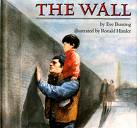 Retell: A father and son visit the Vietnam Memorial in Washington D.C. The young son describes what he sees and hears on the day of his visit.
Topics: family, Memorial Day, Vietnam War
Units of Study: Personal Narrative, Social Issues
Tribes: Mutual Respect, Right to Pass
Reading Skills: inference, synthesis
Writing Skills: writing sensory details, writing small moments
My Thoughts: The Wall is one of those books that may be difficult to read aloud with a dry eye. I can see reading this book duing the beginning of the year during the Personal Narrative unit and then rereading it during the Social Issues unit. I could even reread it yet again right before Memorial Day. The Wall provides a good example of how a writer can zoom in on a small moment. The entire book takes place in one location and does not span more than a few hours. Each line of the book encourages readers to question and infer: “That couple seems like they’ve lost someone. Who did they lose?” You could also reread this book with a Tribes lens. You could encourage your students to discuss how the boy solved a problem, not by yelling at the crowd of noisy school girls, but by standing next to his reverent father, supporting his moment of silence in a show of solidarity.
4. Neeny Coming, Neeny Going by Karen English
 Retell: Neeny and her cousin were raised on Daufuskie Island, located off the coast of South Carolina. Years before, Neeny went back to the mainland to live with her mother. When Neeny returns to the island, her cousin realizes that Neeny is not the same cousin she grew up with.
Topics: change, family, environmental issues
Units of Study: Social Issues, Character
Tribes: mutual respect
Reading Skills: envisionment, prediction, inference, monitoring for sense, interpretation, making connections
Writing Skills: writing with voice
My Thoughts: This is a great book for the Social Issues unit. I can imagine a juicy discussion about how much the mainland changed Neeny. Many of my students travel back to their home countries during vacation. I think they could make a lot of connections to this book. I can see using this book as a mentor text for showing how authors write with a distinctive voice.
 Teachable Texts