Posts tagged ‘mutual respect’
32. Team Moon: How 400,000 People Landed Apollo 11 on the Moon by Catherine Thimmesh
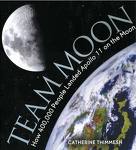 Retell: Thimmesh tells the story of the Apollo 11 mission. It includes several quotes, interviews and amazing photographs from the moon landing.
Topics: moon landing, space, Apollo 11, teamwork, goals, problem-solving, perseverance
Units of Study: Nonfiction, Content Area, Personal Essay
Tribes: attentive listening, mutual respect, personal best
Reading Skills: envisionment, inference, interpretation, determining importance
Writing Skills: using descriptive language, inserting quotations, using dashes, using ellipses
My Thoughts: To commemorate its 40th anniversary I plan to read at least one book about the moon landing this year. What I love about this particular book is its emphasis on teamwork. As the title suggests, Apollo 11 was successful because of the dilligence of several hundred-thousand people working together in teams trying to accomplish one goal. It’s a dense book so I can see reading only a few sections at a time. This could be used as a rich mentor text for writing nonfiction. Thimmesh writes with excitement and enthusiasm making the text very engaging.
30. A Young People’s History of the United States by Howard Zinn
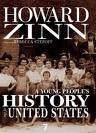 Retell: Like the title suggests, this is a young people’s version of his famous book, A People’s History of the United States. Together with Rebecca Stefoff, Zinn manages to tell a version of history that attempts to include the perspectives of groups that are usually left out (women, people of color, Native people, children, etc.)
Topics: United States, history, exploration, racism, slavery, colonialism, rights, justice, revolution, war, emancipation, industrialization, immigration, empire, protests, terrorism, resistance, freedom of speech
Units of Study: Content Area, Nonfiction, Social Issues, Personal Essay, Historical Fiction
Tribes: mutual respect, personal best
Reading Skills: questioning, synthesis, prediction, determining importance, inference, interpretation
Writing Skills: using evidence to support a thesis or main idea, inserting anecdotes and quotations
My Thoughts: I was so thrilled to find this book on the shelves. I read A People’s History of the United States several years ago and often reread sections before embarking on Social Studies units. Though I thought this book was going to present a child’s perspective of historical events, Zinn does manage to tuck in a few stories of young people working to make a difference. For example, he includes the story about how children started the first milll strike in Paterson, New Jersey. I intend to read aloud exerpts from this book to support and/or challenge what they may be reading in their own nonfiction texts. This book is also available in two volumes. Volume I covers Columbus to the Spanish-American War. Volume II covers World War I to the wars in Iraq and Afghanistan.
28. The Librarian of Basra: A True Story from Iraq by Jeanette Winter
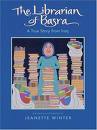 Retell: This is the true story of Alia Muhammad Baker. During U.S. air raids in 2003, Baker managed to hide and save over 30,000 books from destruction.
Topics: libraries, Iraq, heroism, action, war, books, community
Units of Study: Nonfiction, Content-Area Reading and Writing, Journalism
Tribes: mutual respect, personal best
Reading Skills: prediction, questioning
Writing Skills: using dashes
My Thoughts: Stories like this one restores my faith in humanity. Alia Muhammad Baker’s story is a great one to share with kids, many whom don’t even know that the U.S. is involved in two wars at the moment. Her story was originally published back in 2003 in the The New York Times. Reading The Librarian of Basra in conjunction with the The New York Times article could be a great way to emphasize the role of a journalist to bring to light stories that would otherwise go unnoticed. I plan on reading this at the beginning of the year to reiterate the importance of reading.
Click her to read Shaila K. Dewan’s 2003 New York Times article about Alia Muhammad Baker
27. The Road to Santiago by D.H. Figueredo
 Retell: Every year Figueredo and his family return to Santiago, Cuba for Christmas. When calls for revolution sounded throughout Cuba the author recalls how his family almost didn’t make it home for his favorite holiday.
Topics: Cuba, Christmas, rebels, family, kindness of strangers, traditions
Units of Study: Personal Narrative, Memoir, Historical Fiction
Tribes: personal best, mutual respect
Reading Skills: making connections, monitoring for sense
Writing Skills: zooming in on small moments, incorporating vocabulary from another language, generating notebook ideas
My Thoughts: A common thread thoughout the story is kindness. Each scene highlights how people were kind to the author’s family: a mill worker helps them fix a flat tire, a young man gives up his seat on the bus. Though this is technically a personal narrative I could see reading this book during a unit on writing historical fiction. The story takes place during the 1950s revolutionary period in Cuba. He threads details of the time period throughout the story making this a good historical fiction mentor text.
25. Hewitt Anderson’s Great Big Life by Jerdine Nolen
 Retell: Hewitt Anderson has it all. Loving parents, a gorgeous house and fabulous birthday parties. The only problem is that Hewitt wasn’t the son his parents expected. Hewitt’s parents, and indeed the entire town, are giants. This causes a lot of problems but soon they realize that with a few modifications they can still live a ‘normal’ life.
Topics: acceptance, family, giants, differences, size
Units of Study: Fantasy, Character
Tribes: mutual respect, personal best
Reading Skills: monitoring for sense, envisionment
Writing Skills: using interesting vocabulary
My Thoughts: This is a nice twist on “Jack and the Beanstalk”. When next I teach a Fantasy unit I would like to either read this while immersing students in the genre, or use it as a writing mentor text. The characters are African-American which students don’t often encounter when reading fantasy or fairy tales. The language in the book is gorgeous. Since there are many different words for ‘large’ and ‘small’ throughout the story, one could use this book during a lesson on synonyms.
24. Owen and Mzee: The Language of Friendship by Isabella Hatkoff, Craig Hatkoff, and Dr. Paula Kahumbu
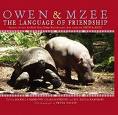 Retell: This sequel continues the story of Owen and Mzee, the beloved baby hippo and the anti-social tortoise, who were brought together during the aftermath of the tsunami of 2004.
Topics: tsunami, hippos, tortoises, wildlife, preservation, Kenya, friendship, biology, animal habitats, narrative nonfiction, biography
Units of Study: Nonfiction, Personal Essay, Content-Area Reading and Writing
Tribes: mutual respect
Reading Skills: monitoring for sense, determining importance, inference
Writing Skills: using transitional phrases, using quotation marks that note unusual usage
My Thoughts: Be ready for a chorus of “ahhh”s if you choose to read this book aloud to your students. Every photograph is absolutely adorable. A lot can be learned from this pair. I plan to use this book during my Content Area Reading and Writing units. Owen and Mzee includes both narrative and expository text making it a good teaching text during the Nonfiction unit as well. One could even use this during a biography unit since it’s telling a life story.
23. Mr. George Baker by Amy Hest
 Retell: Hundred-year-old George Baker and his young neighbor Harry are friends. Each day they wait for the school bus that brings them both to school.
Topics: friendship, reading, literacy, growing old, learning, music, small moments, friendship
Units of Study: Personal Narrative, Social Issues
Tribes: personal best, mutual respect
Reading Skills: envisionment, inference, interpretation
Writing Skills: zooming in on small moments, alliteration, onomatopoeia, using sensory details
My Thoughts: This is a slow-paced story that easily lends itself to teaching small moments. Though you could also read this book aloud with a social issues lens, the author spends most of the story describing the moments just before going to school. It would be a good mentor text for paying attention to how authors incorporate sound into their writing.
22. Wilfrid Gordon McDonald Partridge by Mem Fox
 Retell: Wilfrid Gordon McDonald Partridge enjoys visiting the old people’s home located next door to his house. He especially loves visiting Miss Nancy. When his parents tell him that she has lost her memory, Wilfrid searches for items that may help her remember.
Topics: memories, alzheimer’s disease, small moments, friendship, memory loss
Tribes: mutual respect, personal best
Units of Study: Personal Narrative, Memoir, Realistic Fiction
Reading Skills: inference, making connections
Writing Skills: keeping a writer’s notebook, using objects to get ideas for notebook entries, writing endings that connect to the beginning
My Thoughts: This is the book that I’m going to read when I introduce the concept that writer’s can get ideas for notebook entries by looking at objects. Mem Fox is the author of several excellent books for children. She is an advocate for reading aloud and provides videos, recordings, and tips for reading aloud on her website. Also included on her site is a “stories behind the stories” section where she discusses her inspiration for each of her books. Check out her website: http://www.memfox.com/welcome.html
20. Kindness is Cooler, Mrs. Ruler by Margery Cuyler
 Retell: Mrs. Cooler’s class is getting antsy and cranky. She asks a few misbehaving students to do 10 acts of kindness at home. The next day during show and tell, others are inspired to do random acts of kindness. Eventually the project includes acts of kindness at school and throughout the community.
Topics: kindness, school, community, helping, volunteering, 100th day of school
Units of Study: Character, Realistic Fiction
Tribes: appreciations/no putdowns, mutual respect, community building, personal best
Writing Skills: using rhyme and rhythm
My Thoughts: I think I just found my 100th day of school read aloud. The 100th day of school always creeps up on me and I end up doing a last minute project. This year, I think I’ll use Kindness is Cooler, Mrs. Ruler to launch a Random Acts of Kindness Campaign. In the book Mrs. Ruler’s class tries to do 100 kind acts at home, school, or in the community. She puts each act on a paper heart and they have a celebration when they reach 100. Since the 100th day of school usually falls close to Valentine’s Day, a Kindness Campaign could be a good way to turn a commercialized holiday into one that promotes a good cause. Thanks Ms. Cuyler.
19. Those Shoes by Maribeth Boelts
 Retell: It seems like everyone in school has a pair of black high tops with white stripes–everyone but Jeremy. Jeremy’s grandmother only has enough money for a pair of boots. When they spot a pair of “those shoes” at a thrift shop, Jeremy buys them with his own money, only to find out that they’re too small. He is then faced with a difficult decision–does he keep his blister-causing shoes or give them to a friend.
Topics: shoes, needs and wants, fads, money, grandparents, decisions, friendship, generosity
Units of Study: Character, Talking and Writing About Texts, Literary Essay, Realistic Fiction, Social Issues
Tribes: mutual respect, personal best, community building
Reading Skills: inference, prediction, making connections
Writing Skills: using dashes, transitional phrases, incorporating a balance of dialogue and summary
My Thoughts: My fabulous student teacher introduced this book to me last year. Every year it seems there is some sort of expensive fad: Tech decks, sidekicks, iphones, sneakers, smencils. My heart breaks when I think about the students who are being teased just because they don’t have the latest fad. Those Shoes is a book to address this issue. It is an ideal book to read aloud to discuss the differences between need and want. I can see reading this book aloud during a Social Issues unit. I could also see using this as a text to analyze during a literary essay unit.
 Teachable Texts