Posts tagged ‘making connections’
26. Emily’s Art by Peter Catalanotto
 Retell: Emily loves to paint. She enters her painting of her dog Thor in the school art contest. After narrowly losing the contest, Emily vows never to paint again. With her help from her friend Emily realizes that she should continue doing what makes her happy.
Topics: art, contests, friendship, school, painting, self-esteem
Units of Study: Realistic Fiction, Talking and Writing About Texts, Social Issues
Tribes: attentive listening, appreciations, personal best
Reading Skills: inference, making connections, interpretation
My Thoughts: I feel like I’m coming across a lot of books about young artists lately (see post on Ish). I’m a big fan of books with illustrations that not only support the text but enhance it. At the beginning of the book the illustrations of Emily are vivid and opaque. However, as soon as she loses the contest, the illustrations of Emily are transparent, conveying the idea that she feels alone and invisible. Another cool feature about Emily’s Art is how the book begins. It reminds me of the Harry Potter films. The story begins with a scene that draws the reader into the story and then like the opening credits in a movie, the title page appears. I plan on using this book early in the year when we do a lot of community-building. It’s a great book for showing how far appreciations can go.
22. Wilfrid Gordon McDonald Partridge by Mem Fox
 Retell: Wilfrid Gordon McDonald Partridge enjoys visiting the old people’s home located next door to his house. He especially loves visiting Miss Nancy. When his parents tell him that she has lost her memory, Wilfrid searches for items that may help her remember.
Topics: memories, alzheimer’s disease, small moments, friendship, memory loss
Tribes: mutual respect, personal best
Units of Study: Personal Narrative, Memoir, Realistic Fiction
Reading Skills: inference, making connections
Writing Skills: keeping a writer’s notebook, using objects to get ideas for notebook entries, writing endings that connect to the beginning
My Thoughts: This is the book that I’m going to read when I introduce the concept that writer’s can get ideas for notebook entries by looking at objects. Mem Fox is the author of several excellent books for children. She is an advocate for reading aloud and provides videos, recordings, and tips for reading aloud on her website. Also included on her site is a “stories behind the stories” section where she discusses her inspiration for each of her books. Check out her website: http://www.memfox.com/welcome.html
21. The Skin I’m In by Sharon G. Flake
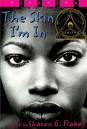 Retell: Every day students tease Maleeka Madison. Whether it be her good grades, her homemade clothes or her dark skin, it seems like the world is against Maleeka. She does others’ homework in exchange for friendship. That is until Miss Saunders, a new teacher from the business world, challenges Maleeka to think for herself.
Topics: self-esteem, confidence, body image, race, middle school, peer pressure, money issues, assault, clothing, status, taking a stand, arson, bullying
Units of Study: Character, Social Issues, Historical Fiction (Writing), Literary Essay, Talking and Writing About Books
Tribes: appreciations/no put-downs, right to pass
Reading Skills: inference, interpretation, synthesis, making connections
Writing Skills: keeping journals, writing poetry
My Thoughts: This is a fantastic text to read aloud in a middle school classroom. I’m not sure that I would read the text as a whole to everyone in an upper elementary grade classroom. I would encourage certain fifth grade book clubs to read and discuss this book. I plan to read certain sections from this book. For example, Maleeka keeps a journal which she writes from the perspective of an African girl aboard a slave ship. There are several scenes throughout the book where Maleeka’s historical fiction writing parallel’s her own life. This would be a great way to show how writers of historical fiction create characters who struggle with similar issues to their own. This is an excellent cautionary tale detailing what can happen if you refuse to let others force you into situations that you know are wrong.
19. Those Shoes by Maribeth Boelts
 Retell: It seems like everyone in school has a pair of black high tops with white stripes–everyone but Jeremy. Jeremy’s grandmother only has enough money for a pair of boots. When they spot a pair of “those shoes” at a thrift shop, Jeremy buys them with his own money, only to find out that they’re too small. He is then faced with a difficult decision–does he keep his blister-causing shoes or give them to a friend.
Topics: shoes, needs and wants, fads, money, grandparents, decisions, friendship, generosity
Units of Study: Character, Talking and Writing About Texts, Literary Essay, Realistic Fiction, Social Issues
Tribes: mutual respect, personal best, community building
Reading Skills: inference, prediction, making connections
Writing Skills: using dashes, transitional phrases, incorporating a balance of dialogue and summary
My Thoughts: My fabulous student teacher introduced this book to me last year. Every year it seems there is some sort of expensive fad: Tech decks, sidekicks, iphones, sneakers, smencils. My heart breaks when I think about the students who are being teased just because they don’t have the latest fad. Those Shoes is a book to address this issue. It is an ideal book to read aloud to discuss the differences between need and want. I can see reading this book aloud during a Social Issues unit. I could also see using this as a text to analyze during a literary essay unit.
18. Library Lion by Michelle Knudsen
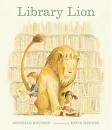 Retell: Miss Merriweather, the librarian, is obsessed with enforcing the rules. One day a lion walks into her library and becomes a regular helper. Later, he proves to be a lifesaver.
Topics: libraries, librarians, lions, rules, work, volunteering, books, storytime, breaking the rules
Units of Study: Fantasy, Character
Tribes: attentive listening, personal best, mutual respect, appreciations/no putdowns
Reading Skills: inference, prediction, making connections
Writing Skills: using interesting verbs (ex. padded instead of walked)
My Thoughts: This book is obviously a good book to read before a trip to the public library. By focusing on the actions of the lion, the reader is also getting to know the features of a public library, such as storytime, new books, the circulation desk, etc. The story highlights the importance and reciprocal benefits of volunteering. Library Lion is also a good read aloud for reviewing agreements and rules in the classroom. For example, to model attentive listening, you could ask students to notice what the students in the illustrations are doing during storytime. Later in the book, you could discuss how the lion feels hearing all of the appreciations he is receiving. The lion in this story is so cute. I love its facial expression when he is admonished by Miss Merriweather.
17. Grandfather’s Journey by Allen Say
 Retell: Allen Say tells the story of how his grandfather made a home in both a village in Japan and in a city in America.
Topics: grandparents, journeys, San Francisco, Japan, World War II, California, travelling, home, being homesick, family
Units of Study: Memoir, Social Issues
Reading Skills: envisionment, interpretation, inference, making connections
Writing Skills: adding setting details, developing the heart of a story, including reflection, including endings that connect to the beginning
My Thoughts: I think I have a soft spot in my heart for this book because I too get homesick for more than one place. Allen Say’s illustrations remind me of faded photographs and automatically put me into a reflective, sentimental mood. This is a perfect text to use during the Memoir unit. Though it starts out as a story about his grandfather, it ends up being more about the author himself.
16. Ish by Peter H. Reynolds
 Retell: A young boy loses confidence on his artwork after his brother insults his work.
Topics: art, interests, self esteem, confidence, sibling issues
Units of Study: Realistic Fiction, Launching the Writers Workshop, Character
Tribes: mutual respect, personal best
Reading Skills: inference, making connections
Writing Skills: using a mixture of dialogue and description
My Thoughts: A friend of mine who is an art teacher once told me that between the ages of 8 and 10 many kids give up artistic pursuits. Apparently this age group becomes obsessed with making their art look realistic. Many people, myself included, stopped drawing and painting at this age because they lost confidence in their artistic ability. Ish is a story that addresses this issue in an adorable way. During read aloud students can analzye the role of the narrator’s sister who helps encourage him to recognize the beauty in his work. This book lends itself well to a discussion on personal best. Later in the book, the young artist starts a writers notebook making this a great book to launch classroom writers notebooks.
14. There’s a Boy in the Girls’ Bathroom by Louis Sachar
 Retell: It is easy to dislike Bradley Chalkers. He beats up other students, lies about everything, and refuses to do his homework. Bradley’s life begins to change when he meets Carla, the school counselor who inspires him to be a gold star student.
Topics: school, counseling, disagreeing, lying, making excuses, power, trust, friendship, homework, imaginary friends, partnerships, fights, confidence, putdowns, name-calling, safety, sibling issues, self-esteem, rewards, gold stars, asking for help, just right books, love of reading, affirmations, trust
Units of Study: Character, Literary Essay, Talking and Writing about Texts
Tribes: mutual respect, appreciations/no putdowns, right to pass, personal best
Reading Skills: inference, interpretation, empathy, making connections, synthesis
My Thoughts: My heart still aches after reading this book. It’s not a depressing book it’s just that I spent the book fearful that Bradley was going to keep digging himself into holes (not literal holes that’s Sachar’s other book). As you can see from this post’s tags, there are so many ways that one could use this book during interactive read aloud. The book lends itself very well to examining character relationships. Many of the secondary characters make significant changes that affect Bradley. I think many students will be able to make connections to Bradley’s complex relationship with his sister, Claudia. Sachar encourages his readers to try and understand the bully rather than demonize him/her. Bradley reminds me of one of my former students. I think I’m going to buy this book and send it to him.
12. Families are Different by Nina Pellegrini
 Retell: Nico is an adopted girl from Korea who begins to feel different from her friends because she doesn’t resemble her parents. After closer observation, Nico realizes that there are many different types of families.
Topics: adoption, divorce, families
Units of Study: memoir, personal narrative, social issues
Tribes: appreciations/no putdowns (appreciating our loved ones), mutual respect
Reading Skills: making connections
Writing Skills: developing the heart of a story
My Thoughts: Do not expect subtlety when reading this book. The title hits you over the head with the book’s message. I can’t imagine using this book for higher level reading work. However, I think it could be a good mentor text when teaching writers to revise by developing the heart of a story. Families are Different is written in a style similar to some of the notebook entries my students tend to write: “Hello, my name is______. I live in ______. I’m going to tell you all about my friends.” Halfway through the story, however the narrator begins to reveal some of her thoughts and emotions about being adopted. I can see reading this story and asking students to identify when the author started getting to the heart of the story. I would also read this during a community circle to encourage discussion about respecting differences.
11. The Whingdingdilly by Bill Peet
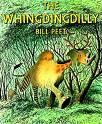 Retell: Scamp is tired of being a dog and wishes he was a grand horse. He runs away and encounters a witch who turns him into a creature called the Whingdingdilly.
Topics: dogs, witches
Units of Study: Fantasy, Character
Tribes: Appreciations/No Putdowns
Reading Skills: inference, prediction, making connections
Writing Skills: using a balance of description and dialogue, using interesting verbs
My Thoughts: I really felt for Scamp in the beginning of this book. I’m a sucker for dogs who are down in the dumps. Unfortunately Scamp’s owner, Orvie calls him a “silly old dog” when he catches his dog pretending to be a horse. Though calling someone ‘silly’ may not be the worst putdown heard at school, I can still see using this book as a way to discuss the damage brought about by insults and putdowns. Scamp begins to feel better, and his luck begins to change when he hears how much Orvie appreciates him. The Whingdingdilly also teaches the importance of appreciating ourselves for our strengths rather than putting ourselves down for our faults. This could also be used as a mentor text during a unit on Fantasy writing. The story has a few fantastical elements but is mostly based on reality.
 Teachable Texts