Posts filed under ‘Picture Books’
101. Heartland by Diane Siebert
 Retell: A celebration of the Midwest, told in rhyming verse and gorgeous illustrations.
Topics: rural communities, landforms, plains, farming
Units of Study: Nonfiction, Content-Area
Habits of Mind: responding with wonderment and awe
Reading Skills: monitoring for sense, envisionment
Writing Skills: creating metaphors, personification
My Thoughts: At the moment my class is learning how readers interpret maps. They have difficulty envisioning what places look like. In their minds, New York State is just one gigantic city. I plan on reading this book aloud to help my ‘citified’ students envision what rural areas look, feel and sound like. It will be great to use this as a mentor text in a few months during the Content-Area unit when some students may choose to write nonfiction poetry.
100. Should There Be Zoos? A Persuasive Text by Tony Stead with Judy Ballester and her fourth grade class
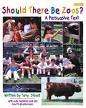 Retell: A collection of persuasive, well-researched essays that explore whether or not we should have zoos. The anthology includes a glossary and a description of the process they went through to write the book.
Topics: zoos, persuasive text, arguments, endangered species, reintroduction
Units of Study: Content-Area, Personal Essay
Tribes: mutual respect
Habits of Mind: thinking and communicating with clarity and precision
Writing Skills: defining a word within a sentence, incorporating precise vocabulary, developing a persuasive voice
My Thoughts: Though the unit is a month away, my school’s literacy coach and I are beginning to collect mentor texts for the personal essay unit. Here is a text that you could use for either Personal Essay or Content-Area writing. The essays not only make good mentor texts but the description of the writing process is important to share with students as they embark on an essay unit. The authors included ten steps to writing a persuasive text. I’m particularly found of number eight: “After doing lots of reading, observing, and note-taking, we put our new information into our arguments to make them stronger. We constantly conferenced with our teachers.”
98. The Bus Ride by William Miller
 Retell: William Miller recreates the story of Rosa Parks and imagines what would have happened if a young girl refused to give up her seat.
Topics: taking a stand, segregation, laws, civil disobedience, bravery, boycotts, power
Units of Study: Social Issues, Historical Fiction, Character
Tribes: right to pass
Habits of Mind: taking responsible risks
Reading Skills: interpretation, prediction
Writing Skills: balancing description, reflection and dialogue
My Thoughts: When I read this book I thought back to a unit our fifth grade teachers did last year that was focused on power. Students looked at power structures in the classroom, in school and at home. Students looked at times when they were powerless and times when they had the power. When reading this book it would be interesting to discuss the question, “Who has the power?” This story inspires children to think about what risks they would be willing to take. Imagine if an entire classroom decided to boycott McDonalds because they disagreed with how the company targets children. Or what would happen if a classroom decided to boycott toys made in places that use child labor?
97. A Family Guide to House Monsters by Stanislov Marijanovic
 Retell: This book explains many things including: why we look in the mirror, why we spill things and why we are afraid of the dark. It turns out we can blame everything on house monsters.
Topics: monsters, behavior, forgetfulness, laziness, vanity, clumsiness
Units of Study: Fantasy
Tribes: personal best
Habits of Mind: finding humor
Reading Skills: making connections, monitoring for sense
Writing Skills: using alliteration
My Thoughts: I thought I was feeling exhausted from the hectic day. It turns out I’m being followed by Doze-A-Log, the house monster of fatigue. One of the great things about doing this blog is that I’ve been receiving gifts of books. (Thanks Jess!) Just last week I had a reading celebration where students brought in artifacts that represent a positive reading moment. I’m so thankful to the people in my life who are sharing their favorite reading moments with me. Keep sending recommendations!
This book may be difficult to obtain, but I highly recommend getting your hands on a copy. It has many teaching purposes. It could be a great mentor text during the Fantasy unit for developing quirky characters. Each monster’s name is either a play-on-words or contains a Greek or Latin root that is connected to the monster’s behavior. What a wonderful addition to word work! With my more advanced students I plan on having them read a monster’s name and make a prediction about its behavior based on information from the word itself. We’ll then read the text together and discuss if there are other words that may be connected to the word. For example, I may show students the name, “Instantania”. I would expect that they could recognize “instant” and guess that the monster is impatient. We may then brainstorm other words with that base, (instantly, instantaneous, etc.)
96. Jim and the Beanstalk by Raymond Briggs
 Retell: Jim discovers a mysterious vine outside of his window one day. He follows it up and up and encounters a giant. This giant however is not very ferocious. He has lost his sight, his teeth and his hair. With Jim’s help the giant acquires glasses, dentures and a wig.
Topics: curiosity, measurement, fairy tales, act of kindness
Units of Study: Fantasy, Talking and Writing About Texts
Tribes: mutual respect, appreciations/no put-downs
Habits of Mind: striving for accuracy and precision
Reading Skills: monitoring for sense, prediction, interpretation
Writing Skills: incorporating the rule of three
My Thoughts: This can be filed under “stories with a twist”. (See The Paper Bag Princess post). This is a spoof/sequel to the story, “Jack and the Beanstalk”. In this story, the main character is nice to the giant, drastically changing the moral of the story. It would be interesting to plan a mini read aloud where you read twisted fairy tales. With older kids, it may be great to use twisted fairy tales to work on interpretation. Students could examine questions such as: How does the moral of the story change when the characters act differently? Why do you think the author chose to rewrite the famous fairy tale? What was he/she trying to teach?
94. This Land is Your Land by Woody Guthrie, Paintings by Kathy Jakobsen
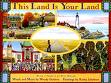 Retell: Woody Guthrie’s famous song in picture book form. The book includes a tribute by Pete Seeger and information about Guthrie’s life.
Topics: America, Great Depression, Dust Bowl, traveling, migrant camps
Units of Study: Social Issues, Talking and Writing About Texts, Personal Essay
Tribes: mutual respect
Habits of Mind: responding with wonderment and awe
Reading Skills: interpretation, envisionment
My Thoughts: I started a ‘song of the week’ tradition in my classroom this year. Each day while students enter the classroom and unpack we listen to a song together. By the end of the song students are expected to have unpacked and come to the rug with their lyrics. At the end of the week we sing the song together. This week’s song just happens to be “This Land is Your Land”. This morning while on my walk I passed by a bookstore which displayed the picture book version of the song in its window. I was so pleased! Kathy Jakobsen’s paintings compliment the lyrics well. (She also illustrated the book, My New York.) I can’t wait to read this to my students this week. Seeing the pictures will help them visualize the lyrics of the song. In the version my students sing there are three verses that are omitted. This is one of them:
“In the shadow of the steeple I saw my people; By the relief office I seen my people; As they stood there hungry, I stood there asking, Is this land made for you and me?”
It made me wonder why I had never heard these lyrics growing up. I hope to have a lively whole group discussion after reading this book aloud. I also plan on revisiting this text during the Personal Essay unit when I’ll ask students to observe the world around them and ask difficult questions.
93. Who Pooped in the Zoo? Exploring the Weirdest, Wackiest, Grossest and Most Surprising Facts About Zoo Poop by Caroline Patterson
 Retell: This book is filled with interesting facts about poop. It discusses how animals use poop for food, defense, communication, and shelter.
Topics: poop, feces, animals, digestion, bacteria, camouflage
Units of Study: Nonfiction, Content-Area
Reading Skills: monitoring for sense, determining importance, envisionment
Thoughts: I’ve been chuckling all evening, calling out disgusting facts to my family. “Hey! Did you know that a grizzly bear doesn’t poop when he hibernates? When a grizzly bear wakes up in the Spring its poop is as big as a baseball bat!” This book is great for demonstrating how readers of nonfiction make a plan before they read the text. Each section of the book contains blurbs with interesting facts about poop, glossaries and supplemental information. Readers can choose to read the blurbs first and then read the entire section or vice versa. A great read before going to the zoo or before you dissect owl pellets.
92. Butterflies for Kiri by Cathryn Falwell
 Retell: Kiri loves to paint and draw. When her Auntie Lu sends her a package of origami paper, Kiri begins teaching herself how to fold a paper butterfly. She gets to a point where her corners are supposed to match up and tears her paper. She attempts the butterfly the next day but she is scared that she will tear one of her beautiful papers. Through practice and persistence Kiri eventually folds a successful butterfly.
Topics: origami, art, paper, diagrams, how-to
Units of Study: Realistic Fiction
Tribes: personal best, appreciations/no put-downs
Habits of Mind: persisting, striving for accuracy, creating-innovating-imagining, thinking flexibly, managing impulsivity, taking responsible risks, remaining open to continuous learning
Writing Skills: including similes, making several drafts before publishing
My Thoughts: I wish I had known about this book years ago when I started a paper crane project with my fourth graders. We read Sadako and the Thousand Paper Cranes, folded 1,000 paper cranes, and sent them to a school in Japan who delivered our cranes to the peace memorial in Hiroshima. When I had started the project, I didn’t realize how difficult paper crane folding would be for that age. Some students were able to pick it up quickly while others got really frustrated with the process. Kiri teaches us how to deal with frustration. She took a break from the project, practiced with other materials, and tackled the project with new energy. Throughout this book many ‘habits of mind’ are presented. Even if you don’t plan on doing origami with your class, it’s great to read during the revising process of any Writing unit.
91. What’s So Bad About Gasoline? Fossil Fuels and What They Do by Anne Rockwell
 Retell: This book explains how gasoline is made and describes its role in global warming.
Topics: gasoline, carbon emissions, global warming, petroleum, coal
Units of Study: Personal Essay, Nonfiction, Content-Area
Habits: Thinking flexibly
Reading Skills: questioning, determining importance, monitoring for sense
Writing Skills: using repetition to make a thesis stronger, using supporting reasons and examples to support a thesis
My Thoughts: I mentioned before that my students are currently studying earth movements (how mountains are made, volcanoes, etc). Next week students will examine fossils found in rocks. This book could be a nice extension of the fossil investigation. It blew my mind years ago when I learned that petroleum is made from decomposed fossils. When we are in the Personal Essay unit I plan on rereading parts of this text to show how the writer weaves in her opinions and supports them with facts.
The beginning of the book explains how petroleum is made and how it has been used throughout history. Throughout this section the phrase, “They still didn’t use much” repeats. The author argues that gasoline and other petroleum products are not inherently evil. After all, the reason why we still have forests and whales is connected to the invention of distilled petroleum. I like how the book ends with the question, “What ways can you think of to help?” After the read aloud students could brainstorm ways to use less gasoline.
90. Bringing the Rain to Kapiti Plain by Verna Aardema
 Retell: In this Nandi folktale a man is worried about the drought that is turning the plains brown and making his cows hungry and dry. He decides to make an arrow and shoot it into a storm cloud which brings the much needed rain.
Topics: plains, drought, weather, Kenya, folktales
Habits of Mind: thinking flexibly, managing impulsivity
Reading Skills: envisionment, monitoring for sense
Writing Skills: incorporating repetition, rhyme and rhythm
Thoughts: Like “The Little Old Lady Who Swallowed a Fly” and “The House that Jack Built” (also see The House That Crack Built) Bringing the Rain to Kapiti Plain is a cumulative rhyme. The words are composed in a way that it’s easy to find a rhythm when you read. In addition to being a nice Social Studies read aloud, it’s a great text to use with readers who need help with phrasing and parsing.
 Teachable Texts