Posts filed under ‘Female Authors’
23. Mr. George Baker by Amy Hest
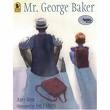 Retell: Hundred-year-old George Baker and his young neighbor Harry are friends. Each day they wait for the school bus that brings them both to school.
Topics: friendship, reading, literacy, growing old, learning, music, small moments, friendship
Units of Study: Personal Narrative, Social Issues
Tribes: personal best, mutual respect
Reading Skills: envisionment, inference, interpretation
Writing Skills: zooming in on small moments, alliteration, onomatopoeia, using sensory details
My Thoughts: This is a slow-paced story that easily lends itself to teaching small moments. Though you could also read this book aloud with a social issues lens, the author spends most of the story describing the moments just before going to school. It would be a good mentor text for paying attention to how authors incorporate sound into their writing.
22. Wilfrid Gordon McDonald Partridge by Mem Fox
 Retell: Wilfrid Gordon McDonald Partridge enjoys visiting the old people’s home located next door to his house. He especially loves visiting Miss Nancy. When his parents tell him that she has lost her memory, Wilfrid searches for items that may help her remember.
Topics: memories, alzheimer’s disease, small moments, friendship, memory loss
Tribes: mutual respect, personal best
Units of Study: Personal Narrative, Memoir, Realistic Fiction
Reading Skills: inference, making connections
Writing Skills: keeping a writer’s notebook, using objects to get ideas for notebook entries, writing endings that connect to the beginning
My Thoughts: This is the book that I’m going to read when I introduce the concept that writer’s can get ideas for notebook entries by looking at objects. Mem Fox is the author of several excellent books for children. She is an advocate for reading aloud and provides videos, recordings, and tips for reading aloud on her website. Also included on her site is a “stories behind the stories” section where she discusses her inspiration for each of her books. Check out her website: http://www.memfox.com/welcome.html
21. The Skin I’m In by Sharon G. Flake
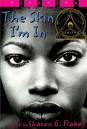 Retell: Every day students tease Maleeka Madison. Whether it be her good grades, her homemade clothes or her dark skin, it seems like the world is against Maleeka. She does others’ homework in exchange for friendship. That is until Miss Saunders, a new teacher from the business world, challenges Maleeka to think for herself.
Topics: self-esteem, confidence, body image, race, middle school, peer pressure, money issues, assault, clothing, status, taking a stand, arson, bullying
Units of Study: Character, Social Issues, Historical Fiction (Writing), Literary Essay, Talking and Writing About Books
Tribes: appreciations/no put-downs, right to pass
Reading Skills: inference, interpretation, synthesis, making connections
Writing Skills: keeping journals, writing poetry
My Thoughts: This is a fantastic text to read aloud in a middle school classroom. I’m not sure that I would read the text as a whole to everyone in an upper elementary grade classroom. I would encourage certain fifth grade book clubs to read and discuss this book. I plan to read certain sections from this book. For example, Maleeka keeps a journal which she writes from the perspective of an African girl aboard a slave ship. There are several scenes throughout the book where Maleeka’s historical fiction writing parallel’s her own life. This would be a great way to show how writers of historical fiction create characters who struggle with similar issues to their own. This is an excellent cautionary tale detailing what can happen if you refuse to let others force you into situations that you know are wrong.
20. Kindness is Cooler, Mrs. Ruler by Margery Cuyler
 Retell: Mrs. Cooler’s class is getting antsy and cranky. She asks a few misbehaving students to do 10 acts of kindness at home. The next day during show and tell, others are inspired to do random acts of kindness. Eventually the project includes acts of kindness at school and throughout the community.
Topics: kindness, school, community, helping, volunteering, 100th day of school
Units of Study: Character, Realistic Fiction
Tribes: appreciations/no putdowns, mutual respect, community building, personal best
Writing Skills: using rhyme and rhythm
My Thoughts: I think I just found my 100th day of school read aloud. The 100th day of school always creeps up on me and I end up doing a last minute project. This year, I think I’ll use Kindness is Cooler, Mrs. Ruler to launch a Random Acts of Kindness Campaign. In the book Mrs. Ruler’s class tries to do 100 kind acts at home, school, or in the community. She puts each act on a paper heart and they have a celebration when they reach 100. Since the 100th day of school usually falls close to Valentine’s Day, a Kindness Campaign could be a good way to turn a commercialized holiday into one that promotes a good cause. Thanks Ms. Cuyler.
19. Those Shoes by Maribeth Boelts
 Retell: It seems like everyone in school has a pair of black high tops with white stripes–everyone but Jeremy. Jeremy’s grandmother only has enough money for a pair of boots. When they spot a pair of “those shoes” at a thrift shop, Jeremy buys them with his own money, only to find out that they’re too small. He is then faced with a difficult decision–does he keep his blister-causing shoes or give them to a friend.
Topics: shoes, needs and wants, fads, money, grandparents, decisions, friendship, generosity
Units of Study: Character, Talking and Writing About Texts, Literary Essay, Realistic Fiction, Social Issues
Tribes: mutual respect, personal best, community building
Reading Skills: inference, prediction, making connections
Writing Skills: using dashes, transitional phrases, incorporating a balance of dialogue and summary
My Thoughts: My fabulous student teacher introduced this book to me last year. Every year it seems there is some sort of expensive fad: Tech decks, sidekicks, iphones, sneakers, smencils. My heart breaks when I think about the students who are being teased just because they don’t have the latest fad. Those Shoes is a book to address this issue. It is an ideal book to read aloud to discuss the differences between need and want. I can see reading this book aloud during a Social Issues unit. I could also see using this as a text to analyze during a literary essay unit.
18. Library Lion by Michelle Knudsen
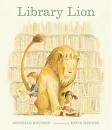 Retell: Miss Merriweather, the librarian, is obsessed with enforcing the rules. One day a lion walks into her library and becomes a regular helper. Later, he proves to be a lifesaver.
Topics: libraries, librarians, lions, rules, work, volunteering, books, storytime, breaking the rules
Units of Study: Fantasy, Character
Tribes: attentive listening, personal best, mutual respect, appreciations/no putdowns
Reading Skills: inference, prediction, making connections
Writing Skills: using interesting verbs (ex. padded instead of walked)
My Thoughts: This book is obviously a good book to read before a trip to the public library. By focusing on the actions of the lion, the reader is also getting to know the features of a public library, such as storytime, new books, the circulation desk, etc. The story highlights the importance and reciprocal benefits of volunteering. Library Lion is also a good read aloud for reviewing agreements and rules in the classroom. For example, to model attentive listening, you could ask students to notice what the students in the illustrations are doing during storytime. Later in the book, you could discuss how the lion feels hearing all of the appreciations he is receiving. The lion in this story is so cute. I love its facial expression when he is admonished by Miss Merriweather.
15. Henry’s Freedom Box by Ellen Levine
 Retell: This is the true story of Henry “Box” Brown. After his family was sold to another plantation, Henry decides to escape to freedom via the postal service.
Topics: underground railroad, slavery, perseverance
Units of Study: Nonfiction, Content-Area Reading and Writing, Historical Fiction
Tribes: personal best
Reading Skills: inference, emapthy
Writing Skills: incorporating symbolism, using setting details
My thoughts: I can see why this won a Caldecott Award. The illustrations by Kadir Nelson are larger than life. What’s nice about this book, as well as many biographies written for young readers, is its author’s note. Reading both the story and the author’s note is a nice way to compare narrative and expository nonfiction. Though Henry’s Freedom Box is a biography, I could also see reading this book during a unit on historical fiction to examine how an author tucks in historical details.
12. Families are Different by Nina Pellegrini
 Retell: Nico is an adopted girl from Korea who begins to feel different from her friends because she doesn’t resemble her parents. After closer observation, Nico realizes that there are many different types of families.
Topics: adoption, divorce, families
Units of Study: memoir, personal narrative, social issues
Tribes: appreciations/no putdowns (appreciating our loved ones), mutual respect
Reading Skills: making connections
Writing Skills: developing the heart of a story
My Thoughts: Do not expect subtlety when reading this book. The title hits you over the head with the book’s message. I can’t imagine using this book for higher level reading work. However, I think it could be a good mentor text when teaching writers to revise by developing the heart of a story. Families are Different is written in a style similar to some of the notebook entries my students tend to write: “Hello, my name is______. I live in ______. I’m going to tell you all about my friends.” Halfway through the story, however the narrator begins to reveal some of her thoughts and emotions about being adopted. I can see reading this story and asking students to identify when the author started getting to the heart of the story. I would also read this during a community circle to encourage discussion about respecting differences.
10. Come On, Rain! by Karen Hesse
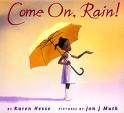 Retell: A young girl anticipates the long awaited thunderstorms that will cool down the humid city she lives in.
Topics: heat, rain, family, summer, cities, thunderstorms
Units of Study: personal narrative, poetry
Reading Skills: envisionment, making connections
Writing Skills: including similes, using active verbs, personification, alliteration
My Thoughts: This book makes me wish it was more humid outside right now. Every New Yorker without air conditioning will be able to relate to this book. I love how Hesse uses poetic devices throughout this small moment story, making it a nice mentor text for personal narrative or poetry unit. She includes personification: “The smell of hot tar and garbage bullies the air…” There is alliteration and assonance: “The first drops plop down big, making dust dance all around us.” Hesse teaches young writers to slow down and zoom in on ordinary moments.
8. The Lucky Star by Judy Young
 Retell: Ruth, a young girl growing up during The Great Depression, discovers that her school will be closed down before she enters her 5th grade year. Ruth learns a lesson of perseverance and counting one’s lucky stars.
Topics: The Great Depression, perseverance, family,
Unit of Study: Historical Fiction, Character
Tribes: Personal best
Reading Skills: inference, making connections, prediction
Writing Skills: incorporating setting details, using sensory details
My Thoughts: This book would be a great mentor text during a unit on reading and writing historical fiction. However, I’m tempted to use this at the beginning of the year when I introduce partner work and independence. The Lucky Star teaches that smart people persevere through difficult situations. A closure of a school, or similarly an absence of a teacher or a change in schedule, does not mean that learning stops completely.
 Teachable Texts