Posts filed under ‘Female Authors’
99. The Whales by Cynthia Rylant
 Retell: Rylant imagines what whales might be thinking while swimming in the ocean.
Topics: whales, whale songs
Units of Study: Nonfiction, Content-Area
Habits of Mind: responding with wonderment and awe
Reading Skills: envisionment, inference, monitoring for sense
Writing Skills: repetition, alliteration
My Thoughts: Though the Content-Area unit is months away I’m trying to start early in my search for nonfiction poetry. As a child I loved doing research but I hated having to do research reports. Within the Content-Area unit students make choices about how they will publish the findings from their research. They could do a research report but they could also choose to do a speech, an essay or write a poem. Last year one of my struggling writers, who found essays and fiction writing to be torture, discovered nonfiction poetry. He became interested in longhouses, researched the topic for a few weeks and wrote a poem several stanzas long. I feel that I could lift the level of my students’ writing this year if I can get my hands on engaging nonfiction poetry. The Whales is just the mentor text I’ve been looking for. I love how she inserts factual information and balances it with descriptive language. I think it would be great to read this book side by side with an informational text in order to compare each author’s voice.
Do you know of any fantastic nonfiction poetry texts? Please post your suggestions in the comments section!
95. If You Are a Hunter of Fossils by Byrd Baylor
 Retell: As a child goes hunting for fossils in the Southwest she envisions what the dry world once looked like underwater.
Topics: fossils, trilobites, dinosaurs, ocean, landforms
Units of Study: Nonfiction, Content-Area
Habits of Mind: responding with wonderment and awe, striving for accuracy and precision
Reading Skills: envisionment, questioning
Writing Skills: using repetition
My Thoughts: One of the many goals of this blog is to discover hidden read aloud gems. This is one of those books and it just happens to fit with our current Science unit. I love how the author invites the reader to envision what the world must have been like when today’s mountains were covered by a vast ocean. This book could also make a good mentor text for students who need help using repetition effectively. If you decide to have students read and write nonfiction poetry, this book would be a good addition to that unit.
92. Butterflies for Kiri by Cathryn Falwell
 Retell: Kiri loves to paint and draw. When her Auntie Lu sends her a package of origami paper, Kiri begins teaching herself how to fold a paper butterfly. She gets to a point where her corners are supposed to match up and tears her paper. She attempts the butterfly the next day but she is scared that she will tear one of her beautiful papers. Through practice and persistence Kiri eventually folds a successful butterfly.
Topics: origami, art, paper, diagrams, how-to
Units of Study: Realistic Fiction
Tribes: personal best, appreciations/no put-downs
Habits of Mind: persisting, striving for accuracy, creating-innovating-imagining, thinking flexibly, managing impulsivity, taking responsible risks, remaining open to continuous learning
Writing Skills: including similes, making several drafts before publishing
My Thoughts: I wish I had known about this book years ago when I started a paper crane project with my fourth graders. We read Sadako and the Thousand Paper Cranes, folded 1,000 paper cranes, and sent them to a school in Japan who delivered our cranes to the peace memorial in Hiroshima. When I had started the project, I didn’t realize how difficult paper crane folding would be for that age. Some students were able to pick it up quickly while others got really frustrated with the process. Kiri teaches us how to deal with frustration. She took a break from the project, practiced with other materials, and tackled the project with new energy. Throughout this book many ‘habits of mind’ are presented. Even if you don’t plan on doing origami with your class, it’s great to read during the revising process of any Writing unit.
91. What’s So Bad About Gasoline? Fossil Fuels and What They Do by Anne Rockwell
 Retell: This book explains how gasoline is made and describes its role in global warming.
Topics: gasoline, carbon emissions, global warming, petroleum, coal
Units of Study: Personal Essay, Nonfiction, Content-Area
Habits: Thinking flexibly
Reading Skills: questioning, determining importance, monitoring for sense
Writing Skills: using repetition to make a thesis stronger, using supporting reasons and examples to support a thesis
My Thoughts: I mentioned before that my students are currently studying earth movements (how mountains are made, volcanoes, etc). Next week students will examine fossils found in rocks. This book could be a nice extension of the fossil investigation. It blew my mind years ago when I learned that petroleum is made from decomposed fossils. When we are in the Personal Essay unit I plan on rereading parts of this text to show how the writer weaves in her opinions and supports them with facts.
The beginning of the book explains how petroleum is made and how it has been used throughout history. Throughout this section the phrase, “They still didn’t use much” repeats. The author argues that gasoline and other petroleum products are not inherently evil. After all, the reason why we still have forests and whales is connected to the invention of distilled petroleum. I like how the book ends with the question, “What ways can you think of to help?” After the read aloud students could brainstorm ways to use less gasoline.
90. Bringing the Rain to Kapiti Plain by Verna Aardema
 Retell: In this Nandi folktale a man is worried about the drought that is turning the plains brown and making his cows hungry and dry. He decides to make an arrow and shoot it into a storm cloud which brings the much needed rain.
Topics: plains, drought, weather, Kenya, folktales
Habits of Mind: thinking flexibly, managing impulsivity
Reading Skills: envisionment, monitoring for sense
Writing Skills: incorporating repetition, rhyme and rhythm
Thoughts: Like “The Little Old Lady Who Swallowed a Fly” and “The House that Jack Built” (also see The House That Crack Built) Bringing the Rain to Kapiti Plain is a cumulative rhyme. The words are composed in a way that it’s easy to find a rhythm when you read. In addition to being a nice Social Studies read aloud, it’s a great text to use with readers who need help with phrasing and parsing.
87. How Mountains Are Made by Kathleen Weidner Zoehfeld
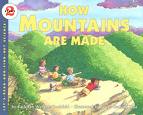 Retell: A group of children climb a nearby mountain. During the climb they start wondering about how mountains are made.
Topics: mountains, erosion, plate tectonics, earth movements, volcanoes
Units of Study: Nonfiction, Content-Area
Habits of Mind: responding with wonderment and awe
Reading Skills: questioning, determining importance, envisionment
My Thoughts: This is a great read aloud to supplement the fourth grade New York Delta FOSS Kit unit on Earth Movements. It’s a simple example of how narrative nonfiction and expository nonfiction are often blended together within the same text. The illustrated characters who narrate the text are a little distracting but you can choose whether or not to read their speech bubbles out loud.
86. Me on the Map by Joan Sweeney
 Retell: The narrator of this story imagines herself on various maps, both homemade and store-bought. The maps range from small scale (her bedroom) to large scale (the world).
Topics: geography, maps, globes, location
Habits of Mind: creating-imagining-innovating
My Thoughts: Every other Thursday someone covers my class while I co-plan with another teacher. On that day, it’s very difficult for me to tuck in a read aloud without cutting another subject. To solve this problem I plan to do a Social Studies read aloud connected to our current unit of study. We’re currently in a Map and Geography unit. By the end of the unit we expect students to be able to find themselves on any kind of map. I thought I would never find a decent read aloud to support this study. I was wrong. Me on the Map is a cute introduction to map reading. It’s simple, but it shows reminds students that maps tell the reader where they are. If you have access to a projector (or a computer lab) I highly recommend pairing this read aloud with an exploration of Google Earth.
84. Chicken Sunday by Patricia Polacco
 Retell: Easter is around the corner and Miss Eula wants a new hat to wear to church. Her grandchildren and her young neighbor decide to ask Mr. Kodinski if they could work at his hat shop to earn extra money. On the way to his shop, he mistakes the children for vandals. They come up with an interesting way to earn back his trust as well as earn enough money for a new hat.
Topics: reputation, hats, chutzpah, Easter, vandalism, gifts, Holocaust survivors
Units of Study: Personal Narrative, Memoir, Social Issues, Talking and Writing About Texts
Tribes: mutual respect, personal best
Habits of Mind: thinking flexibly, creating-imagining-innovating, persisting
Reading Skills: questioning, inference
Writing Skills: zooming in on small moments, repeating powerful lines
My Thoughts: If you follow this blog daily, you’re sick of seeing entries about Patricia Polacco. I can’t help it. I love her work. Since I’m currently in the Personal Narrative mindset, her work naturally comes to mind. The illustrations in this book can be powerful teaching tools. Throughout Chicken Sunday, real photographs appear in the background. This shows that Polacco thinks about significant people in her life and then writes stories about them. I love how Mr. Kodinski’s story can be inferred through the illustrations. Previously, Miss Eula alluded to the fact that he wanted a peaceful life after suffering so much. The text never states specifically why he had a difficult life. The illustrations give you the information. Tattooed on Mr. Kodinski’s arm are six blue numbers, revealing that he survived the concentration camps. This book shows students how readers can reread a text and peal a different layer of meaning with each reading.
83. Fake Out! Animals That Play Tricks by Ginjer L. Clarke (All Aboard Science Reader)
 Retell: In this book, readers learn how animals ‘play games’ in order to adapt to their habitat. In order to survive they play hide-and-seek, play dead, and even play pretend.
Topics: animals, adaptations, habitats, marine life, mammals, mimicry, camouflage
Units of Study: Nonfiction, Content Area
Reading Skills: envisionment, questioning, synthesis, determining importance
Writing Skills: developing voice in expository writing, including conclusions that sum up and release the writer
Thoughts: I’m worried about a boy in my class. He dropped four reading levels over the summer. He’s distracted during Reading Workshop and his reading log shows he’s not reading at home. However, he’s obsessed with the books in the dinosaur bin and carries around a gaming magazine. He’s a nonfiction reader trapped in a unit of study focused on fiction. I think of him as I plan my read alouds. I want to make sure that I’m finding time to tuck in nonfiction read alouds throughout the week, even though we’re not currently in a nonfiction unit. Fake Out! is a high engagement nonfiction read aloud that just happens to look like a “low level” book. Reading this book aloud ‘blesses’ this struggling reader’s level and will hopefully make “All Aboard” books cool to read.
81. The Tequila Worm by Viola Canales
 Retell: Sophia is an intelligent, hardworking girl from McAllen, Texas. When she receives a scholarship for a boarding school 400 miles, she must learn to live in two different worlds. She longs to explore and be accepted by the people at St. Lukes, but she also wishes to be a good comadre and participate in her family’s traditions.
Topics: overcrowding, barrios, family, traditions, Mexican-Americans, friendship, ambition, choices, siblings, Day of the Dead, boarding school, scholarships
Units of Study: Social Issues, Character, Talking and Writing About Texts, Realistic Fiction
Tribes: appreciations/no put-downs
Habits of Mind: thinking flexibly, thinking interdependently
Reading Skills: inference, synthesis, interpretation, envisionment
Writing Skills: bringing out the heart of a story
Thoughts: Though I believe this book is probably most appropriate for middle school students, I wouldn’t hesitate reading sections of this book to my fourth graders. There are great examples of how writers collect stories from their lives and how people become the change they want see in the world. I love Canales’ description of the various rituals and traditions of Sofia’s family. The relationship between Sofia and Berta is interesting. They made very different choices. Sofia chose to move far away and attend college. Berta married young, stayed in her hometown and had two children. Readers could have an interesting discussion about the pros and cons of both characters’ choices.
 Teachable Texts