Posts tagged ‘social issues’
76. My Best Friend by Mary Ann Rodman
 Retell: Lily spends each Wednesday at the neighborhood pool. She has decided that Tamika will be her best friend. Tamika however does not seem interested in being Lily’s friend. Lily tries many things to win over Tamika. She tries to dress the same and she shares her popsicles with her but to no avail. Lily eventually becomes friends with Keesha who doesn’t need to be impressed.
Topics: summer, pools, friendship, popularity
Units: Character, Social Issues, Talking and Writing About Texts
Tribes: mutual respect, appreciations/no put-downs, right to pass
Reading Skills: prediction, interpretation
Writing Skills: balancing dialogue with reflection and description
My Thoughts: This book does a great job of addressing the issue of popularity. Every year I see students going out of their way to impress others who don’t give them the time of day. It could be an interesting book to use when discussing the ‘right to pass’. Though Tamika should have been nicer to Lily, she has the right to pass on her offer of friendship.
Thanks again Beth for another great read aloud.
75. 14 Cows For America by Carmen Agra Deedy
 Retell: To the Maasai people the cow is life. In June 2002 Wilson Kimeli Naiyomah returned to his Kenyan village with a tragic story from New York. Kimeli presented a cow for blessing, in honor of those who died during the attacks of September 11th. 13 others offered their own cows for blessing. The cows remain in Kenya but they continue to be a symbol of hope and compassion to people around the world.
Topics: September 11th, Maasai, Kenya, compassion, cows, hope
Units of Study: Character, Social Issues, Talking and Writing About Texts
Tribes: mutual respect
Reading Skills: envisionment, inference, monitoring for sense
Thoughts: The tone of my classroom during this short first week of school has been so positive. Students are making new friends, and seem excited about school. I now approach planning my read aloud for the third day of school which happens to also be September 11th. It feels weird to start a discussion about tragedy and terrorism on the third day of school. I don’t want to spend a lot of time discussing frightening details of that day but on the other hand I don’t want to ignore the day altogether. I’ve decided to read 14 Cows For America because it focuses more on the idea of compassion rather than tragedy. I’m hoping that the last line of the book will prompt an interesting discussion: “Because there is no nation so powerful it cannot be wounded, nor a people so small they cannot offer mighty comfort.”
Thanks Beth for recommending this fabulous read aloud!
70. Agatha’s Feather Bed: Not Just Another Wild Goose Story by Carmen Agra
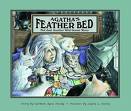 Retell: Agatha is famous for saying, “Everything comes from something.” One night, as she dreams on her new feather bed she is visited by naked geese who want their feathers back. Agatha comes up with an interesting compromise.
Topics: origins, fabric, responsibility
Units of Study: Social Issues
Tribes: mutual respect
Habits of Mind: responding with wonderment and awe, thinking flexibly
Reading Skills: monitoring for sense (understanding idioms and puns), inference
Writing Skills: using first-person narration, including puns
My Thoughts: In her author’s note Deedy writes, “What we choose to discuss with our children concerning ivory, whalebone, or the Brazilian rain forest is a matter of both individual conscience and collective responsibility. But the first step is to ask.” This book is all about inspiring people to ask, “Where does it come from?” Reading these words I’m reminded of a 4th grader who seemed so shocked when she discovered that leather is made from the hides of cows. The text contains a lot of interesting features. When describing her old mattress as ‘lumpy’ and ‘bumpy’ the letters actually look lumpy and bumpy. There are lots of cute idioms, puns and play-on-words. I know I’ll have to explain to my students why the name of the catalog (B.B. Lean) is so funny.
69. Big Al by Andrew Clements
 Retell: Big Al is one scary fish. He happens to also be the nicest fish you’ll ever meet. Unfortunately, the other fish in the sea don’t realize that. Big Al tries to make friends but the others can’t get past the way he looks. One day the little fish get caught in a net. Big Al comes to the rescue and the other fish realize what a wonderful fish he really is.
Topics: fish, friendship, respecting differences, appearances, golden rule
Units of Study: Social Issues, Talking and Writing About Texts
Tribes: mutual respect
Habits of Mind: thinking flexibly
Thoughts: It’s that time of year again. I’m exhausted from moving desks from one end of the room to the other, cleaning up after leaks under the sink (disgusting!!), and labeling hundreds of books destined to enter my classroom library. I was almost too tired to choose a read aloud today. But then my friend Katie came to my rescue and brought this read aloud which she plans to read during the first week of school. This is a wonderful book for discussing the meaning of mutual respect. Some may read this book and think, “Why did Big Al go and save the rest of the fish? They didn’t give him the time of day. They don’t deserve his help.” Even though Big Al was not being respected by the other fish, he didn’t let the fish get caught in the net. He did what was right and not only gained many friends, but taught the others a valuable lesson.
68. Old MacDonald Had an Apartment House by Judi Barrett
 Retell: A super decides to turn the apartment building he manages into a vegetable garden. When Mr. Wrental, the owner, finds out he’s furious. But when he thinks about all the money he could make, the owner has a change of heart.
Topics: gardening, apartments, cities, indoor gardening
Units of Study: Social Issues, Realistic Fiction
Habits: thinking flexibly
Reading Skills: Prediction, making connections
Writing Skills: Using the ‘rule of three’ when listing examples
My Thoughts: This is a very cute book by the author of Cloudy With a Chance of Meatballs. Before reading this book aloud, you may want to find a copy of Grant Wood’s painting American Gothic so students will understand the joke behind the cover illustration. I can certainly identify with the characters in this book. Both my apartment and my classroom get little to no light. My classroom doesn’t have any windows at all so I wrote a grant proposal for a GroLab on Donors Choose and it was funded in three days! When it arrives I plan on reading this book to the class. Perhaps after the read aloud we’ll try growing vegetables.
67. Love That Dog by Sharon Creech
 Retell: “I don’t want to because boys don’t write poetry. Girls do.” Jack reluctantly keeps a poetry journal. With encouragement from his teacher he begins to write about his dog. By using famous poems as mentor texts, Jack learns to be a prolific poet.
Topics: poetry, school, pets, loss, writer’s block
Units of Study: Independent Writing Projects, Poetry, Social Issues, Character
Tribes: personal best
Habits of Mind: striving for accuracy, thinking interdependently, thinking flexibly
Reading Skills: inference, interpretation, making connections
Writing Skills: using mentor texts to improve writing
My Thoughts: This is one of my favorite books by Sharon Creech. She captures the voice of a young writer so well. I consider this a read aloud though I often use it as a text for doing shared reading. Since each entry is dated, one could conceivably read the pages on or close to the dates in the book–a read aloud that lasts all year long. In the back of the book are poems by: Walter Dean Meyers, William Carlos Williams, Robert Frost and Valerie Worth. You could use the poems for shared reading at the same time you read the book aloud.
66. Amazing Grace by Mary Hoffman
 Retell: Grace loves to act. When her school puts on a production of Peter Pan she is eager to audition. Her classmates tell her that she can’t be Peter Pan because she is a girl and she’s black. After an inspiring visit to the ballet Grace finds confidence to audition.
Topics: reading, stories, acting, school, gender issues, racism, role models, theater, ballet
Units of Study: Social Issues, Realistic Fiction, Character
Tribes: Personal Best
Habits of Mind: persistence, striving for accuracy, thinking interdependently
Reading Skills: inference, interpretation
My Thoughts: Amazing Grace has been a favorite read aloud of mine for introducing the Social Issues unit. However, I’m thinking of reading it earlier this year when introducing the Habit of Mind–‘persistence’. Grace is a good example of how one persists when they have a dream. Grace’s dream is to play Peter Pan. Despite the discouragement she receives from a few of her classmates, Grace practices over the weekend and ends up getting the part. However, it’s interesting to note that this persistence didn’t just come from herself–she had to be encouraged by her family. I wonder if Grace would have succeeded if her Nana hadn’t taken her to the ballet.
58. Riding the Tiger by Eve Bunting
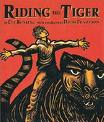 Retell: Danny, a new boy in town, is invited to ride on the back of a tiger. When he notices the fear in the eyes of passersby he tries to get off of the tiger. He soon realizes that once you get on the tiger it’s difficult to get off.
Topics: danger, choices, excitement, gangs, influence, power, respect, fear, peer pressure
Units of Study: Talking and Writing about Texts, Social Issues
Tribes: right to pass, mutual respect
Reading Skills: inference, interpretation, envisionment
Writing Skills: using dialogue, incorporating metaphors in to a story
My Thoughts: As the school year approaches I am thinking about the books that I will want to read during the first few weeks of school. During the first two weeks of school I like to read books that lend themselves well to teaching the five agreements of our school (These agreements are based on Tribes. Our school added a fifth agreement–‘personal best’) Riding the Tiger is an excellent book for teaching about the ‘right to pass’. From the beginning of the story Danny doesn’t feel comfortable accepting a ride from the tiger without first asking his mom for permission. He accepts the ride anyway and becomes increasingly more conflicted about the ride. He eventually takes the ‘right to pass’ when he finally gets off the tiger and helps a man who has fallen down. This book will certainly inspire discussion about peer pressure and gang recruitment. When introducing this book you will want to set students up to do deep interpretation work. Some students may not realize that the tiger is metaphorical.
54. Two Bobbies: A True Story of Hurricane Katrina, Friendship, and Survival by Kirby Larson and Mary Nethery
 Retell: This is the true story of how a stranded cat and dog survived the aftermath of Hurricane Katrina.
Topics: pets, Hurricane Katrina, survival, friendship, family, homelessness
Units of Study: Social Issues, Nonfiction, Talking and Writing about Texts
Tribes: personal best, mutual respect
Habits of Mind: taking responsible risks, thinking flexibly
Reading Skills: envisionment, inference, interpretation
My Thoughts: This is a book that I didn’t mind buying brand new and in hardcover. I found this in a bookstore in Ashland, Oregon. The cashier and I spent a few moments cooing over her ridiculously cute it is. In addition to being an amazingly touching story it’s a great text to read to learn about Hurricane Katrina. It could also be a great read aloud during an interpretation unit. On one level it’s a story about survival but it could also be interpreted as a story about friendship between two individuals who come from groups who are normally not friendly to each other.
49. Fireflies in the Dark: The Story of Friedl Dicker-Brandeis and the Children of Terezin by Susan Goldman Rubin
 Retell: Learn about the amazing life of Friedl Dicker-Brandeis, who taught art to children in the Terezin Camp during the Holocaust. The book includes several photos, drawings, paintings and writings from her students, many of whom did not survive.
Topics: art, holocaust, ghetto, Terezin, Nazis, school, poetry, drama, resiliency
Units of Study: Personal Narrative, Nonfiction, Content Area Reading and Writing, Social Issues
Tribes: personal best, mutual respect
Habits of Mind: persisting, thinking flexibly, creating-imagining-innovating, thinking interdependently, remaining open to continuous learning
Reading Skills: envisionment, determining importance, interpretation, inference
Writing Skills: launching writers notebook, zooming in on small moments
My Thoughts: One can learn many lessons from this book. I am impressed by Dicker-Brandeis’ devotion to learning. When she discovered that she would be sent to Terezin she chose not to bring items for herself, but art supplies for the children she knew would be in the camp. Through art her students were able to both escape and record the horrors around them. Though I don’t plan on teaching a unit about the Holocaust this year, I may choose to read a portion of this book when emphasizing how writers notebooks can be powerful places to record our memories, our thoughts and our struggles. It is important for our students to realize that their experiences, just like those recorded at Terezin, are important and should be recorded.
 Teachable Texts