Posts tagged ‘sensory details’
8. The Lucky Star by Judy Young
 Retell: Ruth, a young girl growing up during The Great Depression, discovers that her school will be closed down before she enters her 5th grade year. Ruth learns a lesson of perseverance and counting one’s lucky stars.
Topics: The Great Depression, perseverance, family,
Unit of Study: Historical Fiction, Character
Tribes: Personal best
Reading Skills: inference, making connections, prediction
Writing Skills: incorporating setting details, using sensory details
My Thoughts: This book would be a great mentor text during a unit on reading and writing historical fiction. However, I’m tempted to use this at the beginning of the year when I introduce partner work and independence. The Lucky Star teaches that smart people persevere through difficult situations. A closure of a school, or similarly an absence of a teacher or a change in schedule, does not mean that learning stops completely.
6. The Wall by Eve Bunting
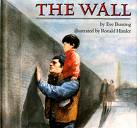 Retell: A father and son visit the Vietnam Memorial in Washington D.C. The young son describes what he sees and hears on the day of his visit.
Topics: family, Memorial Day, Vietnam War
Units of Study: Personal Narrative, Social Issues
Tribes: Mutual Respect, Right to Pass
Reading Skills: inference, synthesis
Writing Skills: writing sensory details, writing small moments
My Thoughts: The Wall is one of those books that may be difficult to read aloud with a dry eye. I can see reading this book duing the beginning of the year during the Personal Narrative unit and then rereading it during the Social Issues unit. I could even reread it yet again right before Memorial Day. The Wall provides a good example of how a writer can zoom in on a small moment. The entire book takes place in one location and does not span more than a few hours. Each line of the book encourages readers to question and infer: “That couple seems like they’ve lost someone. Who did they lose?” You could also reread this book with a Tribes lens. You could encourage your students to discuss how the boy solved a problem, not by yelling at the crowd of noisy school girls, but by standing next to his reverent father, supporting his moment of silence in a show of solidarity.
2. Three Days on a River In a Red Canoe by Vera B. Williams
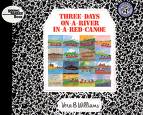
Retell: After purchasing a red canoe at a yard sale, a family goes on a three-day canoe trip.
Topics: Family, adventure, camping
Units of Study: Personal Narratives, Launching the Writers Notebook
Tribes: Personal Best
Reading Skills: envisionment, making connections, inference
Writing Skills: incorporating details about setting, using transition words, including sensory details, writing endings that connect to the beginning
My thoughts: This book has great teaching potential. As the marbled cover suggests it reads like someone’s writers notebook. Each page describes a scene from the camping trip. I can imagine using this book when I introduce writers notebooks to my students. Each page is a small moment that could be stretched into a larger story. The colorful, colored pencil drawings will be inspiring for young artists who like to draw pictures with each notebook entry. I plan on using this as a mentor text for students who want to write endings that connect to an earlier scene.
 Teachable Texts