Posts tagged ‘personal narrative’
39. Mama Loves Me From Away by Pat Brisson
 Retell: Sugar and her mama share the same birthday. Sugar enjoys listening to her mother’s stories. She especially misses them now that her mother is in prison. Her mother finds a way to share her stories even from far away.
Topics: mothers, families, prison, stories, birthdays
Units of Study: Social Issues, Personal Narratives, Realistic Fiction
Tribes: attentive listening
Reading Skills: interpretation, questioning, empathy
Writing Skills: writing with a balance of description and reflection, keeping a writers notebook
My Thoughts: This is a moving story about a girl who is dealing with the fact that her mother is imprisoned. There aren’t many published stories like this in the world. It’s a great model to use when you teach your students to write about stories you wish belonged in the world–the ones that show aspects of your life or struggles you are going through. The author never reveals what the mother did to land her in prison which I think is a nice touch. The book isn’t about the mother, but about how much her daughter misses her.
34. What Will You Do For Peace?: Impact of 9/11 on New York City Youth
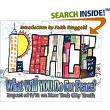 Retell: Faith Ringgold introduces this collaboration of young artists and poets aged 11-19. Each page includes responses to the tragic events of 9/11.
Topics: 9/11, peace, children, World Trade Center
Units of Study: Personal Narrative, Poetry, Personal Essay
Tribes: personal best, mutual respect
Writing Skills: collecting notebook entries
My Thoughts: This is a very moving collection of stories, poems and drawings from young children who experienced the events of 9/11 firsthand. There are accounts of how it felt to be at school when people were going home every few minutes. There are stories of watching the news for hours and hours. I plan on reading this book on September 11th this year. I think it will not only prompt a good discussion about why they day is important but it will also be a good mentor text for generating notebook entries and writing about events that will never be forgotten.
29. Saying Goodbye to Lulu by Corinne Demas
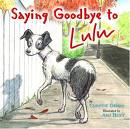 Retell: A young girl has difficulty saying goodbye to her beloved dog Lulu. With help from her parents, she learns how to move on without forgetting the wonderful memories of Lulu.
Topics: loss, dogs, reflection, death, dying, pets, grief, memories, family
Units of Study: Personal Narrative
Reading Skills: synthesis, making connections
Writing Skills: creating flashbacks, zooming in on small moments, using sensory details
My Thoughts: I shouldn’t have read this book in a cafe. Let’s just say that my eyes were quite red and puffy after reading this book. It is however, a great text for discussing various stages of the grieving process. She goes through denial, anger, sadness, reflection and finally acceptance. The author zooms in on small but important details (“I missed the sound of her tail going thump, thump while she waited for me at the bottom of the stairs…”) making it a great mentor text for writing narratives.
27. The Road to Santiago by D.H. Figueredo
 Retell: Every year Figueredo and his family return to Santiago, Cuba for Christmas. When calls for revolution sounded throughout Cuba the author recalls how his family almost didn’t make it home for his favorite holiday.
Topics: Cuba, Christmas, rebels, family, kindness of strangers, traditions
Units of Study: Personal Narrative, Memoir, Historical Fiction
Tribes: personal best, mutual respect
Reading Skills: making connections, monitoring for sense
Writing Skills: zooming in on small moments, incorporating vocabulary from another language, generating notebook ideas
My Thoughts: A common thread thoughout the story is kindness. Each scene highlights how people were kind to the author’s family: a mill worker helps them fix a flat tire, a young man gives up his seat on the bus. Though this is technically a personal narrative I could see reading this book during a unit on writing historical fiction. The story takes place during the 1950s revolutionary period in Cuba. He threads details of the time period throughout the story making this a good historical fiction mentor text.
23. Mr. George Baker by Amy Hest
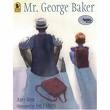 Retell: Hundred-year-old George Baker and his young neighbor Harry are friends. Each day they wait for the school bus that brings them both to school.
Topics: friendship, reading, literacy, growing old, learning, music, small moments, friendship
Units of Study: Personal Narrative, Social Issues
Tribes: personal best, mutual respect
Reading Skills: envisionment, inference, interpretation
Writing Skills: zooming in on small moments, alliteration, onomatopoeia, using sensory details
My Thoughts: This is a slow-paced story that easily lends itself to teaching small moments. Though you could also read this book aloud with a social issues lens, the author spends most of the story describing the moments just before going to school. It would be a good mentor text for paying attention to how authors incorporate sound into their writing.
22. Wilfrid Gordon McDonald Partridge by Mem Fox
 Retell: Wilfrid Gordon McDonald Partridge enjoys visiting the old people’s home located next door to his house. He especially loves visiting Miss Nancy. When his parents tell him that she has lost her memory, Wilfrid searches for items that may help her remember.
Topics: memories, alzheimer’s disease, small moments, friendship, memory loss
Tribes: mutual respect, personal best
Units of Study: Personal Narrative, Memoir, Realistic Fiction
Reading Skills: inference, making connections
Writing Skills: keeping a writer’s notebook, using objects to get ideas for notebook entries, writing endings that connect to the beginning
My Thoughts: This is the book that I’m going to read when I introduce the concept that writer’s can get ideas for notebook entries by looking at objects. Mem Fox is the author of several excellent books for children. She is an advocate for reading aloud and provides videos, recordings, and tips for reading aloud on her website. Also included on her site is a “stories behind the stories” section where she discusses her inspiration for each of her books. Check out her website: http://www.memfox.com/welcome.html
12. Families are Different by Nina Pellegrini
 Retell: Nico is an adopted girl from Korea who begins to feel different from her friends because she doesn’t resemble her parents. After closer observation, Nico realizes that there are many different types of families.
Topics: adoption, divorce, families
Units of Study: memoir, personal narrative, social issues
Tribes: appreciations/no putdowns (appreciating our loved ones), mutual respect
Reading Skills: making connections
Writing Skills: developing the heart of a story
My Thoughts: Do not expect subtlety when reading this book. The title hits you over the head with the book’s message. I can’t imagine using this book for higher level reading work. However, I think it could be a good mentor text when teaching writers to revise by developing the heart of a story. Families are Different is written in a style similar to some of the notebook entries my students tend to write: “Hello, my name is______. I live in ______. I’m going to tell you all about my friends.” Halfway through the story, however the narrator begins to reveal some of her thoughts and emotions about being adopted. I can see reading this story and asking students to identify when the author started getting to the heart of the story. I would also read this during a community circle to encourage discussion about respecting differences.
10. Come On, Rain! by Karen Hesse
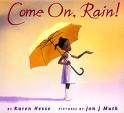 Retell: A young girl anticipates the long awaited thunderstorms that will cool down the humid city she lives in.
Topics: heat, rain, family, summer, cities, thunderstorms
Units of Study: personal narrative, poetry
Reading Skills: envisionment, making connections
Writing Skills: including similes, using active verbs, personification, alliteration
My Thoughts: This book makes me wish it was more humid outside right now. Every New Yorker without air conditioning will be able to relate to this book. I love how Hesse uses poetic devices throughout this small moment story, making it a nice mentor text for personal narrative or poetry unit. She includes personification: “The smell of hot tar and garbage bullies the air…” There is alliteration and assonance: “The first drops plop down big, making dust dance all around us.” Hesse teaches young writers to slow down and zoom in on ordinary moments.
9. Dogteam by Gary Paulsen
 Retell: A moonlit night inspires the narrator to take his dogs on an exciting night ride.
Topics: dogs, dog sledding
Units of Study: personal narrative, content-area writing
Reading Skills: envisionment
Writing Skills: using active verbs, zooming in on a small moment, incorporating sensory details, adding suspense, inserting commas and semicolons, repetition
My Thoughts: Dogteam reads more like prose. In addition to including beautiful imagery, Paulsen’s book has many examples of how writers use all senses to describe a moment in time. Though I would categorize this as a personal narrative, one could also use this as a mentor text for writing nonfiction poetry.
7. Guys Write for Guys Read
 Retell: Jon Scieszka edits this fabulous collection of stories, comics, essays, illustrations and vignettes contributed by prominent male authors and illustrators. Contributors include: Stephen King, Matt Groening, Jerry Spinelli, Seymour Simon, James Howe, Neil Gaiman, Gary Paulsen and many more. Royalties from the book are used to support Scieszka’s Guys Read Program.
Topics: boys, family, growing up, reading, writing, art
Units of Study: Personal Narrative, Launching the Reading and Writing Workshop, Character, Personal Essay, Content-Area Reading and Writing, Nonfiction, Memoir, Social Issues, Fantasy, Preparing for the ELA
Tribes: Mutual Respect, Personal Best, Appreciations/No Putdowns, Right to Pass
Reading Skills: inference, making connections, interpretation
Writing Skills: writing with voice, zooming in on a small moment, observing the world for stories
My Thoughts: This book is teacher gold! Guys Write for Guys Read has a plethora of short stories that can be used for mentor texts in almost every Reading and Writing unit. One of the stories, “Reading Can Be Dangerous” by Tedd Arnold was featured on the 5th grade ELA test last year. James Howe, author of Bunnicula, writes a personal narrative about getting help from a friend on how to be a boy–a great text for personal essay or discussing gender issues. Many authors write about how they came to love reading and writing. Christopher Paolini, author of Eragon, writes about how he fell in love with fantasy–great to read when you launch a unit on Fantasy reading and writing. Patrick Jones, a librarian, writes about how being interested in wrestling inspired him to become a voracious reader. Many entries include samples of famous authors childhood work alongside their adult work. For example, Dav Pilkey, author/illustrator of the infamous Captain Underpants series, writes about a comic strip he started when he was 11. I will probably use this book for almost every unit I teach this year.
If you don’t pick up a copy of this book you must go to Scieska’s website, Guys Read. The site is dedicated to inspiring more young boys to fall in love with reading. Mr. Scieszka, you’re my hero.
 Teachable Texts