Posts tagged ‘nonfiction’
83. Fake Out! Animals That Play Tricks by Ginjer L. Clarke (All Aboard Science Reader)
 Retell: In this book, readers learn how animals ‘play games’ in order to adapt to their habitat. In order to survive they play hide-and-seek, play dead, and even play pretend.
Topics: animals, adaptations, habitats, marine life, mammals, mimicry, camouflage
Units of Study: Nonfiction, Content Area
Reading Skills: envisionment, questioning, synthesis, determining importance
Writing Skills: developing voice in expository writing, including conclusions that sum up and release the writer
Thoughts: I’m worried about a boy in my class. He dropped four reading levels over the summer. He’s distracted during Reading Workshop and his reading log shows he’s not reading at home. However, he’s obsessed with the books in the dinosaur bin and carries around a gaming magazine. He’s a nonfiction reader trapped in a unit of study focused on fiction. I think of him as I plan my read alouds. I want to make sure that I’m finding time to tuck in nonfiction read alouds throughout the week, even though we’re not currently in a nonfiction unit. Fake Out! is a high engagement nonfiction read aloud that just happens to look like a “low level” book. Reading this book aloud ‘blesses’ this struggling reader’s level and will hopefully make “All Aboard” books cool to read.
62. “Before New York” by Peter Miller, National Geographic September 2009
 Retell: Peter Miller investigates the Mannahatta Project, a group who have analyzed several historical maps in order to create pictures of what Manhattan might have looked like when Henry Hudson spotted the island back in 1609.
Topics: New York, beavers, then & now, New Amsterdam, Hudson, conservation, geography, maps
Units of Study: Nonfiction, Content Area
Habits of Mind: thinking interdependently, responding with wonderment and awe, striving for accuracy
Reading Skills: envisionment, determining importance, questioning
My Thoughts: My eyes lit up when I received my monthly National Geographic magazine yesterday afternoon. The feature article, “Before New York,” is dedicated to presenting a picture of the landscape of New York City before it was the crowded, bustling town it is today. If you are a 4th grade teacher in New York I highly recommend going out to your local news stand and picking up a copy today. The article includes several pictures of ‘then and now’ maps and digital renderings. I plan on reading this article (or a portion of it) when we do our unit on New York geography. The article highlights how cartographers pose questions, strive for accuracy and work in groups. I may just reread the beginning of the article where the author tells the story of a beaver named Jose who appeared near the Bronx zoo. According to the article beaver haven’t been spotted in New York City in over 200 years. If you don’t have a subscription check out the National Geographic website. If you have a projector in your classroom you could share the interactive maps of New York after reading the article.
55. The Bumblebee Queen by April Pulley Sayre
 Retell: This book describes the life cycle of a bumblebee queen.
Topics: bumblebees, life cycles, habitats, pollination
Units of Study: Nonfiction, Content Area Reading and Writing
Reading Skills: envisionment, questioning, determining importance
Writing Skills: using commas to separate clauses
My Thoughts: I like how this book is structured. It has two threads–a narrative thread and an expository thread. In bold letters the text tells a story about the amazing work of a bumblebee queen. On every other page or so there are fact bubbles that give more detailed information about bumblebees. I plan on using this book when we do our Content Area unit which will focus on life cycles and habitats.
54. Two Bobbies: A True Story of Hurricane Katrina, Friendship, and Survival by Kirby Larson and Mary Nethery
 Retell: This is the true story of how a stranded cat and dog survived the aftermath of Hurricane Katrina.
Topics: pets, Hurricane Katrina, survival, friendship, family, homelessness
Units of Study: Social Issues, Nonfiction, Talking and Writing about Texts
Tribes: personal best, mutual respect
Habits of Mind: taking responsible risks, thinking flexibly
Reading Skills: envisionment, inference, interpretation
My Thoughts: This is a book that I didn’t mind buying brand new and in hardcover. I found this in a bookstore in Ashland, Oregon. The cashier and I spent a few moments cooing over her ridiculously cute it is. In addition to being an amazingly touching story it’s a great text to read to learn about Hurricane Katrina. It could also be a great read aloud during an interpretation unit. On one level it’s a story about survival but it could also be interpreted as a story about friendship between two individuals who come from groups who are normally not friendly to each other.
49. Fireflies in the Dark: The Story of Friedl Dicker-Brandeis and the Children of Terezin by Susan Goldman Rubin
 Retell: Learn about the amazing life of Friedl Dicker-Brandeis, who taught art to children in the Terezin Camp during the Holocaust. The book includes several photos, drawings, paintings and writings from her students, many of whom did not survive.
Topics: art, holocaust, ghetto, Terezin, Nazis, school, poetry, drama, resiliency
Units of Study: Personal Narrative, Nonfiction, Content Area Reading and Writing, Social Issues
Tribes: personal best, mutual respect
Habits of Mind: persisting, thinking flexibly, creating-imagining-innovating, thinking interdependently, remaining open to continuous learning
Reading Skills: envisionment, determining importance, interpretation, inference
Writing Skills: launching writers notebook, zooming in on small moments
My Thoughts: One can learn many lessons from this book. I am impressed by Dicker-Brandeis’ devotion to learning. When she discovered that she would be sent to Terezin she chose not to bring items for herself, but art supplies for the children she knew would be in the camp. Through art her students were able to both escape and record the horrors around them. Though I don’t plan on teaching a unit about the Holocaust this year, I may choose to read a portion of this book when emphasizing how writers notebooks can be powerful places to record our memories, our thoughts and our struggles. It is important for our students to realize that their experiences, just like those recorded at Terezin, are important and should be recorded.
42. River of Dreams: The Story of the Hudson River by Hudson Talbott
 Retell: A beautifully illustrated history of the Hudson River.
Topics: Hudson River, New York, Native Americans, Henry Hudson, dreamers, Dutch, explorers, British, American Revolution, Robert Fulton, Erie Canal, trade, Hudson River School Painters, Industrial Revolution, environment, Franny Reese, pollution, immigration
Units of Study: Nonfiction, Social Issues, Content Area
Tribes: mutual respect
Reading Skills: envisionment, determining importance, questioning, synthesis
Writing Skills: including expository text features
My Thoughts: My eyes grew wide when I spotted this book in Barnes and Noble this afternoon. This book is treasure for New York 4th grade teachers who will be embarking on a year-long study of New York history. A timeline painted in the shape of the Hudson River winds throughout the book noting historic events including: the American Revolution, the commercial success of Fulton’s steamboat, the opening of the Erie Canal, and the Scenic Hudson Decision. I think I may read this book in September when we discuss what we will be learning in Social Studies this year. When we get to a new unit, I think I’ll reread corresponding sections of River of Dreams. Talbott also highlights writers and artists who were inspired by the Hudson River such as Washington Irving, James Fenimore Cooper and the Hudson River School Painters. This is a great book to use when discussing trade and industry. There is a beautiful painting in the book that shows the Hudson River bursting with steamboats and schooners–“America’s first superhighway.” I like how the story includes the environmental impact of industrial pollution and the story ends with a strong message–it’s up to us to protect the beauty of this river.
37. Tallchief: America’s Prima Ballerina by Maria Tallchief with Rosemary Wells
 Retell: This is an autobiographical story of Maria Tallchief, one of the greatest American-born ballerinas of her time.
Topics: native americans, Osage, Oklahoma, ballet, Westward Expansion, music, interests, biographies, narrative nonfiction
Units of Study: Social Issues, Nonfiction
Tribes: personal best
Reading Skills: inference, determining importance, envisionment
Writing Skills: seeing the world as a writer, using interesting transitional phrases
My Thoughts: This story is great to read when discussing what it means to put your all into something. Maria Tallchief lived, breathed, and ate music and dance. She writes about how her teacher told her to live like a dancer “When you sleep, you must sleep like a dancer. When you stand and wait for the bus, you must wait for the bus like a dancer.” This particular scene reminds me how we often challenge our students to live like writers. Perhaps now we can tell students, “When you wait for the bus, you must wait for the bus like a writer–notebook in hand, waiting to collect stories.”
32. Team Moon: How 400,000 People Landed Apollo 11 on the Moon by Catherine Thimmesh
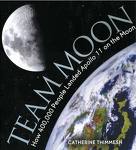 Retell: Thimmesh tells the story of the Apollo 11 mission. It includes several quotes, interviews and amazing photographs from the moon landing.
Topics: moon landing, space, Apollo 11, teamwork, goals, problem-solving, perseverance
Units of Study: Nonfiction, Content Area, Personal Essay
Tribes: attentive listening, mutual respect, personal best
Reading Skills: envisionment, inference, interpretation, determining importance
Writing Skills: using descriptive language, inserting quotations, using dashes, using ellipses
My Thoughts: To commemorate its 40th anniversary I plan to read at least one book about the moon landing this year. What I love about this particular book is its emphasis on teamwork. As the title suggests, Apollo 11 was successful because of the dilligence of several hundred-thousand people working together in teams trying to accomplish one goal. It’s a dense book so I can see reading only a few sections at a time. This could be used as a rich mentor text for writing nonfiction. Thimmesh writes with excitement and enthusiasm making the text very engaging.
30. A Young People’s History of the United States by Howard Zinn
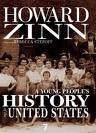 Retell: Like the title suggests, this is a young people’s version of his famous book, A People’s History of the United States. Together with Rebecca Stefoff, Zinn manages to tell a version of history that attempts to include the perspectives of groups that are usually left out (women, people of color, Native people, children, etc.)
Topics: United States, history, exploration, racism, slavery, colonialism, rights, justice, revolution, war, emancipation, industrialization, immigration, empire, protests, terrorism, resistance, freedom of speech
Units of Study: Content Area, Nonfiction, Social Issues, Personal Essay, Historical Fiction
Tribes: mutual respect, personal best
Reading Skills: questioning, synthesis, prediction, determining importance, inference, interpretation
Writing Skills: using evidence to support a thesis or main idea, inserting anecdotes and quotations
My Thoughts: I was so thrilled to find this book on the shelves. I read A People’s History of the United States several years ago and often reread sections before embarking on Social Studies units. Though I thought this book was going to present a child’s perspective of historical events, Zinn does manage to tuck in a few stories of young people working to make a difference. For example, he includes the story about how children started the first milll strike in Paterson, New Jersey. I intend to read aloud exerpts from this book to support and/or challenge what they may be reading in their own nonfiction texts. This book is also available in two volumes. Volume I covers Columbus to the Spanish-American War. Volume II covers World War I to the wars in Iraq and Afghanistan.
28. The Librarian of Basra: A True Story from Iraq by Jeanette Winter
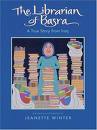 Retell: This is the true story of Alia Muhammad Baker. During U.S. air raids in 2003, Baker managed to hide and save over 30,000 books from destruction.
Topics: libraries, Iraq, heroism, action, war, books, community
Units of Study: Nonfiction, Content-Area Reading and Writing, Journalism
Tribes: mutual respect, personal best
Reading Skills: prediction, questioning
Writing Skills: using dashes
My Thoughts: Stories like this one restores my faith in humanity. Alia Muhammad Baker’s story is a great one to share with kids, many whom don’t even know that the U.S. is involved in two wars at the moment. Her story was originally published back in 2003 in the The New York Times. Reading The Librarian of Basra in conjunction with the The New York Times article could be a great way to emphasize the role of a journalist to bring to light stories that would otherwise go unnoticed. I plan on reading this at the beginning of the year to reiterate the importance of reading.
Click her to read Shaila K. Dewan’s 2003 New York Times article about Alia Muhammad Baker
 Teachable Texts