Posts tagged ‘monitoring for sense’
51. Skippyjon Jones by Judy Schachner
 Retell: Skippyjon Jones is an imaginative Siamese cat. After catching her son in a bird’s nest she banishes Skippyjon to his room so he can think about what it means to be a cat. Instead he imagines that he is a chihuahua named Skippito Friskito.
Topics: individuality, creativity, imagination, parents, Spanish
Units of Study: Talking and Writing about Texts, Realistic Fiction
Habits of Mind: creating-imagining-innovating
Reading Skills: envisionment, making connections, monitoring for sense
Writing Skills: incorporating rhyme and rhythm, writing stories based on real life
My Thoughts: I purchased this book at JFK while waiting for my flight to Portland. The rhyming chants in the book caught my eye. It seems like it will be a fun book to read aloud. I like how the book promotes having an active imagination. However, I don’t feel I’d be comfortable reading this book aloud without encouraging my students to think critically about whether or not the book is culturally sensitive. When Skippyjon becomes a chihuahua he starts speaking in a Spanish accent–which means ending most of his words with -ito. He doesn’t say ‘big’ he says ‘beeg’. The author isn’t trying to create an authentic Mexican character. She’s trying to write a story about a character who likes to play pretend. At any rate, this book could be great to read or reread during a critical reading study. If you click on the book image above the link will take you to an interesting comments thread on Powell’s website.
50. Home: A Collaboration of Thirty Distinguished Authors and Illustrators of Children’s Books to Aid the Homeless
 Retell: An anthology of poetry and prose all based on the subject ‘home’. Many famous writers and illustrators contributed pieces such as: Virginia Hamilton, Aliki, Jon Sciszka, Jane Yolen and more.
Topics: home, hiding places, family, children
Units of Study: Personal Narrative, Memoir, Launching the Reading Workshop
Habits of Mind: thinking flexibly, creating-imagining-innovating
Reading Skills: making connections, envisionment, monitoring for sense
Writing Skills: zooming in on small moments, using sensory details
My Thoughts: This is a handy resource for the Personal Narrative unit. Many of the poems and stories within the anthology will be great ‘small moment’ mentor texts. Home contains some great pieces that will encourage students as they author their independent reading lives. The story “Comfortable Old Chair” by Karla Kuskin features a girl who loves reading in her favorite chair. In the poem, “Elevator” Lucille Clifton describes a girl who reads in the corner of her building’s elevator. I plan on using these pieces to show how dedicated readers take charge of their lives at home and find a place that’s entirely theirs. I knew a student who used to have trouble finding a quiet space to read in his crowded apartment. He started scheduling bathroom reading time. He would bring in pillows, blankets and books and make a comfy reading spot in the bathtub.
46. Butterflies in My Stomach and Other School Hazards by Serge Bloch
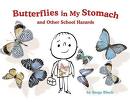 Retell: It’s the first day of school and the narrator is nervous. Each person he encounters speaks in confusing idioms.
Topics: first day of school, idioms, school
Units of Study: Personal Narrative, Realistic Fiction
Reading Skills: monitoring for sense, envisionment
My Thoughts: It’s well into August and that means that my mind is beginning to think more and more about the first weeks of school. I’m on the hunt for engaging books to start the year out well. I found this cute book a few days ago during a visit to Powell’s Books in Portland, Oregon. Butterflies in My Stomach and Other School Hazards not only makes for a good read aloud on the first day of school, but it is also great for introducing idioms. On each page the main character encounters a person who says an idiom. Each idiom is illustrated literally. For example, when his teacher said “he was all ears,” the illustration shows the teacher with giant ears. If you didn’t want to read this book aloud in one sitting, you could read a page or two each day as a warm-up activity. You could keep a chart of idioms that the class learns each day.
44. Shrek! by William Steig
 Retell: Shrek is proud to be an ugly ogre. He loves everything disgusting and enjoys scaring people around him. One day he visits a fortune teller who tells him that he is destined to meet a princess even uglier than he. With the help of a donkey he travels to the castle, defeats a knight and meets the princess of his dreams.
Topics: ogres, nightmares, monsters, fortune tellers
Units of Study: Fantasy
Reading Skills: monitoring for sense, envisionment
Writing Skills: using rhyme, including interesting vocabulary
My Thoughts: I never realized how different the original story was from the movie. The movie version has a much stronger moral more lesson but that doesn’t mean Steig’s classic does not have value as a read aloud. I think this book lends itself quite well to modeling how readers monitor for sense. Steig writes with rich vocabulary. His characters never walk, speak, or work. Rather they, stalk, hiss, and scythe. Giggle alert: the story includes the word jackass, which refers of course to the donkey in the story. Read aloud with discretion.
25. Hewitt Anderson’s Great Big Life by Jerdine Nolen
 Retell: Hewitt Anderson has it all. Loving parents, a gorgeous house and fabulous birthday parties. The only problem is that Hewitt wasn’t the son his parents expected. Hewitt’s parents, and indeed the entire town, are giants. This causes a lot of problems but soon they realize that with a few modifications they can still live a ‘normal’ life.
Topics: acceptance, family, giants, differences, size
Units of Study: Fantasy, Character
Tribes: mutual respect, personal best
Reading Skills: monitoring for sense, envisionment
Writing Skills: using interesting vocabulary
My Thoughts: This is a nice twist on “Jack and the Beanstalk”. When next I teach a Fantasy unit I would like to either read this while immersing students in the genre, or use it as a writing mentor text. The characters are African-American which students don’t often encounter when reading fantasy or fairy tales. The language in the book is gorgeous. Since there are many different words for ‘large’ and ‘small’ throughout the story, one could use this book during a lesson on synonyms.
24. Owen and Mzee: The Language of Friendship by Isabella Hatkoff, Craig Hatkoff, and Dr. Paula Kahumbu
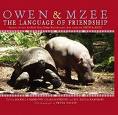 Retell: This sequel continues the story of Owen and Mzee, the beloved baby hippo and the anti-social tortoise, who were brought together during the aftermath of the tsunami of 2004.
Topics: tsunami, hippos, tortoises, wildlife, preservation, Kenya, friendship, biology, animal habitats, narrative nonfiction, biography
Units of Study: Nonfiction, Personal Essay, Content-Area Reading and Writing
Tribes: mutual respect
Reading Skills: monitoring for sense, determining importance, inference
Writing Skills: using transitional phrases, using quotation marks that note unusual usage
My Thoughts: Be ready for a chorus of “ahhh”s if you choose to read this book aloud to your students. Every photograph is absolutely adorable. A lot can be learned from this pair. I plan to use this book during my Content Area Reading and Writing units. Owen and Mzee includes both narrative and expository text making it a good teaching text during the Nonfiction unit as well. One could even use this during a biography unit since it’s telling a life story.
13. A Dandelion’s Life by John Himmelman (The Nature Upclose Series)
 Retell: John Himmelman tells the life story, from seed to bloom, of the unappreciated dandelion.
Topics: dandelions, flowers, life cycle, narrative nonfiction
Units of Study: Nonfiction, Content-Area Reading and Writing
Reading Skills: prediction, determining importance, monitoring for sense
Writing Skills: incorporating transitional phrases, including text features
My Thoughts: A Dandelion’s Life is but one of several narrative nonfiction books in the Nature Upclose Series. After reading this book I had a new appreciation for the dandelion. This is a decent, simple example of narrative nonfiction that could be used as a mentor text during the Content-Area Reading and Writing unit. If you’re a fourth grade teacher in New York, you will be pleased with how well this book could align with the Science unit: Food Chains and Life Cycles. Our fourth grade team is considering aligning that Science unit with the Content-Area Reading and Writing units, making A Dandelion’s Life a perfect read aloud fit. The illustrations don’t just exclusively feature the dandelion. Throughout the narrative butterflies, snakes, fireflies, birds and crickets make appearances. I can envision readers using the illustrations to envision the habitat of each creature. I think I’m going to keep my eye out for more books in this series.
4. Neeny Coming, Neeny Going by Karen English
 Retell: Neeny and her cousin were raised on Daufuskie Island, located off the coast of South Carolina. Years before, Neeny went back to the mainland to live with her mother. When Neeny returns to the island, her cousin realizes that Neeny is not the same cousin she grew up with.
Topics: change, family, environmental issues
Units of Study: Social Issues, Character
Tribes: mutual respect
Reading Skills: envisionment, prediction, inference, monitoring for sense, interpretation, making connections
Writing Skills: writing with voice
My Thoughts: This is a great book for the Social Issues unit. I can imagine a juicy discussion about how much the mainland changed Neeny. Many of my students travel back to their home countries during vacation. I think they could make a lot of connections to this book. I can see using this book as a mentor text for showing how authors write with a distinctive voice.
 Teachable Texts