Posts tagged ‘monitoring for sense’
90. Bringing the Rain to Kapiti Plain by Verna Aardema
 Retell: In this Nandi folktale a man is worried about the drought that is turning the plains brown and making his cows hungry and dry. He decides to make an arrow and shoot it into a storm cloud which brings the much needed rain.
Topics: plains, drought, weather, Kenya, folktales
Habits of Mind: thinking flexibly, managing impulsivity
Reading Skills: envisionment, monitoring for sense
Writing Skills: incorporating repetition, rhyme and rhythm
Thoughts: Like “The Little Old Lady Who Swallowed a Fly” and “The House that Jack Built” (also see The House That Crack Built) Bringing the Rain to Kapiti Plain is a cumulative rhyme. The words are composed in a way that it’s easy to find a rhythm when you read. In addition to being a nice Social Studies read aloud, it’s a great text to use with readers who need help with phrasing and parsing.
88. Volcanoes by Seymour Simon
 Retell: The title pretty much speaks for itself. Seymour Simon explains how volcanoes form and why some volcanoes are not as destructive as others.
Topics: volcanoes, magma, lava, Mount St. Helens, Mt. Shasta, plates, Mt. Hood, Surtsey, legends
Units of Study: Nonfiction, Content Area
Reading Skills: determining importance, envisionment, monitoring for sense
Writing Skills: supporting a thesis with reasons and examples, including similes in nonfiction writing
My Thoughts: The photographs in Simon’s books draw me in and I find myself becoming interested in subjects I had never cared about before. Volcanoes is another great nonfiction title that could support the Earth Movements unit. (See post #87.) Unlike many nonfiction books for kids, this book doesn’t organize the information into friendly headings. It’s a great way to model how readers organize expository text, creating our own mental headings and subheadings.
85. Kat Kong by Dav Pilkey
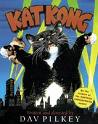 Retell: Explorers from Mousopolis land on an uncharted island where they meet the terrifying “beast” Kat Kong. They bring him back to Mousopolis in order to seek fame and fortune. When Kat Kong escapes his shackles, citizens are terrified.
Topics: cats, mice, greed, exploration, monsters, humor, puns
Units of Study: Fantasy
Tribes: mutual respect
Habits of Mind: finding humor
Reading Skills: monitoring for sense
My Thoughts: This is the adorable sequel to Pilkey’s book, Dogzilla. Similar to the style of Dogzilla, Kat Kong includes ‘cheesy’ puns and idioms, all related to cats. For example, when Kat Kong ravages the city the butcher cries, “The cat’s got my tongue!” I plan to read this book aloud when I want to focus on the reading skill monitoring for sense. I find that many books written for upper elementary students are highly engaging, but can also be really confusing. Many of my students are English Language Learners and often don’t understand when an author slips in a joke. Using Kat Kong as an a model could remind students to seek out humor throughout their reading.
80. Three Samurai Cats: A Story From Japan by Eric A. Kimmel
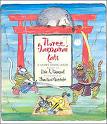 Retell: Many years ago, in a castle in Ancient Japan, there lived a powerful lord with a terrible rat problem. He tried everything in his power to chase the rat away, but the rat would not leave. He asked the senior monk to send his strongest samurais to defeat the rat. Both of them were thwarted. Finally, the senior monk sent his oldest and wisest samurai to the castle. He beat the rat with his ultimate weapon–patience.
Units of Study: Talking and Writing About Texts
Topics: Japan, rats, power, patience, samurais, monks, bullies
Habits of Mind: persisting, thinking flexibly, managing impulsivity
Reading Skills: monitoring for sense, interpretation
Writing Skills: incorporating the rule of three
Thoughts: When I read this book I immediately thought of those situations where we want to fight back. When someone insults us we want to think of a better insult to ‘squash’ that person. How often do we see students try and assert power over another with a put-down, a push, a punch? This book is great for discussing how bullies are truly defeated.
75. 14 Cows For America by Carmen Agra Deedy
 Retell: To the Maasai people the cow is life. In June 2002 Wilson Kimeli Naiyomah returned to his Kenyan village with a tragic story from New York. Kimeli presented a cow for blessing, in honor of those who died during the attacks of September 11th. 13 others offered their own cows for blessing. The cows remain in Kenya but they continue to be a symbol of hope and compassion to people around the world.
Topics: September 11th, Maasai, Kenya, compassion, cows, hope
Units of Study: Character, Social Issues, Talking and Writing About Texts
Tribes: mutual respect
Reading Skills: envisionment, inference, monitoring for sense
Thoughts: The tone of my classroom during this short first week of school has been so positive. Students are making new friends, and seem excited about school. I now approach planning my read aloud for the third day of school which happens to also be September 11th. It feels weird to start a discussion about tragedy and terrorism on the third day of school. I don’t want to spend a lot of time discussing frightening details of that day but on the other hand I don’t want to ignore the day altogether. I’ve decided to read 14 Cows For America because it focuses more on the idea of compassion rather than tragedy. I’m hoping that the last line of the book will prompt an interesting discussion: “Because there is no nation so powerful it cannot be wounded, nor a people so small they cannot offer mighty comfort.”
Thanks Beth for recommending this fabulous read aloud!
71. The Bee Tree by Patricia Polacco
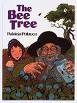 Retell: When Mary Ellen becomes bored of reading her grampa takes her on a hunt for a bee tree. People from the community join them as they run through the Michigan countryside chasing bees. By the end of the bee tree chase Mary Ellen learns that there are many similarities between chasing knowledge through the pages of a book and chasing bees.
Topics: reading, outdoors, adventure, grandparents, community, knowledge
Units of Study: Realistic Fiction, Personal Narrative, Authoring an Independent Reading Life
Tribes: personal best
Habits of Mind: responding with wonderment and awe
Reading Skills: monitoring for sense, interpretation
My Thoughts: I like reading this book at the beginning of the year when we author our own independent reading lives. I think this year I want to keep referring back to the book when we have particularly juicy conversations. When students ask interesting, provocative questions I could refer to them as ‘honey questions’. I need to make a banner with Grampa’s words: “[Adventure, knowledge and wisdom] do not come easily. You have to pursue them. Just like we ran after the bees to find their tree, so you must also chase these things through the pages of a book!”
70. Agatha’s Feather Bed: Not Just Another Wild Goose Story by Carmen Agra
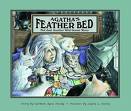 Retell: Agatha is famous for saying, “Everything comes from something.” One night, as she dreams on her new feather bed she is visited by naked geese who want their feathers back. Agatha comes up with an interesting compromise.
Topics: origins, fabric, responsibility
Units of Study: Social Issues
Tribes: mutual respect
Habits of Mind: responding with wonderment and awe, thinking flexibly
Reading Skills: monitoring for sense (understanding idioms and puns), inference
Writing Skills: using first-person narration, including puns
My Thoughts: In her author’s note Deedy writes, “What we choose to discuss with our children concerning ivory, whalebone, or the Brazilian rain forest is a matter of both individual conscience and collective responsibility. But the first step is to ask.” This book is all about inspiring people to ask, “Where does it come from?” Reading these words I’m reminded of a 4th grader who seemed so shocked when she discovered that leather is made from the hides of cows. The text contains a lot of interesting features. When describing her old mattress as ‘lumpy’ and ‘bumpy’ the letters actually look lumpy and bumpy. There are lots of cute idioms, puns and play-on-words. I know I’ll have to explain to my students why the name of the catalog (B.B. Lean) is so funny.
60. In My Momma’s Kitchen by Jerdine Nolen
 Retell: This is a heartwarming collection of small moments that all take place in a family’s kitchen: a daughter receives a music scholarship, children make up stories, women chitchat and a father makes his signature dish.
Topics: family, community, childhood
Units of Study: Personal Narrative, Memoir
Tribes: mutual respect
Reading Skills: monitoring for sense, envisionment, interpretation
Writing Skills: zooming in on small moments
My Thoughts: This is a great text to read at different points of the year. I originally purchased this book thinking it would be a good read aloud for the Personal Narrative unit. After reading it a second time, I realize that it’s also a great mentor text for the Memoir unit. Each story is connected by its setting–the kitchen. Using this text students could try out Nolen’s strategy of thinking of an important place (a room, a park) and write memories associated with that place. Since this book reads like an anthology of notebook entries, you could use this text when introducing the writer’s notebook.
59. My Ol’ Man by Patricia Polacco
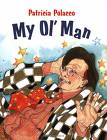 Retell: When she was growing up, Patricia Polacco spent the summers with her father and her grandmother. In this charming book, Polacco tells the story of the time they found a magical rock that helped them cope with hard times.
Topics: divorce, summer, dads, grandmothers, storytelling, layoffs, magic
Units of Study: Personal Narrative, Memoir
Tribes: attentive listening
Habits of Mind: responding with wonderment and awe
Reading Skills: prediction, monitoring for sense
Writing Skills: using commas in lists, crafting meaningful introductions
My Thoughts: Patricia Polacco is one of my favorite authors and I often read several of her books during the Personal Narrative unit. Most of her books are inspired by moments, people, and places in her life. In the beginning of My Ol’ Man, there are authentic photographs from Polacco’s childhood. This book would be great to read as you are teaching how writers use artifacts to generate notebook entries. When writing about people, my students often make lists of what they like about a person. This book will be great to use as a mentor text to help students move from list writing (“My dad likes tacos. My dad takes me places.) to narrative writing (“One time my dad brought out this book of stamps. I’ll never forget the time when my dad took me for a ride in his 1947 GMC truck.”)
52. Night of the Gargoyles by Eve Bunting
 Retell: During the day gargoyles suffer a lot of abuse. They get rained on, they endure the heat and they tolerate nasty pigeons. However, during the evening the gargoyles come out to play.
Topics: gargoyles, play, perspectives, night
Units of Study: Fantasy
Reading Skills: envisionment, monitoring for sense
Writing Skills: using descriptive language, incorporating interesting vocabulary
My Thoughts: I never realized how much I love the works of Eve Bunting. This is the third book of hers that I’ve reviewed. Night of the Gargoyles might be a nice book to read on or prior to Halloween. It’s spooky but not too creepy. It’s also a good book for introducing the idea that there are different perspectives other than our own. A lot of writers have created fabulous stories by considering the perspective of animals, objects, insects, etc. (ex. James and the Giant Peach, Charlotte’s Web). This could then lead to a discussion about using personification in our writing.
 Teachable Texts