Posts tagged ‘interpretation’
109. Encounter by Jane Yolen
 Retell: An account of Columbus’ ‘discovery’ of the Americas told from the point of view of a Taino boy.
Topics: Christopher Columbus, explorers, gold, Taino, trade, slaves
Units of Study: Nonfiction, Historical Fiction, Content-Area
Tribes: mutual respect
Reading Skills: interpretation, envisionment, inference
Writing Skills: using figurative language
My Thoughts: Yesterday was Columbus Day and to celebrate, here is one of my favorite Columbus Day read alouds. Since the story is told from the perspective of a child, students will be able to relate to how powerless the boy feels. He warns his people not to trust the “strange creatures” that were “spat out of the canoes”, but no one listens to him. This is a fantastic text for teaching inference. Yolen takes great care not to use terms that would have been foreign to the Taino people. Readers must constantly infer what the boy is describing. For example, Yolen describes beards as “hair growing like bushes on their chins”. When Columbus claims the island for Spain she describes how people “knelt before their chief and pushed sticks into the sand”. It’s important to model how readers constantly consult the illustration while reading the text in order to construct meaning.
108. Who Eats What? Food Chains and Food Webs by Patricia Lauber
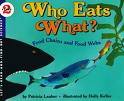 Retell: This book explains how energy flows within food chains and food webs. It also describes the importance of plant life.
Topics: food chains, food webs, interconnectedness, plants, animals, endangered species, ecology
Units of Study: Nonfiction, Content-Area
Reading Skills: envisionment, determining importance, interpretation, reading text features
Writing Skills: including diagrams to illustrate an idea
My Thoughts: Though our food chain unit is a few months away, I’m on the search for future read alouds. This is a great, straight-forward text for introducing food chains and food webs. I like the diagrams throughout the text. This would be a great text to read to introduce the idea of a diagram. After reading the text aloud, students could make food webs of their breakfast or lunch that day.
98. The Bus Ride by William Miller
 Retell: William Miller recreates the story of Rosa Parks and imagines what would have happened if a young girl refused to give up her seat.
Topics: taking a stand, segregation, laws, civil disobedience, bravery, boycotts, power
Units of Study: Social Issues, Historical Fiction, Character
Tribes: right to pass
Habits of Mind: taking responsible risks
Reading Skills: interpretation, prediction
Writing Skills: balancing description, reflection and dialogue
My Thoughts: When I read this book I thought back to a unit our fifth grade teachers did last year that was focused on power. Students looked at power structures in the classroom, in school and at home. Students looked at times when they were powerless and times when they had the power. When reading this book it would be interesting to discuss the question, “Who has the power?” This story inspires children to think about what risks they would be willing to take. Imagine if an entire classroom decided to boycott McDonalds because they disagreed with how the company targets children. Or what would happen if a classroom decided to boycott toys made in places that use child labor?
96. Jim and the Beanstalk by Raymond Briggs
 Retell: Jim discovers a mysterious vine outside of his window one day. He follows it up and up and encounters a giant. This giant however is not very ferocious. He has lost his sight, his teeth and his hair. With Jim’s help the giant acquires glasses, dentures and a wig.
Topics: curiosity, measurement, fairy tales, act of kindness
Units of Study: Fantasy, Talking and Writing About Texts
Tribes: mutual respect, appreciations/no put-downs
Habits of Mind: striving for accuracy and precision
Reading Skills: monitoring for sense, prediction, interpretation
Writing Skills: incorporating the rule of three
My Thoughts: This can be filed under “stories with a twist”. (See The Paper Bag Princess post). This is a spoof/sequel to the story, “Jack and the Beanstalk”. In this story, the main character is nice to the giant, drastically changing the moral of the story. It would be interesting to plan a mini read aloud where you read twisted fairy tales. With older kids, it may be great to use twisted fairy tales to work on interpretation. Students could examine questions such as: How does the moral of the story change when the characters act differently? Why do you think the author chose to rewrite the famous fairy tale? What was he/she trying to teach?
94. This Land is Your Land by Woody Guthrie, Paintings by Kathy Jakobsen
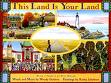 Retell: Woody Guthrie’s famous song in picture book form. The book includes a tribute by Pete Seeger and information about Guthrie’s life.
Topics: America, Great Depression, Dust Bowl, traveling, migrant camps
Units of Study: Social Issues, Talking and Writing About Texts, Personal Essay
Tribes: mutual respect
Habits of Mind: responding with wonderment and awe
Reading Skills: interpretation, envisionment
My Thoughts: I started a ‘song of the week’ tradition in my classroom this year. Each day while students enter the classroom and unpack we listen to a song together. By the end of the song students are expected to have unpacked and come to the rug with their lyrics. At the end of the week we sing the song together. This week’s song just happens to be “This Land is Your Land”. This morning while on my walk I passed by a bookstore which displayed the picture book version of the song in its window. I was so pleased! Kathy Jakobsen’s paintings compliment the lyrics well. (She also illustrated the book, My New York.) I can’t wait to read this to my students this week. Seeing the pictures will help them visualize the lyrics of the song. In the version my students sing there are three verses that are omitted. This is one of them:
“In the shadow of the steeple I saw my people; By the relief office I seen my people; As they stood there hungry, I stood there asking, Is this land made for you and me?”
It made me wonder why I had never heard these lyrics growing up. I hope to have a lively whole group discussion after reading this book aloud. I also plan on revisiting this text during the Personal Essay unit when I’ll ask students to observe the world around them and ask difficult questions.
81. The Tequila Worm by Viola Canales
 Retell: Sophia is an intelligent, hardworking girl from McAllen, Texas. When she receives a scholarship for a boarding school 400 miles, she must learn to live in two different worlds. She longs to explore and be accepted by the people at St. Lukes, but she also wishes to be a good comadre and participate in her family’s traditions.
Topics: overcrowding, barrios, family, traditions, Mexican-Americans, friendship, ambition, choices, siblings, Day of the Dead, boarding school, scholarships
Units of Study: Social Issues, Character, Talking and Writing About Texts, Realistic Fiction
Tribes: appreciations/no put-downs
Habits of Mind: thinking flexibly, thinking interdependently
Reading Skills: inference, synthesis, interpretation, envisionment
Writing Skills: bringing out the heart of a story
Thoughts: Though I believe this book is probably most appropriate for middle school students, I wouldn’t hesitate reading sections of this book to my fourth graders. There are great examples of how writers collect stories from their lives and how people become the change they want see in the world. I love Canales’ description of the various rituals and traditions of Sofia’s family. The relationship between Sofia and Berta is interesting. They made very different choices. Sofia chose to move far away and attend college. Berta married young, stayed in her hometown and had two children. Readers could have an interesting discussion about the pros and cons of both characters’ choices.
80. Three Samurai Cats: A Story From Japan by Eric A. Kimmel
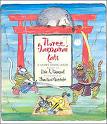 Retell: Many years ago, in a castle in Ancient Japan, there lived a powerful lord with a terrible rat problem. He tried everything in his power to chase the rat away, but the rat would not leave. He asked the senior monk to send his strongest samurais to defeat the rat. Both of them were thwarted. Finally, the senior monk sent his oldest and wisest samurai to the castle. He beat the rat with his ultimate weapon–patience.
Units of Study: Talking and Writing About Texts
Topics: Japan, rats, power, patience, samurais, monks, bullies
Habits of Mind: persisting, thinking flexibly, managing impulsivity
Reading Skills: monitoring for sense, interpretation
Writing Skills: incorporating the rule of three
Thoughts: When I read this book I immediately thought of those situations where we want to fight back. When someone insults us we want to think of a better insult to ‘squash’ that person. How often do we see students try and assert power over another with a put-down, a push, a punch? This book is great for discussing how bullies are truly defeated.
76. My Best Friend by Mary Ann Rodman
 Retell: Lily spends each Wednesday at the neighborhood pool. She has decided that Tamika will be her best friend. Tamika however does not seem interested in being Lily’s friend. Lily tries many things to win over Tamika. She tries to dress the same and she shares her popsicles with her but to no avail. Lily eventually becomes friends with Keesha who doesn’t need to be impressed.
Topics: summer, pools, friendship, popularity
Units: Character, Social Issues, Talking and Writing About Texts
Tribes: mutual respect, appreciations/no put-downs, right to pass
Reading Skills: prediction, interpretation
Writing Skills: balancing dialogue with reflection and description
My Thoughts: This book does a great job of addressing the issue of popularity. Every year I see students going out of their way to impress others who don’t give them the time of day. It could be an interesting book to use when discussing the ‘right to pass’. Though Tamika should have been nicer to Lily, she has the right to pass on her offer of friendship.
Thanks again Beth for another great read aloud.
71. The Bee Tree by Patricia Polacco
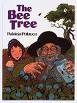 Retell: When Mary Ellen becomes bored of reading her grampa takes her on a hunt for a bee tree. People from the community join them as they run through the Michigan countryside chasing bees. By the end of the bee tree chase Mary Ellen learns that there are many similarities between chasing knowledge through the pages of a book and chasing bees.
Topics: reading, outdoors, adventure, grandparents, community, knowledge
Units of Study: Realistic Fiction, Personal Narrative, Authoring an Independent Reading Life
Tribes: personal best
Habits of Mind: responding with wonderment and awe
Reading Skills: monitoring for sense, interpretation
My Thoughts: I like reading this book at the beginning of the year when we author our own independent reading lives. I think this year I want to keep referring back to the book when we have particularly juicy conversations. When students ask interesting, provocative questions I could refer to them as ‘honey questions’. I need to make a banner with Grampa’s words: “[Adventure, knowledge and wisdom] do not come easily. You have to pursue them. Just like we ran after the bees to find their tree, so you must also chase these things through the pages of a book!”
67. Love That Dog by Sharon Creech
 Retell: “I don’t want to because boys don’t write poetry. Girls do.” Jack reluctantly keeps a poetry journal. With encouragement from his teacher he begins to write about his dog. By using famous poems as mentor texts, Jack learns to be a prolific poet.
Topics: poetry, school, pets, loss, writer’s block
Units of Study: Independent Writing Projects, Poetry, Social Issues, Character
Tribes: personal best
Habits of Mind: striving for accuracy, thinking interdependently, thinking flexibly
Reading Skills: inference, interpretation, making connections
Writing Skills: using mentor texts to improve writing
My Thoughts: This is one of my favorite books by Sharon Creech. She captures the voice of a young writer so well. I consider this a read aloud though I often use it as a text for doing shared reading. Since each entry is dated, one could conceivably read the pages on or close to the dates in the book–a read aloud that lasts all year long. In the back of the book are poems by: Walter Dean Meyers, William Carlos Williams, Robert Frost and Valerie Worth. You could use the poems for shared reading at the same time you read the book aloud.
 Teachable Texts