Posts tagged ‘family’
54. Two Bobbies: A True Story of Hurricane Katrina, Friendship, and Survival by Kirby Larson and Mary Nethery
 Retell: This is the true story of how a stranded cat and dog survived the aftermath of Hurricane Katrina.
Topics: pets, Hurricane Katrina, survival, friendship, family, homelessness
Units of Study: Social Issues, Nonfiction, Talking and Writing about Texts
Tribes: personal best, mutual respect
Habits of Mind: taking responsible risks, thinking flexibly
Reading Skills: envisionment, inference, interpretation
My Thoughts: This is a book that I didn’t mind buying brand new and in hardcover. I found this in a bookstore in Ashland, Oregon. The cashier and I spent a few moments cooing over her ridiculously cute it is. In addition to being an amazingly touching story it’s a great text to read to learn about Hurricane Katrina. It could also be a great read aloud during an interpretation unit. On one level it’s a story about survival but it could also be interpreted as a story about friendship between two individuals who come from groups who are normally not friendly to each other.
50. Home: A Collaboration of Thirty Distinguished Authors and Illustrators of Children’s Books to Aid the Homeless
 Retell: An anthology of poetry and prose all based on the subject ‘home’. Many famous writers and illustrators contributed pieces such as: Virginia Hamilton, Aliki, Jon Sciszka, Jane Yolen and more.
Topics: home, hiding places, family, children
Units of Study: Personal Narrative, Memoir, Launching the Reading Workshop
Habits of Mind: thinking flexibly, creating-imagining-innovating
Reading Skills: making connections, envisionment, monitoring for sense
Writing Skills: zooming in on small moments, using sensory details
My Thoughts: This is a handy resource for the Personal Narrative unit. Many of the poems and stories within the anthology will be great ‘small moment’ mentor texts. Home contains some great pieces that will encourage students as they author their independent reading lives. The story “Comfortable Old Chair” by Karla Kuskin features a girl who loves reading in her favorite chair. In the poem, “Elevator” Lucille Clifton describes a girl who reads in the corner of her building’s elevator. I plan on using these pieces to show how dedicated readers take charge of their lives at home and find a place that’s entirely theirs. I knew a student who used to have trouble finding a quiet space to read in his crowded apartment. He started scheduling bathroom reading time. He would bring in pillows, blankets and books and make a comfy reading spot in the bathtub.
41. Shanghai Messenger by Andrea Cheng
 Retell: Xiao Mei is invited by her uncle to visit China. At first she is reluctant to travel by herself and once she arrives she finds the new setting lonely and disorienting. She eventually adjusts and begins to appreciate her extended Chinese family.
Topics: Chinese, China, poetry, family, mixed-race, language barrier, traveling, homesickness
Units of Study: Character, Personal Narrative, Social Issues
Tribes: appreciations/no put-downs
Reading Skills: interpretation, inference, envisionment, making connections
Writing Skills: incoporating foreign languages, zooming in on small moments, including sensory details
My Thoughts: I love how this story is told as a series of free verse poems. I plan on reading this book aloud when I teach how writers zoom in on small moments. Each poem is a small moment from her trip. It can be a good mentor text for writers who want to write about a vacation and are tempted to write about the entire vacation. Cheng incorporates Chinese vocabulary throughout the story. She even includes a Chinese glossary with a pronunciation guide which will aid readers when they attempt to read it aloud. It’s also a good book to read when studying character change. In the beginning, Xiao Mei is afraid to go to China by herself and thinks she will never adjust to life in China. By the end she develops into a grown-up girl who is both completely American and completely Chinese.
39. Mama Loves Me From Away by Pat Brisson
 Retell: Sugar and her mama share the same birthday. Sugar enjoys listening to her mother’s stories. She especially misses them now that her mother is in prison. Her mother finds a way to share her stories even from far away.
Topics: mothers, families, prison, stories, birthdays
Units of Study: Social Issues, Personal Narratives, Realistic Fiction
Tribes: attentive listening
Reading Skills: interpretation, questioning, empathy
Writing Skills: writing with a balance of description and reflection, keeping a writers notebook
My Thoughts: This is a moving story about a girl who is dealing with the fact that her mother is imprisoned. There aren’t many published stories like this in the world. It’s a great model to use when you teach your students to write about stories you wish belonged in the world–the ones that show aspects of your life or struggles you are going through. The author never reveals what the mother did to land her in prison which I think is a nice touch. The book isn’t about the mother, but about how much her daughter misses her.
29. Saying Goodbye to Lulu by Corinne Demas
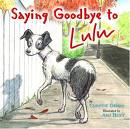 Retell: A young girl has difficulty saying goodbye to her beloved dog Lulu. With help from her parents, she learns how to move on without forgetting the wonderful memories of Lulu.
Topics: loss, dogs, reflection, death, dying, pets, grief, memories, family
Units of Study: Personal Narrative
Reading Skills: synthesis, making connections
Writing Skills: creating flashbacks, zooming in on small moments, using sensory details
My Thoughts: I shouldn’t have read this book in a cafe. Let’s just say that my eyes were quite red and puffy after reading this book. It is however, a great text for discussing various stages of the grieving process. She goes through denial, anger, sadness, reflection and finally acceptance. The author zooms in on small but important details (“I missed the sound of her tail going thump, thump while she waited for me at the bottom of the stairs…”) making it a great mentor text for writing narratives.
27. The Road to Santiago by D.H. Figueredo
 Retell: Every year Figueredo and his family return to Santiago, Cuba for Christmas. When calls for revolution sounded throughout Cuba the author recalls how his family almost didn’t make it home for his favorite holiday.
Topics: Cuba, Christmas, rebels, family, kindness of strangers, traditions
Units of Study: Personal Narrative, Memoir, Historical Fiction
Tribes: personal best, mutual respect
Reading Skills: making connections, monitoring for sense
Writing Skills: zooming in on small moments, incorporating vocabulary from another language, generating notebook ideas
My Thoughts: A common thread thoughout the story is kindness. Each scene highlights how people were kind to the author’s family: a mill worker helps them fix a flat tire, a young man gives up his seat on the bus. Though this is technically a personal narrative I could see reading this book during a unit on writing historical fiction. The story takes place during the 1950s revolutionary period in Cuba. He threads details of the time period throughout the story making this a good historical fiction mentor text.
25. Hewitt Anderson’s Great Big Life by Jerdine Nolen
 Retell: Hewitt Anderson has it all. Loving parents, a gorgeous house and fabulous birthday parties. The only problem is that Hewitt wasn’t the son his parents expected. Hewitt’s parents, and indeed the entire town, are giants. This causes a lot of problems but soon they realize that with a few modifications they can still live a ‘normal’ life.
Topics: acceptance, family, giants, differences, size
Units of Study: Fantasy, Character
Tribes: mutual respect, personal best
Reading Skills: monitoring for sense, envisionment
Writing Skills: using interesting vocabulary
My Thoughts: This is a nice twist on “Jack and the Beanstalk”. When next I teach a Fantasy unit I would like to either read this while immersing students in the genre, or use it as a writing mentor text. The characters are African-American which students don’t often encounter when reading fantasy or fairy tales. The language in the book is gorgeous. Since there are many different words for ‘large’ and ‘small’ throughout the story, one could use this book during a lesson on synonyms.
17. Grandfather’s Journey by Allen Say
 Retell: Allen Say tells the story of how his grandfather made a home in both a village in Japan and in a city in America.
Topics: grandparents, journeys, San Francisco, Japan, World War II, California, travelling, home, being homesick, family
Units of Study: Memoir, Social Issues
Reading Skills: envisionment, interpretation, inference, making connections
Writing Skills: adding setting details, developing the heart of a story, including reflection, including endings that connect to the beginning
My Thoughts: I think I have a soft spot in my heart for this book because I too get homesick for more than one place. Allen Say’s illustrations remind me of faded photographs and automatically put me into a reflective, sentimental mood. This is a perfect text to use during the Memoir unit. Though it starts out as a story about his grandfather, it ends up being more about the author himself.
12. Families are Different by Nina Pellegrini
 Retell: Nico is an adopted girl from Korea who begins to feel different from her friends because she doesn’t resemble her parents. After closer observation, Nico realizes that there are many different types of families.
Topics: adoption, divorce, families
Units of Study: memoir, personal narrative, social issues
Tribes: appreciations/no putdowns (appreciating our loved ones), mutual respect
Reading Skills: making connections
Writing Skills: developing the heart of a story
My Thoughts: Do not expect subtlety when reading this book. The title hits you over the head with the book’s message. I can’t imagine using this book for higher level reading work. However, I think it could be a good mentor text when teaching writers to revise by developing the heart of a story. Families are Different is written in a style similar to some of the notebook entries my students tend to write: “Hello, my name is______. I live in ______. I’m going to tell you all about my friends.” Halfway through the story, however the narrator begins to reveal some of her thoughts and emotions about being adopted. I can see reading this story and asking students to identify when the author started getting to the heart of the story. I would also read this during a community circle to encourage discussion about respecting differences.
10. Come On, Rain! by Karen Hesse
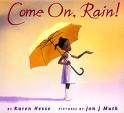 Retell: A young girl anticipates the long awaited thunderstorms that will cool down the humid city she lives in.
Topics: heat, rain, family, summer, cities, thunderstorms
Units of Study: personal narrative, poetry
Reading Skills: envisionment, making connections
Writing Skills: including similes, using active verbs, personification, alliteration
My Thoughts: This book makes me wish it was more humid outside right now. Every New Yorker without air conditioning will be able to relate to this book. I love how Hesse uses poetic devices throughout this small moment story, making it a nice mentor text for personal narrative or poetry unit. She includes personification: “The smell of hot tar and garbage bullies the air…” There is alliteration and assonance: “The first drops plop down big, making dust dance all around us.” Hesse teaches young writers to slow down and zoom in on ordinary moments.
 Teachable Texts