Posts tagged ‘envisionment’
25. Hewitt Anderson’s Great Big Life by Jerdine Nolen
 Retell: Hewitt Anderson has it all. Loving parents, a gorgeous house and fabulous birthday parties. The only problem is that Hewitt wasn’t the son his parents expected. Hewitt’s parents, and indeed the entire town, are giants. This causes a lot of problems but soon they realize that with a few modifications they can still live a ‘normal’ life.
Topics: acceptance, family, giants, differences, size
Units of Study: Fantasy, Character
Tribes: mutual respect, personal best
Reading Skills: monitoring for sense, envisionment
Writing Skills: using interesting vocabulary
My Thoughts: This is a nice twist on “Jack and the Beanstalk”. When next I teach a Fantasy unit I would like to either read this while immersing students in the genre, or use it as a writing mentor text. The characters are African-American which students don’t often encounter when reading fantasy or fairy tales. The language in the book is gorgeous. Since there are many different words for ‘large’ and ‘small’ throughout the story, one could use this book during a lesson on synonyms.
23. Mr. George Baker by Amy Hest
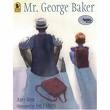 Retell: Hundred-year-old George Baker and his young neighbor Harry are friends. Each day they wait for the school bus that brings them both to school.
Topics: friendship, reading, literacy, growing old, learning, music, small moments, friendship
Units of Study: Personal Narrative, Social Issues
Tribes: personal best, mutual respect
Reading Skills: envisionment, inference, interpretation
Writing Skills: zooming in on small moments, alliteration, onomatopoeia, using sensory details
My Thoughts: This is a slow-paced story that easily lends itself to teaching small moments. Though you could also read this book aloud with a social issues lens, the author spends most of the story describing the moments just before going to school. It would be a good mentor text for paying attention to how authors incorporate sound into their writing.
17. Grandfather’s Journey by Allen Say
 Retell: Allen Say tells the story of how his grandfather made a home in both a village in Japan and in a city in America.
Topics: grandparents, journeys, San Francisco, Japan, World War II, California, travelling, home, being homesick, family
Units of Study: Memoir, Social Issues
Reading Skills: envisionment, interpretation, inference, making connections
Writing Skills: adding setting details, developing the heart of a story, including reflection, including endings that connect to the beginning
My Thoughts: I think I have a soft spot in my heart for this book because I too get homesick for more than one place. Allen Say’s illustrations remind me of faded photographs and automatically put me into a reflective, sentimental mood. This is a perfect text to use during the Memoir unit. Though it starts out as a story about his grandfather, it ends up being more about the author himself.
10. Come On, Rain! by Karen Hesse
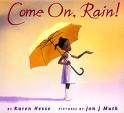 Retell: A young girl anticipates the long awaited thunderstorms that will cool down the humid city she lives in.
Topics: heat, rain, family, summer, cities, thunderstorms
Units of Study: personal narrative, poetry
Reading Skills: envisionment, making connections
Writing Skills: including similes, using active verbs, personification, alliteration
My Thoughts: This book makes me wish it was more humid outside right now. Every New Yorker without air conditioning will be able to relate to this book. I love how Hesse uses poetic devices throughout this small moment story, making it a nice mentor text for personal narrative or poetry unit. She includes personification: “The smell of hot tar and garbage bullies the air…” There is alliteration and assonance: “The first drops plop down big, making dust dance all around us.” Hesse teaches young writers to slow down and zoom in on ordinary moments.
9. Dogteam by Gary Paulsen
 Retell: A moonlit night inspires the narrator to take his dogs on an exciting night ride.
Topics: dogs, dog sledding
Units of Study: personal narrative, content-area writing
Reading Skills: envisionment
Writing Skills: using active verbs, zooming in on a small moment, incorporating sensory details, adding suspense, inserting commas and semicolons, repetition
My Thoughts: Dogteam reads more like prose. In addition to including beautiful imagery, Paulsen’s book has many examples of how writers use all senses to describe a moment in time. Though I would categorize this as a personal narrative, one could also use this as a mentor text for writing nonfiction poetry.
5. The Girl Who Lost Her Smile by Karim Alrawi
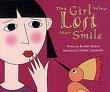 Retell: One day in Baghdad a girl named Jehan loses her smile. Her father searches the world for someone who will help his daughter find her smile.
Topics: Baghdad, art, folk tales
Units of Study: Fantasy, Creating Community, Geography
Tribes: Personal Best, Mutual Respect
Reading Skills: envisionment, making connections, prediction
My Thoughts: This is a very quick read aloud which could be good for discussing the expectation of doing one’s personal best and the satisfaction it brings. Throughout the book Jehan’s father brings her the most beautiful art in the world to cheer her up. However, it is not until she participates in the arduous process of making a wall gleam that she finally finds her smile. It woule be nice to use this as a community building mentor text. We can discuss how Jehan’s family did their best to cheer her up and how we should try and give our friends encouragement and help them find their smiles when they are down. Her father brings art from around the world to cheer her up. I could see asking students to find those places on a world map to practice their geography skills.
4. Neeny Coming, Neeny Going by Karen English
 Retell: Neeny and her cousin were raised on Daufuskie Island, located off the coast of South Carolina. Years before, Neeny went back to the mainland to live with her mother. When Neeny returns to the island, her cousin realizes that Neeny is not the same cousin she grew up with.
Topics: change, family, environmental issues
Units of Study: Social Issues, Character
Tribes: mutual respect
Reading Skills: envisionment, prediction, inference, monitoring for sense, interpretation, making connections
Writing Skills: writing with voice
My Thoughts: This is a great book for the Social Issues unit. I can imagine a juicy discussion about how much the mainland changed Neeny. Many of my students travel back to their home countries during vacation. I think they could make a lot of connections to this book. I can see using this book as a mentor text for showing how authors write with a distinctive voice.
3. Uptown by Bryan Collier
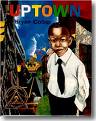 Retell: A young boy writes about his observations of Harlem.
Topics: neighborhoods, Harlem, community
Units of Study: Personal Narratives, Geography of New York
Reading Skills: envisionment
Writing Skills: writing small moments, including setting details, writing metaphors and similes
My Thoughts: This beautiful book shows that writers observe the world around them. Each observation is something that can turn into powerful writing. I plan on using this book as a mentor text for teaching about metaphors and similes. Collier writes, “Uptown is a caterpillar. Well, it’s really the Metro-North train as it eases over the Harlem River.” Though my students don’t live in Harlem, I’m hoping that reading this book together will show them that they need to share their world with others through writing. The world needs more books about Sunset Park, Brooklyn! For 4th grade teachers in New York, I can see using this book during a Geography unit. Perhaps after reading Uptown, students could locate the landmarks in the book on a subway map.
2. Three Days on a River In a Red Canoe by Vera B. Williams
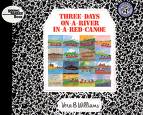
Retell: After purchasing a red canoe at a yard sale, a family goes on a three-day canoe trip.
Topics: Family, adventure, camping
Units of Study: Personal Narratives, Launching the Writers Notebook
Tribes: Personal Best
Reading Skills: envisionment, making connections, inference
Writing Skills: incorporating details about setting, using transition words, including sensory details, writing endings that connect to the beginning
My thoughts: This book has great teaching potential. As the marbled cover suggests it reads like someone’s writers notebook. Each page describes a scene from the camping trip. I can imagine using this book when I introduce writers notebooks to my students. Each page is a small moment that could be stretched into a larger story. The colorful, colored pencil drawings will be inspiring for young artists who like to draw pictures with each notebook entry. I plan on using this as a mentor text for students who want to write endings that connect to an earlier scene.
1. Thank You Mr. Falker by Patricia Polacco
 Retell: Trisha has a difficulty with reading. Though admired for her artistic ability, she gets teased at school for being dumb. That is until her teacher, Mr. Falker, stands up for her and teaches her to read.
Topics: bullying, honoring the different ways we’re smart, family relationships, death of a grandparent, importance of small group instruction
Units of Study: Personal Narrative, Character, Social Issues
Tribes: mutual respect, personal best, appreciations/no put-downs
Reading Skills: envisionment, inference,
My Thoughts: This is a read aloud classic. Since I start every school year off reading this book to my class, I thought it was only proper to start my blog year with one of my favorite read alouds. Thank You Mr. Falker is one of those books that kids have heard a thousand times but never get tired of it. I usually refer to this book and reread parts of it in several units throughout the year.
 Teachable Texts