Posts tagged ‘content-area’
55. The Bumblebee Queen by April Pulley Sayre
 Retell: This book describes the life cycle of a bumblebee queen.
Topics: bumblebees, life cycles, habitats, pollination
Units of Study: Nonfiction, Content Area Reading and Writing
Reading Skills: envisionment, questioning, determining importance
Writing Skills: using commas to separate clauses
My Thoughts: I like how this book is structured. It has two threads–a narrative thread and an expository thread. In bold letters the text tells a story about the amazing work of a bumblebee queen. On every other page or so there are fact bubbles that give more detailed information about bumblebees. I plan on using this book when we do our Content Area unit which will focus on life cycles and habitats.
49. Fireflies in the Dark: The Story of Friedl Dicker-Brandeis and the Children of Terezin by Susan Goldman Rubin
 Retell: Learn about the amazing life of Friedl Dicker-Brandeis, who taught art to children in the Terezin Camp during the Holocaust. The book includes several photos, drawings, paintings and writings from her students, many of whom did not survive.
Topics: art, holocaust, ghetto, Terezin, Nazis, school, poetry, drama, resiliency
Units of Study: Personal Narrative, Nonfiction, Content Area Reading and Writing, Social Issues
Tribes: personal best, mutual respect
Habits of Mind: persisting, thinking flexibly, creating-imagining-innovating, thinking interdependently, remaining open to continuous learning
Reading Skills: envisionment, determining importance, interpretation, inference
Writing Skills: launching writers notebook, zooming in on small moments
My Thoughts: One can learn many lessons from this book. I am impressed by Dicker-Brandeis’ devotion to learning. When she discovered that she would be sent to Terezin she chose not to bring items for herself, but art supplies for the children she knew would be in the camp. Through art her students were able to both escape and record the horrors around them. Though I don’t plan on teaching a unit about the Holocaust this year, I may choose to read a portion of this book when emphasizing how writers notebooks can be powerful places to record our memories, our thoughts and our struggles. It is important for our students to realize that their experiences, just like those recorded at Terezin, are important and should be recorded.
42. River of Dreams: The Story of the Hudson River by Hudson Talbott
 Retell: A beautifully illustrated history of the Hudson River.
Topics: Hudson River, New York, Native Americans, Henry Hudson, dreamers, Dutch, explorers, British, American Revolution, Robert Fulton, Erie Canal, trade, Hudson River School Painters, Industrial Revolution, environment, Franny Reese, pollution, immigration
Units of Study: Nonfiction, Social Issues, Content Area
Tribes: mutual respect
Reading Skills: envisionment, determining importance, questioning, synthesis
Writing Skills: including expository text features
My Thoughts: My eyes grew wide when I spotted this book in Barnes and Noble this afternoon. This book is treasure for New York 4th grade teachers who will be embarking on a year-long study of New York history. A timeline painted in the shape of the Hudson River winds throughout the book noting historic events including: the American Revolution, the commercial success of Fulton’s steamboat, the opening of the Erie Canal, and the Scenic Hudson Decision. I think I may read this book in September when we discuss what we will be learning in Social Studies this year. When we get to a new unit, I think I’ll reread corresponding sections of River of Dreams. Talbott also highlights writers and artists who were inspired by the Hudson River such as Washington Irving, James Fenimore Cooper and the Hudson River School Painters. This is a great book to use when discussing trade and industry. There is a beautiful painting in the book that shows the Hudson River bursting with steamboats and schooners–“America’s first superhighway.” I like how the story includes the environmental impact of industrial pollution and the story ends with a strong message–it’s up to us to protect the beauty of this river.
32. Team Moon: How 400,000 People Landed Apollo 11 on the Moon by Catherine Thimmesh
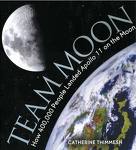 Retell: Thimmesh tells the story of the Apollo 11 mission. It includes several quotes, interviews and amazing photographs from the moon landing.
Topics: moon landing, space, Apollo 11, teamwork, goals, problem-solving, perseverance
Units of Study: Nonfiction, Content Area, Personal Essay
Tribes: attentive listening, mutual respect, personal best
Reading Skills: envisionment, inference, interpretation, determining importance
Writing Skills: using descriptive language, inserting quotations, using dashes, using ellipses
My Thoughts: To commemorate its 40th anniversary I plan to read at least one book about the moon landing this year. What I love about this particular book is its emphasis on teamwork. As the title suggests, Apollo 11 was successful because of the dilligence of several hundred-thousand people working together in teams trying to accomplish one goal. It’s a dense book so I can see reading only a few sections at a time. This could be used as a rich mentor text for writing nonfiction. Thimmesh writes with excitement and enthusiasm making the text very engaging.
31. The Greatest Power by Demi
 Retell: Emperor Ping, the boy emperor of China, appreciates honesty and harmony. He wants to appoint an honest and wise prime minister so he decides to hold a contest. The child who can think of the greatest power in the world will become the next prime minister. Children far and wide prepare presentations for the emperor. A young girl named Sing sits by a lotus pond and comes up with an answer that is quite different from the rest.
Topics: technology, beauty, military, power, money, life, life cycle, China
Units of Study: Talking and Writing About Texts, Content Area
Tribes: personal best, appreciations/no put downs
Reading Skills: interpretation, prediction
Writing Skills: repetition
My Thoughts: Fifth grade teachers at my school do this great unit on power. They examine power structures at home, in the neighborhood, in the classroom, at school, and so on. The Greatest Power could be a great companion to that unit. It will spark discussions about what makes a powerful group or a powerful nation. I could also see this book being used during a unit on the life cycle. Sing after sitting by apond and contemplating a lotus flower is fascinated by its life cycle. She determines that life is the greatest power on earth.
30. A Young People’s History of the United States by Howard Zinn
 Retell: Like the title suggests, this is a young people’s version of his famous book, A People’s History of the United States. Together with Rebecca Stefoff, Zinn manages to tell a version of history that attempts to include the perspectives of groups that are usually left out (women, people of color, Native people, children, etc.)
Topics: United States, history, exploration, racism, slavery, colonialism, rights, justice, revolution, war, emancipation, industrialization, immigration, empire, protests, terrorism, resistance, freedom of speech
Units of Study: Content Area, Nonfiction, Social Issues, Personal Essay, Historical Fiction
Tribes: mutual respect, personal best
Reading Skills: questioning, synthesis, prediction, determining importance, inference, interpretation
Writing Skills: using evidence to support a thesis or main idea, inserting anecdotes and quotations
My Thoughts: I was so thrilled to find this book on the shelves. I read A People’s History of the United States several years ago and often reread sections before embarking on Social Studies units. Though I thought this book was going to present a child’s perspective of historical events, Zinn does manage to tuck in a few stories of young people working to make a difference. For example, he includes the story about how children started the first milll strike in Paterson, New Jersey. I intend to read aloud exerpts from this book to support and/or challenge what they may be reading in their own nonfiction texts. This book is also available in two volumes. Volume I covers Columbus to the Spanish-American War. Volume II covers World War I to the wars in Iraq and Afghanistan.
28. The Librarian of Basra: A True Story from Iraq by Jeanette Winter
 Retell: This is the true story of Alia Muhammad Baker. During U.S. air raids in 2003, Baker managed to hide and save over 30,000 books from destruction.
Topics: libraries, Iraq, heroism, action, war, books, community
Units of Study: Nonfiction, Content-Area Reading and Writing, Journalism
Tribes: mutual respect, personal best
Reading Skills: prediction, questioning
Writing Skills: using dashes
My Thoughts: Stories like this one restores my faith in humanity. Alia Muhammad Baker’s story is a great one to share with kids, many whom don’t even know that the U.S. is involved in two wars at the moment. Her story was originally published back in 2003 in the The New York Times. Reading The Librarian of Basra in conjunction with the The New York Times article could be a great way to emphasize the role of a journalist to bring to light stories that would otherwise go unnoticed. I plan on reading this at the beginning of the year to reiterate the importance of reading.
Click her to read Shaila K. Dewan’s 2003 New York Times article about Alia Muhammad Baker
24. Owen and Mzee: The Language of Friendship by Isabella Hatkoff, Craig Hatkoff, and Dr. Paula Kahumbu
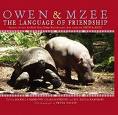 Retell: This sequel continues the story of Owen and Mzee, the beloved baby hippo and the anti-social tortoise, who were brought together during the aftermath of the tsunami of 2004.
Topics: tsunami, hippos, tortoises, wildlife, preservation, Kenya, friendship, biology, animal habitats, narrative nonfiction, biography
Units of Study: Nonfiction, Personal Essay, Content-Area Reading and Writing
Tribes: mutual respect
Reading Skills: monitoring for sense, determining importance, inference
Writing Skills: using transitional phrases, using quotation marks that note unusual usage
My Thoughts: Be ready for a chorus of “ahhh”s if you choose to read this book aloud to your students. Every photograph is absolutely adorable. A lot can be learned from this pair. I plan to use this book during my Content Area Reading and Writing units. Owen and Mzee includes both narrative and expository text making it a good teaching text during the Nonfiction unit as well. One could even use this during a biography unit since it’s telling a life story.
15. Henry’s Freedom Box by Ellen Levine
 Retell: This is the true story of Henry “Box” Brown. After his family was sold to another plantation, Henry decides to escape to freedom via the postal service.
Topics: underground railroad, slavery, perseverance
Units of Study: Nonfiction, Content-Area Reading and Writing, Historical Fiction
Tribes: personal best
Reading Skills: inference, emapthy
Writing Skills: incorporating symbolism, using setting details
My thoughts: I can see why this won a Caldecott Award. The illustrations by Kadir Nelson are larger than life. What’s nice about this book, as well as many biographies written for young readers, is its author’s note. Reading both the story and the author’s note is a nice way to compare narrative and expository nonfiction. Though Henry’s Freedom Box is a biography, I could also see reading this book during a unit on historical fiction to examine how an author tucks in historical details.
13. A Dandelion’s Life by John Himmelman (The Nature Upclose Series)
 Retell: John Himmelman tells the life story, from seed to bloom, of the unappreciated dandelion.
Topics: dandelions, flowers, life cycle, narrative nonfiction
Units of Study: Nonfiction, Content-Area Reading and Writing
Reading Skills: prediction, determining importance, monitoring for sense
Writing Skills: incorporating transitional phrases, including text features
My Thoughts: A Dandelion’s Life is but one of several narrative nonfiction books in the Nature Upclose Series. After reading this book I had a new appreciation for the dandelion. This is a decent, simple example of narrative nonfiction that could be used as a mentor text during the Content-Area Reading and Writing unit. If you’re a fourth grade teacher in New York, you will be pleased with how well this book could align with the Science unit: Food Chains and Life Cycles. Our fourth grade team is considering aligning that Science unit with the Content-Area Reading and Writing units, making A Dandelion’s Life a perfect read aloud fit. The illustrations don’t just exclusively feature the dandelion. Throughout the narrative butterflies, snakes, fireflies, birds and crickets make appearances. I can envision readers using the illustrations to envision the habitat of each creature. I think I’m going to keep my eye out for more books in this series.
 Teachable Texts