Posts tagged ‘character’
16. Ish by Peter H. Reynolds
 Retell: A young boy loses confidence on his artwork after his brother insults his work.
Topics: art, interests, self esteem, confidence, sibling issues
Units of Study: Realistic Fiction, Launching the Writers Workshop, Character
Tribes: mutual respect, personal best
Reading Skills: inference, making connections
Writing Skills: using a mixture of dialogue and description
My Thoughts: A friend of mine who is an art teacher once told me that between the ages of 8 and 10 many kids give up artistic pursuits. Apparently this age group becomes obsessed with making their art look realistic. Many people, myself included, stopped drawing and painting at this age because they lost confidence in their artistic ability. Ish is a story that addresses this issue in an adorable way. During read aloud students can analzye the role of the narrator’s sister who helps encourage him to recognize the beauty in his work. This book lends itself well to a discussion on personal best. Later in the book, the young artist starts a writers notebook making this a great book to launch classroom writers notebooks.
14. There’s a Boy in the Girls’ Bathroom by Louis Sachar
 Retell: It is easy to dislike Bradley Chalkers. He beats up other students, lies about everything, and refuses to do his homework. Bradley’s life begins to change when he meets Carla, the school counselor who inspires him to be a gold star student.
Topics: school, counseling, disagreeing, lying, making excuses, power, trust, friendship, homework, imaginary friends, partnerships, fights, confidence, putdowns, name-calling, safety, sibling issues, self-esteem, rewards, gold stars, asking for help, just right books, love of reading, affirmations, trust
Units of Study: Character, Literary Essay, Talking and Writing about Texts
Tribes: mutual respect, appreciations/no putdowns, right to pass, personal best
Reading Skills: inference, interpretation, empathy, making connections, synthesis
My Thoughts: My heart still aches after reading this book. It’s not a depressing book it’s just that I spent the book fearful that Bradley was going to keep digging himself into holes (not literal holes that’s Sachar’s other book). As you can see from this post’s tags, there are so many ways that one could use this book during interactive read aloud. The book lends itself very well to examining character relationships. Many of the secondary characters make significant changes that affect Bradley. I think many students will be able to make connections to Bradley’s complex relationship with his sister, Claudia. Sachar encourages his readers to try and understand the bully rather than demonize him/her. Bradley reminds me of one of my former students. I think I’m going to buy this book and send it to him.
11. The Whingdingdilly by Bill Peet
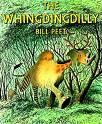 Retell: Scamp is tired of being a dog and wishes he was a grand horse. He runs away and encounters a witch who turns him into a creature called the Whingdingdilly.
Topics: dogs, witches
Units of Study: Fantasy, Character
Tribes: Appreciations/No Putdowns
Reading Skills: inference, prediction, making connections
Writing Skills: using a balance of description and dialogue, using interesting verbs
My Thoughts: I really felt for Scamp in the beginning of this book. I’m a sucker for dogs who are down in the dumps. Unfortunately Scamp’s owner, Orvie calls him a “silly old dog” when he catches his dog pretending to be a horse. Though calling someone ‘silly’ may not be the worst putdown heard at school, I can still see using this book as a way to discuss the damage brought about by insults and putdowns. Scamp begins to feel better, and his luck begins to change when he hears how much Orvie appreciates him. The Whingdingdilly also teaches the importance of appreciating ourselves for our strengths rather than putting ourselves down for our faults. This could also be used as a mentor text during a unit on Fantasy writing. The story has a few fantastical elements but is mostly based on reality.
8. The Lucky Star by Judy Young
 Retell: Ruth, a young girl growing up during The Great Depression, discovers that her school will be closed down before she enters her 5th grade year. Ruth learns a lesson of perseverance and counting one’s lucky stars.
Topics: The Great Depression, perseverance, family,
Unit of Study: Historical Fiction, Character
Tribes: Personal best
Reading Skills: inference, making connections, prediction
Writing Skills: incorporating setting details, using sensory details
My Thoughts: This book would be a great mentor text during a unit on reading and writing historical fiction. However, I’m tempted to use this at the beginning of the year when I introduce partner work and independence. The Lucky Star teaches that smart people persevere through difficult situations. A closure of a school, or similarly an absence of a teacher or a change in schedule, does not mean that learning stops completely.
7. Guys Write for Guys Read
 Retell: Jon Scieszka edits this fabulous collection of stories, comics, essays, illustrations and vignettes contributed by prominent male authors and illustrators. Contributors include: Stephen King, Matt Groening, Jerry Spinelli, Seymour Simon, James Howe, Neil Gaiman, Gary Paulsen and many more. Royalties from the book are used to support Scieszka’s Guys Read Program.
Topics: boys, family, growing up, reading, writing, art
Units of Study: Personal Narrative, Launching the Reading and Writing Workshop, Character, Personal Essay, Content-Area Reading and Writing, Nonfiction, Memoir, Social Issues, Fantasy, Preparing for the ELA
Tribes: Mutual Respect, Personal Best, Appreciations/No Putdowns, Right to Pass
Reading Skills: inference, making connections, interpretation
Writing Skills: writing with voice, zooming in on a small moment, observing the world for stories
My Thoughts: This book is teacher gold! Guys Write for Guys Read has a plethora of short stories that can be used for mentor texts in almost every Reading and Writing unit. One of the stories, “Reading Can Be Dangerous” by Tedd Arnold was featured on the 5th grade ELA test last year. James Howe, author of Bunnicula, writes a personal narrative about getting help from a friend on how to be a boy–a great text for personal essay or discussing gender issues. Many authors write about how they came to love reading and writing. Christopher Paolini, author of Eragon, writes about how he fell in love with fantasy–great to read when you launch a unit on Fantasy reading and writing. Patrick Jones, a librarian, writes about how being interested in wrestling inspired him to become a voracious reader. Many entries include samples of famous authors childhood work alongside their adult work. For example, Dav Pilkey, author/illustrator of the infamous Captain Underpants series, writes about a comic strip he started when he was 11. I will probably use this book for almost every unit I teach this year.
If you don’t pick up a copy of this book you must go to Scieska’s website, Guys Read. The site is dedicated to inspiring more young boys to fall in love with reading. Mr. Scieszka, you’re my hero.
4. Neeny Coming, Neeny Going by Karen English
 Retell: Neeny and her cousin were raised on Daufuskie Island, located off the coast of South Carolina. Years before, Neeny went back to the mainland to live with her mother. When Neeny returns to the island, her cousin realizes that Neeny is not the same cousin she grew up with.
Topics: change, family, environmental issues
Units of Study: Social Issues, Character
Tribes: mutual respect
Reading Skills: envisionment, prediction, inference, monitoring for sense, interpretation, making connections
Writing Skills: writing with voice
My Thoughts: This is a great book for the Social Issues unit. I can imagine a juicy discussion about how much the mainland changed Neeny. Many of my students travel back to their home countries during vacation. I think they could make a lot of connections to this book. I can see using this book as a mentor text for showing how authors write with a distinctive voice.
1. Thank You Mr. Falker by Patricia Polacco
 Retell: Trisha has a difficulty with reading. Though admired for her artistic ability, she gets teased at school for being dumb. That is until her teacher, Mr. Falker, stands up for her and teaches her to read.
Topics: bullying, honoring the different ways we’re smart, family relationships, death of a grandparent, importance of small group instruction
Units of Study: Personal Narrative, Character, Social Issues
Tribes: mutual respect, personal best, appreciations/no put-downs
Reading Skills: envisionment, inference,
My Thoughts: This is a read aloud classic. Since I start every school year off reading this book to my class, I thought it was only proper to start my blog year with one of my favorite read alouds. Thank You Mr. Falker is one of those books that kids have heard a thousand times but never get tired of it. I usually refer to this book and reread parts of it in several units throughout the year.
 Teachable Texts