62. “Before New York” by Peter Miller, National Geographic September 2009
 Retell: Peter Miller investigates the Mannahatta Project, a group who have analyzed several historical maps in order to create pictures of what Manhattan might have looked like when Henry Hudson spotted the island back in 1609.
Topics: New York, beavers, then & now, New Amsterdam, Hudson, conservation, geography, maps
Units of Study: Nonfiction, Content Area
Habits of Mind: thinking interdependently, responding with wonderment and awe, striving for accuracy
Reading Skills: envisionment, determining importance, questioning
My Thoughts: My eyes lit up when I received my monthly National Geographic magazine yesterday afternoon. The feature article, “Before New York,” is dedicated to presenting a picture of the landscape of New York City before it was the crowded, bustling town it is today. If you are a 4th grade teacher in New York I highly recommend going out to your local news stand and picking up a copy today. The article includes several pictures of ‘then and now’ maps and digital renderings. I plan on reading this article (or a portion of it) when we do our unit on New York geography. The article highlights how cartographers pose questions, strive for accuracy and work in groups. I may just reread the beginning of the article where the author tells the story of a beaver named Jose who appeared near the Bronx zoo. According to the article beaver haven’t been spotted in New York City in over 200 years. If you don’t have a subscription check out the National Geographic website. If you have a projector in your classroom you could share the interactive maps of New York after reading the article.
61. The Relatives Came by Cynthia Rylant
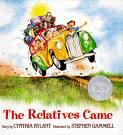 Retell: Every summer the relatives from Virginia drive several hours to visit their family. There is a lot of hugging, a lot of chatting and a lot of eating. When they leave, the house feels a bit empty.
Topics: family, summer, reunions
Units of Study: Personal Narrative, Memoir
Reading Skills: envisionment, inference, making connections
Writing Skills: using sensory details, describing how time passes
My Thoughts: I found this classic for only $2 at a great used bookstore in Mt. Shasta, California. It used to belong to a library so the bottom of each page is cracked, crinkled and reinforced with tape–a testament to how much we love this book. This is a wonderful book to use during the Personal Narrative unit. Though it’s not technically a small moment (the book spans over two weeks) sections of it can be used as a mentor text. I notice that many of my students struggle when writing about time. They often spend a lot of energy including each detail because it happened ‘next’. I see a lot of stories where each sentence begins with ‘then’. Sections of The Relatives Came could be used to show how authors deal with time. The relatives drive for a long time but Rylant doesn’t describe every single thing they see or every pit stop they make. She chooses to focus on a few details only, the strange houses, mountains, and their thoughts of purple grapes back home. The illustrations also tell a story themselves making it a good book for modeling inference.
60. In My Momma’s Kitchen by Jerdine Nolen
 Retell: This is a heartwarming collection of small moments that all take place in a family’s kitchen: a daughter receives a music scholarship, children make up stories, women chitchat and a father makes his signature dish.
Topics: family, community, childhood
Units of Study: Personal Narrative, Memoir
Tribes: mutual respect
Reading Skills: monitoring for sense, envisionment, interpretation
Writing Skills: zooming in on small moments
My Thoughts: This is a great text to read at different points of the year. I originally purchased this book thinking it would be a good read aloud for the Personal Narrative unit. After reading it a second time, I realize that it’s also a great mentor text for the Memoir unit. Each story is connected by its setting–the kitchen. Using this text students could try out Nolen’s strategy of thinking of an important place (a room, a park) and write memories associated with that place. Since this book reads like an anthology of notebook entries, you could use this text when introducing the writer’s notebook.
59. My Ol’ Man by Patricia Polacco
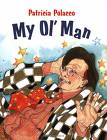 Retell: When she was growing up, Patricia Polacco spent the summers with her father and her grandmother. In this charming book, Polacco tells the story of the time they found a magical rock that helped them cope with hard times.
Topics: divorce, summer, dads, grandmothers, storytelling, layoffs, magic
Units of Study: Personal Narrative, Memoir
Tribes: attentive listening
Habits of Mind: responding with wonderment and awe
Reading Skills: prediction, monitoring for sense
Writing Skills: using commas in lists, crafting meaningful introductions
My Thoughts: Patricia Polacco is one of my favorite authors and I often read several of her books during the Personal Narrative unit. Most of her books are inspired by moments, people, and places in her life. In the beginning of My Ol’ Man, there are authentic photographs from Polacco’s childhood. This book would be great to read as you are teaching how writers use artifacts to generate notebook entries. When writing about people, my students often make lists of what they like about a person. This book will be great to use as a mentor text to help students move from list writing (“My dad likes tacos. My dad takes me places.) to narrative writing (“One time my dad brought out this book of stamps. I’ll never forget the time when my dad took me for a ride in his 1947 GMC truck.”)
58. Riding the Tiger by Eve Bunting
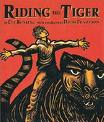 Retell: Danny, a new boy in town, is invited to ride on the back of a tiger. When he notices the fear in the eyes of passersby he tries to get off of the tiger. He soon realizes that once you get on the tiger it’s difficult to get off.
Topics: danger, choices, excitement, gangs, influence, power, respect, fear, peer pressure
Units of Study: Talking and Writing about Texts, Social Issues
Tribes: right to pass, mutual respect
Reading Skills: inference, interpretation, envisionment
Writing Skills: using dialogue, incorporating metaphors in to a story
My Thoughts: As the school year approaches I am thinking about the books that I will want to read during the first few weeks of school. During the first two weeks of school I like to read books that lend themselves well to teaching the five agreements of our school (These agreements are based on Tribes. Our school added a fifth agreement–‘personal best’) Riding the Tiger is an excellent book for teaching about the ‘right to pass’. From the beginning of the story Danny doesn’t feel comfortable accepting a ride from the tiger without first asking his mom for permission. He accepts the ride anyway and becomes increasingly more conflicted about the ride. He eventually takes the ‘right to pass’ when he finally gets off the tiger and helps a man who has fallen down. This book will certainly inspire discussion about peer pressure and gang recruitment. When introducing this book you will want to set students up to do deep interpretation work. Some students may not realize that the tiger is metaphorical.
Green Bean Books–A fabulous new children’s bookstore in Portland, Oregon
 I’ve been back on the West coast for a few weeks visiting family and friends. I dedicated part of my trip to visiting book stores. Today I visited my dream book store–Green Bean Books. It’s my dream bookstore because it has:
- several places to sit and cozy up to a book
- both new and used books
- vending machines that sell handmade finger puppets and mustaches
- a super cheap bin for those on a tight budget
- an owner who is a former public school teacher who is quite knowledgeable about children’s literature
If you’re ever in Portland, you must visit this store. Check out the store’s blog for weekly reviews of new books.
57. The Dot by Peter H. Reynolds
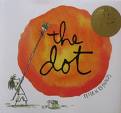
Retell: Vashti is frustrated in art class. She doesn’t have confidence in her artistic ability. Her teacher tells her to start with a dot and see where it takes her. Soon she experiments with dots of different colors, shapes and sizes and becomes pleased with the results.
Topics: art, writer’s block, creativity, experimentation
Units of Study: Personal Narrative
Tribes: personal best, appreciations/no put-downs, mutual respect
Habits of Mind: persisting, creating-imagining-innovating, responding with wonderment and awe, taking responsible risks, thinking interdependently
Writing Skills: dealing with writer’s block, revising
My Thoughts: Though this book is about art, readers will make the obvious connection to writing. I love the message of this book—experiment and enjoy the process. If I don’t read this out loud to my entire class, I will definitely use this in small group work to help struggling writers get over their fear of the blank page. I like how at the end of the book Vashti helps another young artist get over his frustration. It’s a good example of how learners help one another.
56. What Joe Saw by Anna Grossnickle Hines
 Retell: Joe is always lagging behind the class. His teacher and his classmates are always telling him to hurry up. It’s not until a classmate stops to tie his shoes that he realizes why Joe keeps falling behind.
Topics: school, field trips, discovery, curiosity
Units of Study: Realistic Fiction, Talking and Writing about Texts
Tribes: appreciations/no put-downs, mutual respect
Habits of Mind: responding with wonderment and awe
Reading Skills: interpretation, inference
Writing Skills: using repetition, dialogue
My Thoughts: The main character in this book reminds me of my sweetheart. When we’re on route somewhere he always stops to smell the flowers on butterfly bushes or picks fruit from trees. If I’m in a hurry it can be frustrating at first, but most of the time it’s worth it to be a few minutes late. I appreciate how he makes me slow down and notice the world around me. What Joe Saw is a good book to read when you want your class to discuss the importance of paying attention to small details. However, you may not want to read this book to your class just before going on a field trip. It may be good to read during an interpretation unit. I can imagine having interesting discussions about the individual vs. the group.
55. The Bumblebee Queen by April Pulley Sayre
 Retell: This book describes the life cycle of a bumblebee queen.
Topics: bumblebees, life cycles, habitats, pollination
Units of Study: Nonfiction, Content Area Reading and Writing
Reading Skills: envisionment, questioning, determining importance
Writing Skills: using commas to separate clauses
My Thoughts: I like how this book is structured. It has two threads–a narrative thread and an expository thread. In bold letters the text tells a story about the amazing work of a bumblebee queen. On every other page or so there are fact bubbles that give more detailed information about bumblebees. I plan on using this book when we do our Content Area unit which will focus on life cycles and habitats.
54. Two Bobbies: A True Story of Hurricane Katrina, Friendship, and Survival by Kirby Larson and Mary Nethery
 Retell: This is the true story of how a stranded cat and dog survived the aftermath of Hurricane Katrina.
Topics: pets, Hurricane Katrina, survival, friendship, family, homelessness
Units of Study: Social Issues, Nonfiction, Talking and Writing about Texts
Tribes: personal best, mutual respect
Habits of Mind: taking responsible risks, thinking flexibly
Reading Skills: envisionment, inference, interpretation
My Thoughts: This is a book that I didn’t mind buying brand new and in hardcover. I found this in a bookstore in Ashland, Oregon. The cashier and I spent a few moments cooing over her ridiculously cute it is. In addition to being an amazingly touching story it’s a great text to read to learn about Hurricane Katrina. It could also be a great read aloud during an interpretation unit. On one level it’s a story about survival but it could also be interpreted as a story about friendship between two individuals who come from groups who are normally not friendly to each other.
 Teachable Texts