Posts filed under ‘Uncategorized’
62. “Before New York” by Peter Miller, National Geographic September 2009
 Retell: Peter Miller investigates the Mannahatta Project, a group who have analyzed several historical maps in order to create pictures of what Manhattan might have looked like when Henry Hudson spotted the island back in 1609.
Topics: New York, beavers, then & now, New Amsterdam, Hudson, conservation, geography, maps
Units of Study: Nonfiction, Content Area
Habits of Mind: thinking interdependently, responding with wonderment and awe, striving for accuracy
Reading Skills: envisionment, determining importance, questioning
My Thoughts: My eyes lit up when I received my monthly National Geographic magazine yesterday afternoon. The feature article, “Before New York,” is dedicated to presenting a picture of the landscape of New York City before it was the crowded, bustling town it is today. If you are a 4th grade teacher in New York I highly recommend going out to your local news stand and picking up a copy today. The article includes several pictures of ‘then and now’ maps and digital renderings. I plan on reading this article (or a portion of it) when we do our unit on New York geography. The article highlights how cartographers pose questions, strive for accuracy and work in groups. I may just reread the beginning of the article where the author tells the story of a beaver named Jose who appeared near the Bronx zoo. According to the article beaver haven’t been spotted in New York City in over 200 years. If you don’t have a subscription check out the National Geographic website. If you have a projector in your classroom you could share the interactive maps of New York after reading the article.
58. Riding the Tiger by Eve Bunting
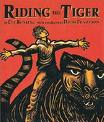 Retell: Danny, a new boy in town, is invited to ride on the back of a tiger. When he notices the fear in the eyes of passersby he tries to get off of the tiger. He soon realizes that once you get on the tiger it’s difficult to get off.
Topics: danger, choices, excitement, gangs, influence, power, respect, fear, peer pressure
Units of Study: Talking and Writing about Texts, Social Issues
Tribes: right to pass, mutual respect
Reading Skills: inference, interpretation, envisionment
Writing Skills: using dialogue, incorporating metaphors in to a story
My Thoughts: As the school year approaches I am thinking about the books that I will want to read during the first few weeks of school. During the first two weeks of school I like to read books that lend themselves well to teaching the five agreements of our school (These agreements are based on Tribes. Our school added a fifth agreement–‘personal best’) Riding the Tiger is an excellent book for teaching about the ‘right to pass’. From the beginning of the story Danny doesn’t feel comfortable accepting a ride from the tiger without first asking his mom for permission. He accepts the ride anyway and becomes increasingly more conflicted about the ride. He eventually takes the ‘right to pass’ when he finally gets off the tiger and helps a man who has fallen down. This book will certainly inspire discussion about peer pressure and gang recruitment. When introducing this book you will want to set students up to do deep interpretation work. Some students may not realize that the tiger is metaphorical.
57. The Dot by Peter H. Reynolds
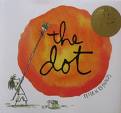
Retell: Vashti is frustrated in art class. She doesn’t have confidence in her artistic ability. Her teacher tells her to start with a dot and see where it takes her. Soon she experiments with dots of different colors, shapes and sizes and becomes pleased with the results.
Topics: art, writer’s block, creativity, experimentation
Units of Study: Personal Narrative
Tribes: personal best, appreciations/no put-downs, mutual respect
Habits of Mind: persisting, creating-imagining-innovating, responding with wonderment and awe, taking responsible risks, thinking interdependently
Writing Skills: dealing with writer’s block, revising
My Thoughts: Though this book is about art, readers will make the obvious connection to writing. I love the message of this book—experiment and enjoy the process. If I don’t read this out loud to my entire class, I will definitely use this in small group work to help struggling writers get over their fear of the blank page. I like how at the end of the book Vashti helps another young artist get over his frustration. It’s a good example of how learners help one another.
53. Dogzilla by Dav Pilkey
 Retell: Every year the mice in Mousopolis have an annual barbecue cook-off. The festivities were interrupted one year when the aroma from the cook-off awoke Dogzilla. The mice band together and eventually defeat Dogzilla by attacking him with a mighty weapon–a dog bath.
Topics: dogs, mice, teamwork
Units of Study: Fantasy
Tribes: personal best
Habits of Mind: persisting, thinking flexibly, thinking interdependently, applying past knowledge
Writing Skills: using dashes, using transitional phrases
My Thoughts: I’ve read this book about five times this summer and each time I read it I giggle to myself. What makes this a fun and engaging read aloud are the illustrations. Pilkey created characters out of his pet mice and pet Corgie. I love how the ferocious monster in the story is a cute cuddly dog who looks so happy in each picture. I think it will be a good read aloud for introducing Habits of Mind. When finding a way to beat Dogzilla they ‘persist,’ ‘think flexibly and interdependently’ and ‘apply past knowledge.’ This may also be a good mentor text for students writing fantasy stories. Students could try generating story ideas by doing what Dav Pilkey did and cast one’s pets as characters in a fantasy story.
51. Skippyjon Jones by Judy Schachner
 Retell: Skippyjon Jones is an imaginative Siamese cat. After catching her son in a bird’s nest she banishes Skippyjon to his room so he can think about what it means to be a cat. Instead he imagines that he is a chihuahua named Skippito Friskito.
Topics: individuality, creativity, imagination, parents, Spanish
Units of Study: Talking and Writing about Texts, Realistic Fiction
Habits of Mind: creating-imagining-innovating
Reading Skills: envisionment, making connections, monitoring for sense
Writing Skills: incorporating rhyme and rhythm, writing stories based on real life
My Thoughts: I purchased this book at JFK while waiting for my flight to Portland. The rhyming chants in the book caught my eye. It seems like it will be a fun book to read aloud. I like how the book promotes having an active imagination. However, I don’t feel I’d be comfortable reading this book aloud without encouraging my students to think critically about whether or not the book is culturally sensitive. When Skippyjon becomes a chihuahua he starts speaking in a Spanish accent–which means ending most of his words with -ito. He doesn’t say ‘big’ he says ‘beeg’. The author isn’t trying to create an authentic Mexican character. She’s trying to write a story about a character who likes to play pretend. At any rate, this book could be great to read or reread during a critical reading study. If you click on the book image above the link will take you to an interesting comments thread on Powell’s website.
50. Home: A Collaboration of Thirty Distinguished Authors and Illustrators of Children’s Books to Aid the Homeless
 Retell: An anthology of poetry and prose all based on the subject ‘home’. Many famous writers and illustrators contributed pieces such as: Virginia Hamilton, Aliki, Jon Sciszka, Jane Yolen and more.
Topics: home, hiding places, family, children
Units of Study: Personal Narrative, Memoir, Launching the Reading Workshop
Habits of Mind: thinking flexibly, creating-imagining-innovating
Reading Skills: making connections, envisionment, monitoring for sense
Writing Skills: zooming in on small moments, using sensory details
My Thoughts: This is a handy resource for the Personal Narrative unit. Many of the poems and stories within the anthology will be great ‘small moment’ mentor texts. Home contains some great pieces that will encourage students as they author their independent reading lives. The story “Comfortable Old Chair” by Karla Kuskin features a girl who loves reading in her favorite chair. In the poem, “Elevator” Lucille Clifton describes a girl who reads in the corner of her building’s elevator. I plan on using these pieces to show how dedicated readers take charge of their lives at home and find a place that’s entirely theirs. I knew a student who used to have trouble finding a quiet space to read in his crowded apartment. He started scheduling bathroom reading time. He would bring in pillows, blankets and books and make a comfy reading spot in the bathtub.
48. The Paper Bag Princess by Robert Munsch
 Retell: After a fire-breathing dragon destroys her castle, Elizabeth dons a paper bag and goes off to rescue the ‘charming’ Prince Ronald. Through cunning wit she tricks the dragon and frees the prince only to realize that perhaps he wasn’t worth saving after all.
Topics: fairy tales, dragons, princesses, princes
Units of Study: Fantasy, Social Issues, Talking and Writing About Texts
Tribes: personal best, mutual respect
Habits of Mind: persisting, managing impulsivity, thinking flexibly, striving for accuracy
Reading Skills: interpretation, inference
Writing Skills: writing interesting dialogue
My Thoughts: This is a TC read aloud classic that I have seen used in several workshops on planning effective interactive read alouds. For such a short book, there are many ways you could teach with it. It’s a great book for discussing gender issues during the Social Issues unit. After rereading this book for the 20th time I just realized what a great text it is for teaching the Habits of Mind. Elizabeth uses a lot of them! For example, her entire castle burns down but she persists and goes to save Prince Ronald. She has no clothes but thinks flexibly and fashions a dress out of a paper bag. After competely exhausting the dragon she strives for accuracy and manages impulsivity by checking to make sure the dragon is truly knocked out.
46. Butterflies in My Stomach and Other School Hazards by Serge Bloch
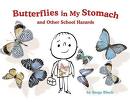 Retell: It’s the first day of school and the narrator is nervous. Each person he encounters speaks in confusing idioms.
Topics: first day of school, idioms, school
Units of Study: Personal Narrative, Realistic Fiction
Reading Skills: monitoring for sense, envisionment
My Thoughts: It’s well into August and that means that my mind is beginning to think more and more about the first weeks of school. I’m on the hunt for engaging books to start the year out well. I found this cute book a few days ago during a visit to Powell’s Books in Portland, Oregon. Butterflies in My Stomach and Other School Hazards not only makes for a good read aloud on the first day of school, but it is also great for introducing idioms. On each page the main character encounters a person who says an idiom. Each idiom is illustrated literally. For example, when his teacher said “he was all ears,” the illustration shows the teacher with giant ears. If you didn’t want to read this book aloud in one sitting, you could read a page or two each day as a warm-up activity. You could keep a chart of idioms that the class learns each day.
40. Rent Party Jazz by William Miller
 Retell: Sonny is worried. His mom just lost her job at the fish market and is worried that they may not make rent. Sonny meets the musician Smilin’ Jack who comes up with a solution that turns out to be both profitable and entertaining.
Topics: New Orleans, rent, money, jazz, parties, music, community
Units of Study: Social Issues, Historical Fiction
Tribes: personal best, attentive listening
Reading Skills: envisionment, interpretation
Writing Skills: using commas to tuck in details
My Thoughts: Great books teach us something new. Rent Party Jazz not only tells a story of Sonny and his family, but tells the story of the origin of rent parties throughout African-American communities in the South. The book will be great to read when your class needs to be reminded of the power a strong, supportive community. Even something as bleak as not being able to pay rent can be conquered when people work together.
37. Tallchief: America’s Prima Ballerina by Maria Tallchief with Rosemary Wells
 Retell: This is an autobiographical story of Maria Tallchief, one of the greatest American-born ballerinas of her time.
Topics: native americans, Osage, Oklahoma, ballet, Westward Expansion, music, interests, biographies, narrative nonfiction
Units of Study: Social Issues, Nonfiction
Tribes: personal best
Reading Skills: inference, determining importance, envisionment
Writing Skills: seeing the world as a writer, using interesting transitional phrases
My Thoughts: This story is great to read when discussing what it means to put your all into something. Maria Tallchief lived, breathed, and ate music and dance. She writes about how her teacher told her to live like a dancer “When you sleep, you must sleep like a dancer. When you stand and wait for the bus, you must wait for the bus like a dancer.” This particular scene reminds me how we often challenge our students to live like writers. Perhaps now we can tell students, “When you wait for the bus, you must wait for the bus like a writer–notebook in hand, waiting to collect stories.”
 Teachable Texts