Posts filed under ‘Picture Books’
89. Mrs. Morgan’s Lawn by Barney Saltzberg
 Retell: Mrs. Morgan does not tolerate anyone or anything treading on her lawn. Whenever a ball lands on her lawn she confiscates it and it is never seen again. After some encouragement from his parents, Mrs. Morgan’s neighbor decides to confront her and ask for his ball back. Even when he asks her nicely Mrs. Morgan refuses to return his ball. After a few weeks he notices that Mrs. Morgan’s lawn is looking unkempt. He rakes up leaves for her and discovers that kindness can often change people’s minds.
Topics: kindness, problem-solving
Units of Study: Character, Talking and Writing About Texts
Tribes: mutual respect
Habits of Mind: taking responsible risks
Reading Skills: inference, interpretation
My Thoughts: I like to read this story when students start having conflicts with each other. Giving “I-Messages” solves many of these conflicts but sometimes something more is needed to solve a problem. Creating peace often starts by attempting to understand the person you have a conflict with. In this story, the neighbor changes from thinking Mrs. Morgan is mean to understanding how she feels about her lawn and eventually helps her, despite the fact that she has not been kind in return. When I read this out loud to my class last year, a student pointed out that “sometimes bullies act mean because they don’t feel that people are nice to them.” She was talking about a particular bully in the class who had been absent during the read aloud. She suggested to the class that they should say nice things to the student and compliment him when he did something well.
87. How Mountains Are Made by Kathleen Weidner Zoehfeld
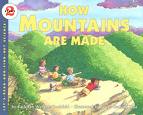 Retell: A group of children climb a nearby mountain. During the climb they start wondering about how mountains are made.
Topics: mountains, erosion, plate tectonics, earth movements, volcanoes
Units of Study: Nonfiction, Content-Area
Habits of Mind: responding with wonderment and awe
Reading Skills: questioning, determining importance, envisionment
My Thoughts: This is a great read aloud to supplement the fourth grade New York Delta FOSS Kit unit on Earth Movements. It’s a simple example of how narrative nonfiction and expository nonfiction are often blended together within the same text. The illustrated characters who narrate the text are a little distracting but you can choose whether or not to read their speech bubbles out loud.
86. Me on the Map by Joan Sweeney
 Retell: The narrator of this story imagines herself on various maps, both homemade and store-bought. The maps range from small scale (her bedroom) to large scale (the world).
Topics: geography, maps, globes, location
Habits of Mind: creating-imagining-innovating
My Thoughts: Every other Thursday someone covers my class while I co-plan with another teacher. On that day, it’s very difficult for me to tuck in a read aloud without cutting another subject. To solve this problem I plan to do a Social Studies read aloud connected to our current unit of study. We’re currently in a Map and Geography unit. By the end of the unit we expect students to be able to find themselves on any kind of map. I thought I would never find a decent read aloud to support this study. I was wrong. Me on the Map is a cute introduction to map reading. It’s simple, but it shows reminds students that maps tell the reader where they are. If you have access to a projector (or a computer lab) I highly recommend pairing this read aloud with an exploration of Google Earth.
84. Chicken Sunday by Patricia Polacco
 Retell: Easter is around the corner and Miss Eula wants a new hat to wear to church. Her grandchildren and her young neighbor decide to ask Mr. Kodinski if they could work at his hat shop to earn extra money. On the way to his shop, he mistakes the children for vandals. They come up with an interesting way to earn back his trust as well as earn enough money for a new hat.
Topics: reputation, hats, chutzpah, Easter, vandalism, gifts, Holocaust survivors
Units of Study: Personal Narrative, Memoir, Social Issues, Talking and Writing About Texts
Tribes: mutual respect, personal best
Habits of Mind: thinking flexibly, creating-imagining-innovating, persisting
Reading Skills: questioning, inference
Writing Skills: zooming in on small moments, repeating powerful lines
My Thoughts: If you follow this blog daily, you’re sick of seeing entries about Patricia Polacco. I can’t help it. I love her work. Since I’m currently in the Personal Narrative mindset, her work naturally comes to mind. The illustrations in this book can be powerful teaching tools. Throughout Chicken Sunday, real photographs appear in the background. This shows that Polacco thinks about significant people in her life and then writes stories about them. I love how Mr. Kodinski’s story can be inferred through the illustrations. Previously, Miss Eula alluded to the fact that he wanted a peaceful life after suffering so much. The text never states specifically why he had a difficult life. The illustrations give you the information. Tattooed on Mr. Kodinski’s arm are six blue numbers, revealing that he survived the concentration camps. This book shows students how readers can reread a text and peal a different layer of meaning with each reading.
82. Flying Over Brooklyn by Myron Uhlberg
 Retell: On a snowy, winter’s evening a boy dreams of flying over Brooklyn. He visits many of his favorite places: Prospect Park, The Brooklyn Bridge and of course, Coney Island.
Topics: Brooklyn, birds-eye view, dreams, flying, imagination, winter
Units of Study: Personal Narrative, Memoir
Habits of Mind: responding with wonderment and awe
Reading skills: envisionment, making connections
Writing Skills: using sensory details, using observation to generate entries, zooming in on small moments
My Thoughts: This book is beautifully written. I think it will be an excellent book to use as a mentor text for using descriptive language. When I read this aloud, I plan on pointing out how the author makes you feel the snow and sense the quiet throughout the snowy city. 4th grade teachers in New York may want to read this during a Geography unit. After reading the book aloud, students could find each place on a map or make their own map based on places visited throughout the text.
80. Three Samurai Cats: A Story From Japan by Eric A. Kimmel
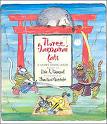 Retell: Many years ago, in a castle in Ancient Japan, there lived a powerful lord with a terrible rat problem. He tried everything in his power to chase the rat away, but the rat would not leave. He asked the senior monk to send his strongest samurais to defeat the rat. Both of them were thwarted. Finally, the senior monk sent his oldest and wisest samurai to the castle. He beat the rat with his ultimate weapon–patience.
Units of Study: Talking and Writing About Texts
Topics: Japan, rats, power, patience, samurais, monks, bullies
Habits of Mind: persisting, thinking flexibly, managing impulsivity
Reading Skills: monitoring for sense, interpretation
Writing Skills: incorporating the rule of three
Thoughts: When I read this book I immediately thought of those situations where we want to fight back. When someone insults us we want to think of a better insult to ‘squash’ that person. How often do we see students try and assert power over another with a put-down, a push, a punch? This book is great for discussing how bullies are truly defeated.
79. Officer Buckle and Gloria by Peggy Rathmann
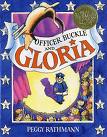 Retell: Officer Buckle often visits Napville School to give presentations about safety. Unfortunately, most people do not listen to his advice. As a result, the accident rate is very high. When Officer Buckle partners with a show-stealing police dog named Gloria, suddenly his audience sit up and pay attention.
Topics: safety, assemblies, dogs, police
Units of Study: Character, Realistic Fiction
Tribes: attentive listening, appreciations/no put-downs
Reading Skills: reading bold and italicized words
Thoughts: Each year I try and use read alouds to review the agreements of our school. (These are Tribes agreements plus one we call ‘personal best’.) It seems that there are many books about mutual respect, but not very many about attentive listening. Officer Buckle and Gloria is a read aloud I’ve been using for the past two years. The illustrations are great for showing two types of audiences: an audience who does not listen and one that shows they are listening. It also shows how people feel when they are not listened to. There are many bold and italicized words throughout the book. When reading the book aloud you may want to ask students to pay attention to how your voice changes when you come across bold and italicized words.
78. Amelia Writes Again by Marissa Moss
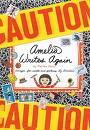 Retell: Amelia is a young girl who collects thoughts, souvenirs, photos and stories in her writer’s notebook. Through the pages of her notebook we learn about Amelia’s friend Leah, her sister Cleo, and the terrible arsonist who destroyed her school.
Topics: writing, birthdays, siblings, friendship, daydreaming, numbers, arson, symbols, partnerships, writer’s notebooks
Units of Study: Personal Narrative, Realistic Fiction, Social Issues, Personal Essay
Tribes: appreciations/no put-downs, right to pass, personal best
Habits of Mind: responding with wonderment and awe
Writing Skills: generating notebook entries, using pictures and objects to inspire writing, writing about ideas, spelling tricky words by writing it in different ways
Thoughts: This is volume 2 in a series of “Amelia” books. I use this each year when we relaunch our writer’s notebooks. The book resembles a composition notebook. There are many ways that it can be used to teach writing skills, but it also stands alone for discussing other issues. For example, Amelia writes about how she is reluctant to show her notebook to her friend Leah. This could be a great time to discuss taking the right to pass. During a Social Issues or Personal Essay unit you could use this book to analyze the issue of school vandalism.
If you have used any books from the “Amelia” series please post your ideas in the comments section.
76. My Best Friend by Mary Ann Rodman
 Retell: Lily spends each Wednesday at the neighborhood pool. She has decided that Tamika will be her best friend. Tamika however does not seem interested in being Lily’s friend. Lily tries many things to win over Tamika. She tries to dress the same and she shares her popsicles with her but to no avail. Lily eventually becomes friends with Keesha who doesn’t need to be impressed.
Topics: summer, pools, friendship, popularity
Units: Character, Social Issues, Talking and Writing About Texts
Tribes: mutual respect, appreciations/no put-downs, right to pass
Reading Skills: prediction, interpretation
Writing Skills: balancing dialogue with reflection and description
My Thoughts: This book does a great job of addressing the issue of popularity. Every year I see students going out of their way to impress others who don’t give them the time of day. It could be an interesting book to use when discussing the ‘right to pass’. Though Tamika should have been nicer to Lily, she has the right to pass on her offer of friendship.
Thanks again Beth for another great read aloud.
75. 14 Cows For America by Carmen Agra Deedy
 Retell: To the Maasai people the cow is life. In June 2002 Wilson Kimeli Naiyomah returned to his Kenyan village with a tragic story from New York. Kimeli presented a cow for blessing, in honor of those who died during the attacks of September 11th. 13 others offered their own cows for blessing. The cows remain in Kenya but they continue to be a symbol of hope and compassion to people around the world.
Topics: September 11th, Maasai, Kenya, compassion, cows, hope
Units of Study: Character, Social Issues, Talking and Writing About Texts
Tribes: mutual respect
Reading Skills: envisionment, inference, monitoring for sense
Thoughts: The tone of my classroom during this short first week of school has been so positive. Students are making new friends, and seem excited about school. I now approach planning my read aloud for the third day of school which happens to also be September 11th. It feels weird to start a discussion about tragedy and terrorism on the third day of school. I don’t want to spend a lot of time discussing frightening details of that day but on the other hand I don’t want to ignore the day altogether. I’ve decided to read 14 Cows For America because it focuses more on the idea of compassion rather than tragedy. I’m hoping that the last line of the book will prompt an interesting discussion: “Because there is no nation so powerful it cannot be wounded, nor a people so small they cannot offer mighty comfort.”
Thanks Beth for recommending this fabulous read aloud!
 Teachable Texts