Posts filed under ‘Picture Books’
124. A Picnic in October by Eve Bunting
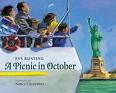 Retell: Each year Tony’s family boards the ferry to Liberty Island at grandma’s insistence. They brave the crowds and the cold to celebrate a special birthday.
Topics: New York, family, Statue of Liberty, grandparents, immigration
Units of Study: Social Issues, Talking and Writing About Texts
Tribes: mutual respect
Reading Skills: prediction, envisionment, inference, questioning
My Thoughts: This book is typically read during an Immigration unit. However I don’t think I can wait that long to read this book. A scene that stuck out for me was the part when Tony helps a young woman who pulls on his jacket, worried that the last boat has left. Apparently no one has been able to help her because she doesn’t speak English. Tony is patient with her and through gestures explains that another boat is on the way. When reading this aloud, I plan on emphasizing this moment and hope it will spark a meaningful discussion about how we can help students who have limited English skills.
This is a great text for modeling expression. Each character has a distinctive personality which may come out best if the reader creates voices for each character. For example, Rosa talks in “a reading kind of way” and should sound official (or as we say in conferences “like a teacher”). Mike seems a bit mischievous and should sound like it.
123. Urban Roosts: Where Birds Nest in the City by Barbara Bush
 Retell: Barbara Bush zooms in on gothic building structures, bridge towers and overpasses to describe the adaptations of birds who thrive in urban areas.
Topics: birds, pigeons, urban areas, cities, habitats, migration, camouflage, adaptation, roosts, crows, shelter
Units of Study: Content-Area, Nonfiction
Reading Skills: envisionment, questioning, determining importance, synthesis
My Thoughts: I’m currently looking for books that will support the current Nonfiction unit. I considered reading this book immediately, but I think I’m going to save it for our Content-Area unit. During that unit we’ll be studying Food Chains and Habitats in Science making this book a perfect fit. Urban Roosts is a book that will encourage urban readers to reconsider the common pigeon, finch or crow–a great book for modeling envisionment in nonfiction.
122. Welcome to the Green House by Jane Yolen
 Retell: Jane Yolen poetically compares the rainforest to a green house.
Topics: rainforest, animals, birds, nonfiction poetry
Units of Study: Nonfiction, Content-Area, Personal Essay
Habits of Mind: gathering data through all senses
Reading Skills: envisionment, inference
Writing Skills: using repetition, incorporating rhythm and rhyme, using sparkling vocabulary, using alliteration
My Thoughts: A few months ago I received a GrowLab through a DonorsChoose grant. We received support from an educator at the Brooklyn Botanic Gardens and created corsage box terrariums. Students planted cuttings from three different plants that thrive in the rainforest. I plan on reading this book soon to support our gardening experience. The text in this book is so vivid that as I read it I can actually feel the humidity of the rainforest. It’s a great text for teaching students how to interpret metaphors. At the end of the book, the author writes a message to her readers encouraging us to find out more about saving the rapidly disappearing rainforest. Though it’s not technically a personal essay, you could use sections of the message as a mentor text.
121. Vote! by Eileen Christelow
 Retell: This book combines narrative and non-narrative text to describe how and why people vote.
Topics: voting, majority, mayors, elections, democracy, voting age, protests, marches, political parties, media, campaigns, taxes
Units of Study: Nonfiction, Content-Area
Reading Skills: monitoring for sense, determining importance, synthesis, making connections
My Thoughts: Tomorrow is election day. My students have the day off and they have no idea why. Unlike last year’s election day, the buzz around tomorrow’s election is quiet. Nevertheless, days off from school can be good teaching moments and a great time to tuck in a read aloud. Vote provides a nice, kid-friendly introduction to the world of voting. The text in the white space explains how voting works. Within the illustrations, speech and thought bubbles support a narrative thread: Chris Smith is running against Bill Brown for mayor and Smith’s family (including the family dog) all participate in the campaign. You may choose to read all of the non-narrative text and then pick and choose which speech bubbles are the most important to highlight.
If you choose to read this book (or others about voting) please add your comments in the space below.
120. Where the Wild Things Are by Maurice Sendak
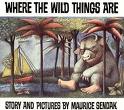 Retell: After Max is sent to bed without supper he imagines traveling to a world where he becomes king of the wild things. Being a wild things is fun for awhile but he learns that it cannot compare to the comforts of home.
Topics: monsters, mischief, disobedience, imagination, travel, dreams, home
Units of Study: Fantasy, Talking and Writing About texts
Habits of Mind: creating-innovating-imagining
Reading Skills: envisionment, inference
Writing Skills: using repetition, crafting endings that connect to the beginning
My Thoughts: I dressed up as a wild thing for our recent school Halloween parade. I looked more like a hairy viking than a wild thing, but I get points for trying. To introduce my costume I read this book aloud. Many of them had heard it before. I’m glad I was able to tuck in this classic read aloud before the majority of my students head to the cinema to see the movie. Upon rereading it, I realized that one has to do a huge amount of envisionment as they read the text. The illustrations are wonderful, but they don’t reveal all. When reading this book aloud I recommend using the pages where there is no text to have your students (or your own children) role play and act like Max or the wild things. You can encourage them to make noise like them, talk like them, move like them and think like them.
119. Full Count: A Baseball Number Book by Brad Herzog
 Retell: A numerical version of his alphabet book H is for Home Run.
Topics: baseball, numbers, Hall of Fame, Women’s League, tee ball, bat boys, Yogi Berra, Joe Nuxhall, Jackie Robinson, Little League, multiplication
Units of Study: Nonfiction, Content Area
Writing Skills: incorporating rhyme and rhythm
My Thoughts: I now have yet another genre to think about when we get to the Content-Area unit: Number Books. This is one number book that fourth graders will find to be quite interesting. Full Count follows the same format as its alphabet companion book–a rhyming poem accompanies a more detailed expository explanation of the content behind the rhyme. This book has an added bonus of having illustrations that can support a unit on multiplication. The illustration for 25, shows five groups of five baseball bats. The illustration for 50, shows 10 groups of five jerseys. If you use the TERC math curriculum you may want to use this book for the Ten-Minute Math activity, Quick Images.
117. Alfred Nobel: The Man Behind the Peace Prize by Kathy-Jo Wargin
 Topics: Alfred Nobel, Nobel Peace Prize, nitroglycerin, death, literature, art, dynamite, peace, legacy
Units of Study: Nonfiction, Content-Area
Habits of Mind: persisting, gathering data through all senses, striving for accuracy and precision, questioning and posing problems, applying past knowledge to new situations
Reading Skills: prediction, synthesis, determining importance, interpretation, empathy
My Thoughts: With the announcement of this year’s Nobel Peace Prize being awarded to Barack Obama, you may want to take the opportunity to discuss the history of the prize itself. It’s a great text for discussing the Habits of Mind. The illustrations are quite large and are particularly vivid–perfect for classroom read alouds.
116. “Could Be Worse!” by James Stevenson
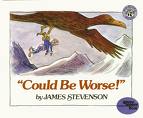 Retell: Day in, day out Grandpa always says the same thing: “Could be worse.” One day Grandpa tells his grandchildren about a wacky adventure he had the night before. At the end of the rambling story his grandchildren surprise him by delivering his favorite phrase.
Topics: imagination, grandparents, family
Units of Study: Fantasy, Realistic Fiction
Habits of Mind: Creating-imagining-innovating
Writing Skills: storytelling
My Thoughts: This month our TC staff developer (Colleen Cruz) will be working with the upper grades on planning interactive read alouds. She reiterated that interactive read aloud is THE most important part of the school day and should never be cut out. She also mentioned that teachers should try and tuck in different kinds of read alouds throughout the day whenever possible. This has inspired me to find quick, fun texts that I can read during transitions or during times when kids are riled up.
“Could Be Worse!” is a cute, short read aloud that can be used to connect to the storytelling work that students are doing during Writing. I think I’m going to read this next week as students get in line. The next day, I could work in fluency practice by having students say the grandkids’ line while I say Grandpa’s lines and on the next day vice versa.
115. Tea With Milk by Allen Say
 Retell: Masako is a Japanese-American who moves to Japan after spending her childhood in America. Adjusting to life in Japan is rough for Masako. She must repeat high school in order to learn Japanese, her classmates call her gaijin (a derogatory word for ‘foreigner’), and she must learn how to be a proper Japanese lady. One day she boards a bus for Osaka and finds work, a companion and a cure for her homesickness.
Topics: English, Japanese-Americans, homesickness, culture shock, matchmaking, individuality
Units of Study: Character, Social Issues, Personal Narrative, Memoir
Tribes: right to pass
Habits of Mind: taking responsible risks, thinking flexibly
Reading Skills: inference, interpretation, prediction, empathy
My Thoughts: I especially enjoy Tea With Milk because I have a personal connection to this book. I taught English for three years in a rural village in Japan. I can relate to May and her struggle to get used to sitting on the floor (women are expected to sit on their knees–it’s considered rude to sit cross-legged) and missing comfort foods. When I read this book I thought of my students who often visit the countries where their parents are from and experience an identity crisis similar to the one that May faced. I hope that this book inspires them to write their stories. Though this is technically a personal narrative (the main character was the author’s mother) you could angle this to fit in many different units including the current Character unit. It’s particularly useful for modeling how readers notice subtle changes in a character.
114. The Gold Coin by Alma Flor Ada
 Retell: A thief discovers a woman who claims to be the “richest person in the world.” He ransacks her hut but fails to find her gold. He goes on a quest to find the woman and her gold. What he finds instead are people who teach him that being rich has little to do with gold.
Topics: gold, greed, thieves, kindness, hard work, acceptance
Units of Study: Character, Social Issues, Talking and Writing about Texts
Tribes: mutual respect
Reading Skills: prediction, interpretation, inference, empathy
Writing Skills: incorporating the rule of three
My Thoughts: I first discovered this story when I went to a Great Books training years ago. I’ve since used it a few times during the Character unit. It is a great text for examining how people can change because of their relationships with other people. It’s a great text to use when you are launching whole class conversation during and after read alouds.
 Teachable Texts