Posts filed under ‘Picture Books’
35. One Green Apple by Eve Bunting
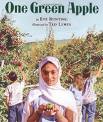 Retell: One Green Apple is the story of Farah, a Muslim immigrant, who struggles to fit in. Despite the language barrier she manages to make friends and participate during the field trip to the apple orchard.
Topics: immigration, language barrier, dupatta, field trips, friendship, Muslim characters
Units of Study: Social Issues, Talking and Writing About Texts, Realistic Fiction
Tribes: mutual respect, right to pass
Reading Skills: interpretation, inference, empathy
Writing Skills: including metaphors, using sensory details
My Thoughts: I wish I knew about this book last year. I had two students who recently came from China. Other students were having difficulty communicating with them. They got frustrated when the Chinese students didn’t understand their rapid speech. The Chinese students got frustrated when people spoke too loud to them and ‘dumbed material down’. I intend to use this book to address language issues. In the story Farah thinks to herself, “I understand. It’s not that I am stupid. It is just that I am lost in this new place.” I can see using this book as a mentor text for teaching about metaphors. You could discuss Eve Bunting’s decision to make Farah choose a green apple rather than a red apple like the others.
34. What Will You Do For Peace?: Impact of 9/11 on New York City Youth
 Retell: Faith Ringgold introduces this collaboration of young artists and poets aged 11-19. Each page includes responses to the tragic events of 9/11.
Topics: 9/11, peace, children, World Trade Center
Units of Study: Personal Narrative, Poetry, Personal Essay
Tribes: personal best, mutual respect
Writing Skills: collecting notebook entries
My Thoughts: This is a very moving collection of stories, poems and drawings from young children who experienced the events of 9/11 firsthand. There are accounts of how it felt to be at school when people were going home every few minutes. There are stories of watching the news for hours and hours. I plan on reading this book on September 11th this year. I think it will not only prompt a good discussion about why they day is important but it will also be a good mentor text for generating notebook entries and writing about events that will never be forgotten.
33. The A+ Custodian by Louise Borden
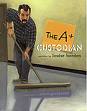 Retell: John Carillo is the custodian for Dublin Elementary School. Everyone in the school thinks he is a great custodian. A few students decide to find a way to appreciate all his hard work.
Topics: custodians, school, hard work,
Units of Study: personal essay, realistic fiction
Tribes: personal best, appreciations/no put-downs, mutual respect
Reading Skills: inference, envsionment
Writing Skills: incorporating tight lists, elaboration, including sensory details
My Thoughts: This is a fabulous book to take out when you feel the class needs to take more responsiblity picking up after themselves. The A+ Custodian reminds me that I should take more time thoughout the year to appreciate the janitors and custodians at my school. I love how the author emphasizes how much Mr. Carillo loves and is proud of the students of Dublin Elementary School. I plan to use this book when collecting ideas for personal essays. The text is a great example of the strategy, “Writers think of a person in their life and jot down ideas about him/her.” In fact the author’s note at the beginning itself makes a good mentor text for personal essay.
32. Team Moon: How 400,000 People Landed Apollo 11 on the Moon by Catherine Thimmesh
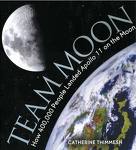 Retell: Thimmesh tells the story of the Apollo 11 mission. It includes several quotes, interviews and amazing photographs from the moon landing.
Topics: moon landing, space, Apollo 11, teamwork, goals, problem-solving, perseverance
Units of Study: Nonfiction, Content Area, Personal Essay
Tribes: attentive listening, mutual respect, personal best
Reading Skills: envisionment, inference, interpretation, determining importance
Writing Skills: using descriptive language, inserting quotations, using dashes, using ellipses
My Thoughts: To commemorate its 40th anniversary I plan to read at least one book about the moon landing this year. What I love about this particular book is its emphasis on teamwork. As the title suggests, Apollo 11 was successful because of the dilligence of several hundred-thousand people working together in teams trying to accomplish one goal. It’s a dense book so I can see reading only a few sections at a time. This could be used as a rich mentor text for writing nonfiction. Thimmesh writes with excitement and enthusiasm making the text very engaging.
31. The Greatest Power by Demi
 Retell: Emperor Ping, the boy emperor of China, appreciates honesty and harmony. He wants to appoint an honest and wise prime minister so he decides to hold a contest. The child who can think of the greatest power in the world will become the next prime minister. Children far and wide prepare presentations for the emperor. A young girl named Sing sits by a lotus pond and comes up with an answer that is quite different from the rest.
Topics: technology, beauty, military, power, money, life, life cycle, China
Units of Study: Talking and Writing About Texts, Content Area
Tribes: personal best, appreciations/no put downs
Reading Skills: interpretation, prediction
Writing Skills: repetition
My Thoughts: Fifth grade teachers at my school do this great unit on power. They examine power structures at home, in the neighborhood, in the classroom, at school, and so on. The Greatest Power could be a great companion to that unit. It will spark discussions about what makes a powerful group or a powerful nation. I could also see this book being used during a unit on the life cycle. Sing after sitting by apond and contemplating a lotus flower is fascinated by its life cycle. She determines that life is the greatest power on earth.
29. Saying Goodbye to Lulu by Corinne Demas
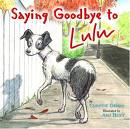 Retell: A young girl has difficulty saying goodbye to her beloved dog Lulu. With help from her parents, she learns how to move on without forgetting the wonderful memories of Lulu.
Topics: loss, dogs, reflection, death, dying, pets, grief, memories, family
Units of Study: Personal Narrative
Reading Skills: synthesis, making connections
Writing Skills: creating flashbacks, zooming in on small moments, using sensory details
My Thoughts: I shouldn’t have read this book in a cafe. Let’s just say that my eyes were quite red and puffy after reading this book. It is however, a great text for discussing various stages of the grieving process. She goes through denial, anger, sadness, reflection and finally acceptance. The author zooms in on small but important details (“I missed the sound of her tail going thump, thump while she waited for me at the bottom of the stairs…”) making it a great mentor text for writing narratives.
28. The Librarian of Basra: A True Story from Iraq by Jeanette Winter
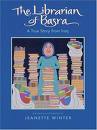 Retell: This is the true story of Alia Muhammad Baker. During U.S. air raids in 2003, Baker managed to hide and save over 30,000 books from destruction.
Topics: libraries, Iraq, heroism, action, war, books, community
Units of Study: Nonfiction, Content-Area Reading and Writing, Journalism
Tribes: mutual respect, personal best
Reading Skills: prediction, questioning
Writing Skills: using dashes
My Thoughts: Stories like this one restores my faith in humanity. Alia Muhammad Baker’s story is a great one to share with kids, many whom don’t even know that the U.S. is involved in two wars at the moment. Her story was originally published back in 2003 in the The New York Times. Reading The Librarian of Basra in conjunction with the The New York Times article could be a great way to emphasize the role of a journalist to bring to light stories that would otherwise go unnoticed. I plan on reading this at the beginning of the year to reiterate the importance of reading.
Click her to read Shaila K. Dewan’s 2003 New York Times article about Alia Muhammad Baker
27. The Road to Santiago by D.H. Figueredo
 Retell: Every year Figueredo and his family return to Santiago, Cuba for Christmas. When calls for revolution sounded throughout Cuba the author recalls how his family almost didn’t make it home for his favorite holiday.
Topics: Cuba, Christmas, rebels, family, kindness of strangers, traditions
Units of Study: Personal Narrative, Memoir, Historical Fiction
Tribes: personal best, mutual respect
Reading Skills: making connections, monitoring for sense
Writing Skills: zooming in on small moments, incorporating vocabulary from another language, generating notebook ideas
My Thoughts: A common thread thoughout the story is kindness. Each scene highlights how people were kind to the author’s family: a mill worker helps them fix a flat tire, a young man gives up his seat on the bus. Though this is technically a personal narrative I could see reading this book during a unit on writing historical fiction. The story takes place during the 1950s revolutionary period in Cuba. He threads details of the time period throughout the story making this a good historical fiction mentor text.
26. Emily’s Art by Peter Catalanotto
 Retell: Emily loves to paint. She enters her painting of her dog Thor in the school art contest. After narrowly losing the contest, Emily vows never to paint again. With her help from her friend Emily realizes that she should continue doing what makes her happy.
Topics: art, contests, friendship, school, painting, self-esteem
Units of Study: Realistic Fiction, Talking and Writing About Texts, Social Issues
Tribes: attentive listening, appreciations, personal best
Reading Skills: inference, making connections, interpretation
My Thoughts: I feel like I’m coming across a lot of books about young artists lately (see post on Ish). I’m a big fan of books with illustrations that not only support the text but enhance it. At the beginning of the book the illustrations of Emily are vivid and opaque. However, as soon as she loses the contest, the illustrations of Emily are transparent, conveying the idea that she feels alone and invisible. Another cool feature about Emily’s Art is how the book begins. It reminds me of the Harry Potter films. The story begins with a scene that draws the reader into the story and then like the opening credits in a movie, the title page appears. I plan on using this book early in the year when we do a lot of community-building. It’s a great book for showing how far appreciations can go.
25. Hewitt Anderson’s Great Big Life by Jerdine Nolen
 Retell: Hewitt Anderson has it all. Loving parents, a gorgeous house and fabulous birthday parties. The only problem is that Hewitt wasn’t the son his parents expected. Hewitt’s parents, and indeed the entire town, are giants. This causes a lot of problems but soon they realize that with a few modifications they can still live a ‘normal’ life.
Topics: acceptance, family, giants, differences, size
Units of Study: Fantasy, Character
Tribes: mutual respect, personal best
Reading Skills: monitoring for sense, envisionment
Writing Skills: using interesting vocabulary
My Thoughts: This is a nice twist on “Jack and the Beanstalk”. When next I teach a Fantasy unit I would like to either read this while immersing students in the genre, or use it as a writing mentor text. The characters are African-American which students don’t often encounter when reading fantasy or fairy tales. The language in the book is gorgeous. Since there are many different words for ‘large’ and ‘small’ throughout the story, one could use this book during a lesson on synonyms.
 Teachable Texts