Posts filed under ‘nonfiction’
103. Steam, Smoke, and Steel: Back in Time with Trains by Patrick O’Brien
 Retell: This is a history of trains told from the perspective of a boy who comes from a long line of engineers.
Topics: trains, generations, generators, steam engines, family
Units of Study: Nonfiction, Content-Area
Reading Skills: envisionment, monitoring for sense, determining importance, reading diagrams
My Thoughts: Though I probably won’t have time to teach a unit on industrialization this year, I think I will just have to insert this book into my read aloud plans anyway. Though my class isn’t studying trains at the moment, we are doing a unit in Math called, “Ages and Timelines”. During the introduction to the unit, students had a difficult time understanding the concept of a ‘great-great grandparent’. Steam, Smoke and Steel could be a book to help them understand this concept. The main character comes from a family of train engineers. As he looks back on his family’s history, the reader learns about trains from the past. His father drives a modern locomotive. His grandfather drove a diesel-electric locomotive. His great-grandmother drove a steam locomotive…you get the point.
Yesterday I attended a Social Studies workshop at Teacher’s College, and I’ve become very excited about time lines (I should probably get out more). In their workshop, Shana Frazin and Kathleen Tolan suggested that teachers should have moveable time lines in their classrooms. Students and teachers can add important events and visuals to the time line. After reading Steam, Smoke and Steel I think I may post pictures of the trains and the characters (the boy, the father, the grandfather, the great-grandmother, the great-great grandfather, etc.) in the book on the timeline. Doing this I think will help enrich students’ understanding of generations and time periods.
Now I just have to find space in my classroom…
101. Heartland by Diane Siebert
 Retell: A celebration of the Midwest, told in rhyming verse and gorgeous illustrations.
Topics: rural communities, landforms, plains, farming
Units of Study: Nonfiction, Content-Area
Habits of Mind: responding with wonderment and awe
Reading Skills: monitoring for sense, envisionment
Writing Skills: creating metaphors, personification
My Thoughts: At the moment my class is learning how readers interpret maps. They have difficulty envisioning what places look like. In their minds, New York State is just one gigantic city. I plan on reading this book aloud to help my ‘citified’ students envision what rural areas look, feel and sound like. It will be great to use this as a mentor text in a few months during the Content-Area unit when some students may choose to write nonfiction poetry.
100. Should There Be Zoos? A Persuasive Text by Tony Stead with Judy Ballester and her fourth grade class
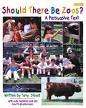 Retell: A collection of persuasive, well-researched essays that explore whether or not we should have zoos. The anthology includes a glossary and a description of the process they went through to write the book.
Topics: zoos, persuasive text, arguments, endangered species, reintroduction
Units of Study: Content-Area, Personal Essay
Tribes: mutual respect
Habits of Mind: thinking and communicating with clarity and precision
Writing Skills: defining a word within a sentence, incorporating precise vocabulary, developing a persuasive voice
My Thoughts: Though the unit is a month away, my school’s literacy coach and I are beginning to collect mentor texts for the personal essay unit. Here is a text that you could use for either Personal Essay or Content-Area writing. The essays not only make good mentor texts but the description of the writing process is important to share with students as they embark on an essay unit. The authors included ten steps to writing a persuasive text. I’m particularly found of number eight: “After doing lots of reading, observing, and note-taking, we put our new information into our arguments to make them stronger. We constantly conferenced with our teachers.”
99. The Whales by Cynthia Rylant
 Retell: Rylant imagines what whales might be thinking while swimming in the ocean.
Topics: whales, whale songs
Units of Study: Nonfiction, Content-Area
Habits of Mind: responding with wonderment and awe
Reading Skills: envisionment, inference, monitoring for sense
Writing Skills: repetition, alliteration
My Thoughts: Though the Content-Area unit is months away I’m trying to start early in my search for nonfiction poetry. As a child I loved doing research but I hated having to do research reports. Within the Content-Area unit students make choices about how they will publish the findings from their research. They could do a research report but they could also choose to do a speech, an essay or write a poem. Last year one of my struggling writers, who found essays and fiction writing to be torture, discovered nonfiction poetry. He became interested in longhouses, researched the topic for a few weeks and wrote a poem several stanzas long. I feel that I could lift the level of my students’ writing this year if I can get my hands on engaging nonfiction poetry. The Whales is just the mentor text I’ve been looking for. I love how she inserts factual information and balances it with descriptive language. I think it would be great to read this book side by side with an informational text in order to compare each author’s voice.
Do you know of any fantastic nonfiction poetry texts? Please post your suggestions in the comments section!
95. If You Are a Hunter of Fossils by Byrd Baylor
 Retell: As a child goes hunting for fossils in the Southwest she envisions what the dry world once looked like underwater.
Topics: fossils, trilobites, dinosaurs, ocean, landforms
Units of Study: Nonfiction, Content-Area
Habits of Mind: responding with wonderment and awe, striving for accuracy and precision
Reading Skills: envisionment, questioning
Writing Skills: using repetition
My Thoughts: One of the many goals of this blog is to discover hidden read aloud gems. This is one of those books and it just happens to fit with our current Science unit. I love how the author invites the reader to envision what the world must have been like when today’s mountains were covered by a vast ocean. This book could also make a good mentor text for students who need help using repetition effectively. If you decide to have students read and write nonfiction poetry, this book would be a good addition to that unit.
93. Who Pooped in the Zoo? Exploring the Weirdest, Wackiest, Grossest and Most Surprising Facts About Zoo Poop by Caroline Patterson
 Retell: This book is filled with interesting facts about poop. It discusses how animals use poop for food, defense, communication, and shelter.
Topics: poop, feces, animals, digestion, bacteria, camouflage
Units of Study: Nonfiction, Content-Area
Reading Skills: monitoring for sense, determining importance, envisionment
Thoughts: I’ve been chuckling all evening, calling out disgusting facts to my family. “Hey! Did you know that a grizzly bear doesn’t poop when he hibernates? When a grizzly bear wakes up in the Spring its poop is as big as a baseball bat!” This book is great for demonstrating how readers of nonfiction make a plan before they read the text. Each section of the book contains blurbs with interesting facts about poop, glossaries and supplemental information. Readers can choose to read the blurbs first and then read the entire section or vice versa. A great read before going to the zoo or before you dissect owl pellets.
91. What’s So Bad About Gasoline? Fossil Fuels and What They Do by Anne Rockwell
 Retell: This book explains how gasoline is made and describes its role in global warming.
Topics: gasoline, carbon emissions, global warming, petroleum, coal
Units of Study: Personal Essay, Nonfiction, Content-Area
Habits: Thinking flexibly
Reading Skills: questioning, determining importance, monitoring for sense
Writing Skills: using repetition to make a thesis stronger, using supporting reasons and examples to support a thesis
My Thoughts: I mentioned before that my students are currently studying earth movements (how mountains are made, volcanoes, etc). Next week students will examine fossils found in rocks. This book could be a nice extension of the fossil investigation. It blew my mind years ago when I learned that petroleum is made from decomposed fossils. When we are in the Personal Essay unit I plan on rereading parts of this text to show how the writer weaves in her opinions and supports them with facts.
The beginning of the book explains how petroleum is made and how it has been used throughout history. Throughout this section the phrase, “They still didn’t use much” repeats. The author argues that gasoline and other petroleum products are not inherently evil. After all, the reason why we still have forests and whales is connected to the invention of distilled petroleum. I like how the book ends with the question, “What ways can you think of to help?” After the read aloud students could brainstorm ways to use less gasoline.
87. How Mountains Are Made by Kathleen Weidner Zoehfeld
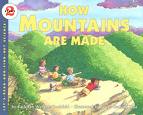 Retell: A group of children climb a nearby mountain. During the climb they start wondering about how mountains are made.
Topics: mountains, erosion, plate tectonics, earth movements, volcanoes
Units of Study: Nonfiction, Content-Area
Habits of Mind: responding with wonderment and awe
Reading Skills: questioning, determining importance, envisionment
My Thoughts: This is a great read aloud to supplement the fourth grade New York Delta FOSS Kit unit on Earth Movements. It’s a simple example of how narrative nonfiction and expository nonfiction are often blended together within the same text. The illustrated characters who narrate the text are a little distracting but you can choose whether or not to read their speech bubbles out loud.
86. Me on the Map by Joan Sweeney
 Retell: The narrator of this story imagines herself on various maps, both homemade and store-bought. The maps range from small scale (her bedroom) to large scale (the world).
Topics: geography, maps, globes, location
Habits of Mind: creating-imagining-innovating
My Thoughts: Every other Thursday someone covers my class while I co-plan with another teacher. On that day, it’s very difficult for me to tuck in a read aloud without cutting another subject. To solve this problem I plan to do a Social Studies read aloud connected to our current unit of study. We’re currently in a Map and Geography unit. By the end of the unit we expect students to be able to find themselves on any kind of map. I thought I would never find a decent read aloud to support this study. I was wrong. Me on the Map is a cute introduction to map reading. It’s simple, but it shows reminds students that maps tell the reader where they are. If you have access to a projector (or a computer lab) I highly recommend pairing this read aloud with an exploration of Google Earth.
83. Fake Out! Animals That Play Tricks by Ginjer L. Clarke (All Aboard Science Reader)
 Retell: In this book, readers learn how animals ‘play games’ in order to adapt to their habitat. In order to survive they play hide-and-seek, play dead, and even play pretend.
Topics: animals, adaptations, habitats, marine life, mammals, mimicry, camouflage
Units of Study: Nonfiction, Content Area
Reading Skills: envisionment, questioning, synthesis, determining importance
Writing Skills: developing voice in expository writing, including conclusions that sum up and release the writer
Thoughts: I’m worried about a boy in my class. He dropped four reading levels over the summer. He’s distracted during Reading Workshop and his reading log shows he’s not reading at home. However, he’s obsessed with the books in the dinosaur bin and carries around a gaming magazine. He’s a nonfiction reader trapped in a unit of study focused on fiction. I think of him as I plan my read alouds. I want to make sure that I’m finding time to tuck in nonfiction read alouds throughout the week, even though we’re not currently in a nonfiction unit. Fake Out! is a high engagement nonfiction read aloud that just happens to look like a “low level” book. Reading this book aloud ‘blesses’ this struggling reader’s level and will hopefully make “All Aboard” books cool to read.
 Teachable Texts