Posts filed under ‘Male authors’
13. A Dandelion’s Life by John Himmelman (The Nature Upclose Series)
 Retell: John Himmelman tells the life story, from seed to bloom, of the unappreciated dandelion.
Topics: dandelions, flowers, life cycle, narrative nonfiction
Units of Study: Nonfiction, Content-Area Reading and Writing
Reading Skills: prediction, determining importance, monitoring for sense
Writing Skills: incorporating transitional phrases, including text features
My Thoughts: A Dandelion’s Life is but one of several narrative nonfiction books in the Nature Upclose Series. After reading this book I had a new appreciation for the dandelion. This is a decent, simple example of narrative nonfiction that could be used as a mentor text during the Content-Area Reading and Writing unit. If you’re a fourth grade teacher in New York, you will be pleased with how well this book could align with the Science unit: Food Chains and Life Cycles. Our fourth grade team is considering aligning that Science unit with the Content-Area Reading and Writing units, making A Dandelion’s Life a perfect read aloud fit. The illustrations don’t just exclusively feature the dandelion. Throughout the narrative butterflies, snakes, fireflies, birds and crickets make appearances. I can envision readers using the illustrations to envision the habitat of each creature. I think I’m going to keep my eye out for more books in this series.
11. The Whingdingdilly by Bill Peet
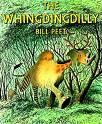 Retell: Scamp is tired of being a dog and wishes he was a grand horse. He runs away and encounters a witch who turns him into a creature called the Whingdingdilly.
Topics: dogs, witches
Units of Study: Fantasy, Character
Tribes: Appreciations/No Putdowns
Reading Skills: inference, prediction, making connections
Writing Skills: using a balance of description and dialogue, using interesting verbs
My Thoughts: I really felt for Scamp in the beginning of this book. I’m a sucker for dogs who are down in the dumps. Unfortunately Scamp’s owner, Orvie calls him a “silly old dog” when he catches his dog pretending to be a horse. Though calling someone ‘silly’ may not be the worst putdown heard at school, I can still see using this book as a way to discuss the damage brought about by insults and putdowns. Scamp begins to feel better, and his luck begins to change when he hears how much Orvie appreciates him. The Whingdingdilly also teaches the importance of appreciating ourselves for our strengths rather than putting ourselves down for our faults. This could also be used as a mentor text during a unit on Fantasy writing. The story has a few fantastical elements but is mostly based on reality.
9. Dogteam by Gary Paulsen
 Retell: A moonlit night inspires the narrator to take his dogs on an exciting night ride.
Topics: dogs, dog sledding
Units of Study: personal narrative, content-area writing
Reading Skills: envisionment
Writing Skills: using active verbs, zooming in on a small moment, incorporating sensory details, adding suspense, inserting commas and semicolons, repetition
My Thoughts: Dogteam reads more like prose. In addition to including beautiful imagery, Paulsen’s book has many examples of how writers use all senses to describe a moment in time. Though I would categorize this as a personal narrative, one could also use this as a mentor text for writing nonfiction poetry.
7. Guys Write for Guys Read
 Retell: Jon Scieszka edits this fabulous collection of stories, comics, essays, illustrations and vignettes contributed by prominent male authors and illustrators. Contributors include: Stephen King, Matt Groening, Jerry Spinelli, Seymour Simon, James Howe, Neil Gaiman, Gary Paulsen and many more. Royalties from the book are used to support Scieszka’s Guys Read Program.
Topics: boys, family, growing up, reading, writing, art
Units of Study: Personal Narrative, Launching the Reading and Writing Workshop, Character, Personal Essay, Content-Area Reading and Writing, Nonfiction, Memoir, Social Issues, Fantasy, Preparing for the ELA
Tribes: Mutual Respect, Personal Best, Appreciations/No Putdowns, Right to Pass
Reading Skills: inference, making connections, interpretation
Writing Skills: writing with voice, zooming in on a small moment, observing the world for stories
My Thoughts: This book is teacher gold! Guys Write for Guys Read has a plethora of short stories that can be used for mentor texts in almost every Reading and Writing unit. One of the stories, “Reading Can Be Dangerous” by Tedd Arnold was featured on the 5th grade ELA test last year. James Howe, author of Bunnicula, writes a personal narrative about getting help from a friend on how to be a boy–a great text for personal essay or discussing gender issues. Many authors write about how they came to love reading and writing. Christopher Paolini, author of Eragon, writes about how he fell in love with fantasy–great to read when you launch a unit on Fantasy reading and writing. Patrick Jones, a librarian, writes about how being interested in wrestling inspired him to become a voracious reader. Many entries include samples of famous authors childhood work alongside their adult work. For example, Dav Pilkey, author/illustrator of the infamous Captain Underpants series, writes about a comic strip he started when he was 11. I will probably use this book for almost every unit I teach this year.
If you don’t pick up a copy of this book you must go to Scieska’s website, Guys Read. The site is dedicated to inspiring more young boys to fall in love with reading. Mr. Scieszka, you’re my hero.
5. The Girl Who Lost Her Smile by Karim Alrawi
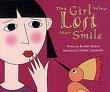 Retell: One day in Baghdad a girl named Jehan loses her smile. Her father searches the world for someone who will help his daughter find her smile.
Topics: Baghdad, art, folk tales
Units of Study: Fantasy, Creating Community, Geography
Tribes: Personal Best, Mutual Respect
Reading Skills: envisionment, making connections, prediction
My Thoughts: This is a very quick read aloud which could be good for discussing the expectation of doing one’s personal best and the satisfaction it brings. Throughout the book Jehan’s father brings her the most beautiful art in the world to cheer her up. However, it is not until she participates in the arduous process of making a wall gleam that she finally finds her smile. It woule be nice to use this as a community building mentor text. We can discuss how Jehan’s family did their best to cheer her up and how we should try and give our friends encouragement and help them find their smiles when they are down. Her father brings art from around the world to cheer her up. I could see asking students to find those places on a world map to practice their geography skills.
3. Uptown by Bryan Collier
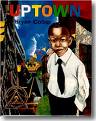 Retell: A young boy writes about his observations of Harlem.
Topics: neighborhoods, Harlem, community
Units of Study: Personal Narratives, Geography of New York
Reading Skills: envisionment
Writing Skills: writing small moments, including setting details, writing metaphors and similes
My Thoughts: This beautiful book shows that writers observe the world around them. Each observation is something that can turn into powerful writing. I plan on using this book as a mentor text for teaching about metaphors and similes. Collier writes, “Uptown is a caterpillar. Well, it’s really the Metro-North train as it eases over the Harlem River.” Though my students don’t live in Harlem, I’m hoping that reading this book together will show them that they need to share their world with others through writing. The world needs more books about Sunset Park, Brooklyn! For 4th grade teachers in New York, I can see using this book during a Geography unit. Perhaps after reading Uptown, students could locate the landmarks in the book on a subway map.
 Teachable Texts