Posts filed under ‘Male authors’
45. A Bad Case of Stripes by David Shannon
 Retell: Camilla Cream is very worried about what other people think of her. She loves to each lima beans but would never admit that to anyone at school. One day she wakes up covered in stripes. No doctor can cure her, people make fun of her and the media is obsessed with her. In the end her condition improves when she learns to be herself.
Topics: teasing, fitting in, self confidence, first day of school
Units of Study: Talking and Writing About Texts, Character, Social Issues
Tribes: right to pass, mutual respect
Habits of Mind: persisting
Reading Skills: interpretation, synthesis
My Thoughts: A Bad Case of Stripes is a great book for encouraging discussion about the importance of individuality. I think it may also be a good text for modeling how important it is to pay attention to details that may seem small but are actually really important. For example, if the reader passed over the part about Camilla liking lima beans, the ending of the book could be confusing. If you are teaching the Habits of Mind, you could ask students to pay attention to how the doctors and specialists ‘persisted’ when trying to solve the problem.
44. Shrek! by William Steig
 Retell: Shrek is proud to be an ugly ogre. He loves everything disgusting and enjoys scaring people around him. One day he visits a fortune teller who tells him that he is destined to meet a princess even uglier than he. With the help of a donkey he travels to the castle, defeats a knight and meets the princess of his dreams.
Topics: ogres, nightmares, monsters, fortune tellers
Units of Study: Fantasy
Reading Skills: monitoring for sense, envisionment
Writing Skills: using rhyme, including interesting vocabulary
My Thoughts: I never realized how different the original story was from the movie. The movie version has a much stronger moral more lesson but that doesn’t mean Steig’s classic does not have value as a read aloud. I think this book lends itself quite well to modeling how readers monitor for sense. Steig writes with rich vocabulary. His characters never walk, speak, or work. Rather they, stalk, hiss, and scythe. Giggle alert: the story includes the word jackass, which refers of course to the donkey in the story. Read aloud with discretion.
42. River of Dreams: The Story of the Hudson River by Hudson Talbott
 Retell: A beautifully illustrated history of the Hudson River.
Topics: Hudson River, New York, Native Americans, Henry Hudson, dreamers, Dutch, explorers, British, American Revolution, Robert Fulton, Erie Canal, trade, Hudson River School Painters, Industrial Revolution, environment, Franny Reese, pollution, immigration
Units of Study: Nonfiction, Social Issues, Content Area
Tribes: mutual respect
Reading Skills: envisionment, determining importance, questioning, synthesis
Writing Skills: including expository text features
My Thoughts: My eyes grew wide when I spotted this book in Barnes and Noble this afternoon. This book is treasure for New York 4th grade teachers who will be embarking on a year-long study of New York history. A timeline painted in the shape of the Hudson River winds throughout the book noting historic events including: the American Revolution, the commercial success of Fulton’s steamboat, the opening of the Erie Canal, and the Scenic Hudson Decision. I think I may read this book in September when we discuss what we will be learning in Social Studies this year. When we get to a new unit, I think I’ll reread corresponding sections of River of Dreams. Talbott also highlights writers and artists who were inspired by the Hudson River such as Washington Irving, James Fenimore Cooper and the Hudson River School Painters. This is a great book to use when discussing trade and industry. There is a beautiful painting in the book that shows the Hudson River bursting with steamboats and schooners–“America’s first superhighway.” I like how the story includes the environmental impact of industrial pollution and the story ends with a strong message–it’s up to us to protect the beauty of this river.
40. Rent Party Jazz by William Miller
 Retell: Sonny is worried. His mom just lost her job at the fish market and is worried that they may not make rent. Sonny meets the musician Smilin’ Jack who comes up with a solution that turns out to be both profitable and entertaining.
Topics: New Orleans, rent, money, jazz, parties, music, community
Units of Study: Social Issues, Historical Fiction
Tribes: personal best, attentive listening
Reading Skills: envisionment, interpretation
Writing Skills: using commas to tuck in details
My Thoughts: Great books teach us something new. Rent Party Jazz not only tells a story of Sonny and his family, but tells the story of the origin of rent parties throughout African-American communities in the South. The book will be great to read when your class needs to be reminded of the power a strong, supportive community. Even something as bleak as not being able to pay rent can be conquered when people work together.
30. A Young People’s History of the United States by Howard Zinn
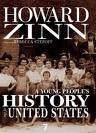 Retell: Like the title suggests, this is a young people’s version of his famous book, A People’s History of the United States. Together with Rebecca Stefoff, Zinn manages to tell a version of history that attempts to include the perspectives of groups that are usually left out (women, people of color, Native people, children, etc.)
Topics: United States, history, exploration, racism, slavery, colonialism, rights, justice, revolution, war, emancipation, industrialization, immigration, empire, protests, terrorism, resistance, freedom of speech
Units of Study: Content Area, Nonfiction, Social Issues, Personal Essay, Historical Fiction
Tribes: mutual respect, personal best
Reading Skills: questioning, synthesis, prediction, determining importance, inference, interpretation
Writing Skills: using evidence to support a thesis or main idea, inserting anecdotes and quotations
My Thoughts: I was so thrilled to find this book on the shelves. I read A People’s History of the United States several years ago and often reread sections before embarking on Social Studies units. Though I thought this book was going to present a child’s perspective of historical events, Zinn does manage to tuck in a few stories of young people working to make a difference. For example, he includes the story about how children started the first milll strike in Paterson, New Jersey. I intend to read aloud exerpts from this book to support and/or challenge what they may be reading in their own nonfiction texts. This book is also available in two volumes. Volume I covers Columbus to the Spanish-American War. Volume II covers World War I to the wars in Iraq and Afghanistan.
27. The Road to Santiago by D.H. Figueredo
 Retell: Every year Figueredo and his family return to Santiago, Cuba for Christmas. When calls for revolution sounded throughout Cuba the author recalls how his family almost didn’t make it home for his favorite holiday.
Topics: Cuba, Christmas, rebels, family, kindness of strangers, traditions
Units of Study: Personal Narrative, Memoir, Historical Fiction
Tribes: personal best, mutual respect
Reading Skills: making connections, monitoring for sense
Writing Skills: zooming in on small moments, incorporating vocabulary from another language, generating notebook ideas
My Thoughts: A common thread thoughout the story is kindness. Each scene highlights how people were kind to the author’s family: a mill worker helps them fix a flat tire, a young man gives up his seat on the bus. Though this is technically a personal narrative I could see reading this book during a unit on writing historical fiction. The story takes place during the 1950s revolutionary period in Cuba. He threads details of the time period throughout the story making this a good historical fiction mentor text.
26. Emily’s Art by Peter Catalanotto
 Retell: Emily loves to paint. She enters her painting of her dog Thor in the school art contest. After narrowly losing the contest, Emily vows never to paint again. With her help from her friend Emily realizes that she should continue doing what makes her happy.
Topics: art, contests, friendship, school, painting, self-esteem
Units of Study: Realistic Fiction, Talking and Writing About Texts, Social Issues
Tribes: attentive listening, appreciations, personal best
Reading Skills: inference, making connections, interpretation
My Thoughts: I feel like I’m coming across a lot of books about young artists lately (see post on Ish). I’m a big fan of books with illustrations that not only support the text but enhance it. At the beginning of the book the illustrations of Emily are vivid and opaque. However, as soon as she loses the contest, the illustrations of Emily are transparent, conveying the idea that she feels alone and invisible. Another cool feature about Emily’s Art is how the book begins. It reminds me of the Harry Potter films. The story begins with a scene that draws the reader into the story and then like the opening credits in a movie, the title page appears. I plan on using this book early in the year when we do a lot of community-building. It’s a great book for showing how far appreciations can go.
17. Grandfather’s Journey by Allen Say
 Retell: Allen Say tells the story of how his grandfather made a home in both a village in Japan and in a city in America.
Topics: grandparents, journeys, San Francisco, Japan, World War II, California, travelling, home, being homesick, family
Units of Study: Memoir, Social Issues
Reading Skills: envisionment, interpretation, inference, making connections
Writing Skills: adding setting details, developing the heart of a story, including reflection, including endings that connect to the beginning
My Thoughts: I think I have a soft spot in my heart for this book because I too get homesick for more than one place. Allen Say’s illustrations remind me of faded photographs and automatically put me into a reflective, sentimental mood. This is a perfect text to use during the Memoir unit. Though it starts out as a story about his grandfather, it ends up being more about the author himself.
16. Ish by Peter H. Reynolds
 Retell: A young boy loses confidence on his artwork after his brother insults his work.
Topics: art, interests, self esteem, confidence, sibling issues
Units of Study: Realistic Fiction, Launching the Writers Workshop, Character
Tribes: mutual respect, personal best
Reading Skills: inference, making connections
Writing Skills: using a mixture of dialogue and description
My Thoughts: A friend of mine who is an art teacher once told me that between the ages of 8 and 10 many kids give up artistic pursuits. Apparently this age group becomes obsessed with making their art look realistic. Many people, myself included, stopped drawing and painting at this age because they lost confidence in their artistic ability. Ish is a story that addresses this issue in an adorable way. During read aloud students can analzye the role of the narrator’s sister who helps encourage him to recognize the beauty in his work. This book lends itself well to a discussion on personal best. Later in the book, the young artist starts a writers notebook making this a great book to launch classroom writers notebooks.
14. There’s a Boy in the Girls’ Bathroom by Louis Sachar
 Retell: It is easy to dislike Bradley Chalkers. He beats up other students, lies about everything, and refuses to do his homework. Bradley’s life begins to change when he meets Carla, the school counselor who inspires him to be a gold star student.
Topics: school, counseling, disagreeing, lying, making excuses, power, trust, friendship, homework, imaginary friends, partnerships, fights, confidence, putdowns, name-calling, safety, sibling issues, self-esteem, rewards, gold stars, asking for help, just right books, love of reading, affirmations, trust
Units of Study: Character, Literary Essay, Talking and Writing about Texts
Tribes: mutual respect, appreciations/no putdowns, right to pass, personal best
Reading Skills: inference, interpretation, empathy, making connections, synthesis
My Thoughts: My heart still aches after reading this book. It’s not a depressing book it’s just that I spent the book fearful that Bradley was going to keep digging himself into holes (not literal holes that’s Sachar’s other book). As you can see from this post’s tags, there are so many ways that one could use this book during interactive read aloud. The book lends itself very well to examining character relationships. Many of the secondary characters make significant changes that affect Bradley. I think many students will be able to make connections to Bradley’s complex relationship with his sister, Claudia. Sachar encourages his readers to try and understand the bully rather than demonize him/her. Bradley reminds me of one of my former students. I think I’m going to buy this book and send it to him.
 Teachable Texts