Posts filed under ‘Female Authors’
79. Officer Buckle and Gloria by Peggy Rathmann
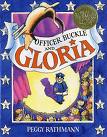 Retell: Officer Buckle often visits Napville School to give presentations about safety. Unfortunately, most people do not listen to his advice. As a result, the accident rate is very high. When Officer Buckle partners with a show-stealing police dog named Gloria, suddenly his audience sit up and pay attention.
Topics: safety, assemblies, dogs, police
Units of Study: Character, Realistic Fiction
Tribes: attentive listening, appreciations/no put-downs
Reading Skills: reading bold and italicized words
Thoughts: Each year I try and use read alouds to review the agreements of our school. (These are Tribes agreements plus one we call ‘personal best’.) It seems that there are many books about mutual respect, but not very many about attentive listening. Officer Buckle and Gloria is a read aloud I’ve been using for the past two years. The illustrations are great for showing two types of audiences: an audience who does not listen and one that shows they are listening. It also shows how people feel when they are not listened to. There are many bold and italicized words throughout the book. When reading the book aloud you may want to ask students to pay attention to how your voice changes when you come across bold and italicized words.
78. Amelia Writes Again by Marissa Moss
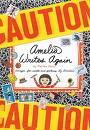 Retell: Amelia is a young girl who collects thoughts, souvenirs, photos and stories in her writer’s notebook. Through the pages of her notebook we learn about Amelia’s friend Leah, her sister Cleo, and the terrible arsonist who destroyed her school.
Topics: writing, birthdays, siblings, friendship, daydreaming, numbers, arson, symbols, partnerships, writer’s notebooks
Units of Study: Personal Narrative, Realistic Fiction, Social Issues, Personal Essay
Tribes: appreciations/no put-downs, right to pass, personal best
Habits of Mind: responding with wonderment and awe
Writing Skills: generating notebook entries, using pictures and objects to inspire writing, writing about ideas, spelling tricky words by writing it in different ways
Thoughts: This is volume 2 in a series of “Amelia” books. I use this each year when we relaunch our writer’s notebooks. The book resembles a composition notebook. There are many ways that it can be used to teach writing skills, but it also stands alone for discussing other issues. For example, Amelia writes about how she is reluctant to show her notebook to her friend Leah. This could be a great time to discuss taking the right to pass. During a Social Issues or Personal Essay unit you could use this book to analyze the issue of school vandalism.
If you have used any books from the “Amelia” series please post your ideas in the comments section.
76. My Best Friend by Mary Ann Rodman
 Retell: Lily spends each Wednesday at the neighborhood pool. She has decided that Tamika will be her best friend. Tamika however does not seem interested in being Lily’s friend. Lily tries many things to win over Tamika. She tries to dress the same and she shares her popsicles with her but to no avail. Lily eventually becomes friends with Keesha who doesn’t need to be impressed.
Topics: summer, pools, friendship, popularity
Units: Character, Social Issues, Talking and Writing About Texts
Tribes: mutual respect, appreciations/no put-downs, right to pass
Reading Skills: prediction, interpretation
Writing Skills: balancing dialogue with reflection and description
My Thoughts: This book does a great job of addressing the issue of popularity. Every year I see students going out of their way to impress others who don’t give them the time of day. It could be an interesting book to use when discussing the ‘right to pass’. Though Tamika should have been nicer to Lily, she has the right to pass on her offer of friendship.
Thanks again Beth for another great read aloud.
75. 14 Cows For America by Carmen Agra Deedy
 Retell: To the Maasai people the cow is life. In June 2002 Wilson Kimeli Naiyomah returned to his Kenyan village with a tragic story from New York. Kimeli presented a cow for blessing, in honor of those who died during the attacks of September 11th. 13 others offered their own cows for blessing. The cows remain in Kenya but they continue to be a symbol of hope and compassion to people around the world.
Topics: September 11th, Maasai, Kenya, compassion, cows, hope
Units of Study: Character, Social Issues, Talking and Writing About Texts
Tribes: mutual respect
Reading Skills: envisionment, inference, monitoring for sense
Thoughts: The tone of my classroom during this short first week of school has been so positive. Students are making new friends, and seem excited about school. I now approach planning my read aloud for the third day of school which happens to also be September 11th. It feels weird to start a discussion about tragedy and terrorism on the third day of school. I don’t want to spend a lot of time discussing frightening details of that day but on the other hand I don’t want to ignore the day altogether. I’ve decided to read 14 Cows For America because it focuses more on the idea of compassion rather than tragedy. I’m hoping that the last line of the book will prompt an interesting discussion: “Because there is no nation so powerful it cannot be wounded, nor a people so small they cannot offer mighty comfort.”
Thanks Beth for recommending this fabulous read aloud!
74. First Day Jitters by Julie Danneberg
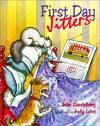 Retell: Sarah Hartwell is nervous about going to her new school. She hides under the covers while Mr. Hartwell urges her to get out of bed. Luckily the students, the principal and the staff are friendly to Sarah and she eventually feels ready for the first day of school. It’s a good thing because Sarah isn’t a kid–she’s the teacher.
Topics: first day of school, nervousness, teachers
Units of Study: Realistic Fiction,
Tribes: mutual respect, personal best, attentive listening
Habits of Mind: perseverance
Reading Skills: making connections, making predictions
Thoughts: I can’t believe tomorrow is the first day of school! I’m surprised by my own first day jitters. Last year I looped with my class. The night before the first day of school I remember feeling more relaxed because I already knew my students. Tomorrow I will be starting with a new batch of 4th grade learners. Though I’m not starting at a new school like Sarah Hartwell, I still feel anxious. I can only imagine how my students feel. I hope that after reading this book tomorrow my students will think of ways to help each other fight the first day jitters.
Welcome back to school everyone!
71. The Bee Tree by Patricia Polacco
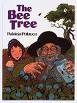 Retell: When Mary Ellen becomes bored of reading her grampa takes her on a hunt for a bee tree. People from the community join them as they run through the Michigan countryside chasing bees. By the end of the bee tree chase Mary Ellen learns that there are many similarities between chasing knowledge through the pages of a book and chasing bees.
Topics: reading, outdoors, adventure, grandparents, community, knowledge
Units of Study: Realistic Fiction, Personal Narrative, Authoring an Independent Reading Life
Tribes: personal best
Habits of Mind: responding with wonderment and awe
Reading Skills: monitoring for sense, interpretation
My Thoughts: I like reading this book at the beginning of the year when we author our own independent reading lives. I think this year I want to keep referring back to the book when we have particularly juicy conversations. When students ask interesting, provocative questions I could refer to them as ‘honey questions’. I need to make a banner with Grampa’s words: “[Adventure, knowledge and wisdom] do not come easily. You have to pursue them. Just like we ran after the bees to find their tree, so you must also chase these things through the pages of a book!”
70. Agatha’s Feather Bed: Not Just Another Wild Goose Story by Carmen Agra
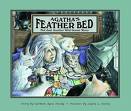 Retell: Agatha is famous for saying, “Everything comes from something.” One night, as she dreams on her new feather bed she is visited by naked geese who want their feathers back. Agatha comes up with an interesting compromise.
Topics: origins, fabric, responsibility
Units of Study: Social Issues
Tribes: mutual respect
Habits of Mind: responding with wonderment and awe, thinking flexibly
Reading Skills: monitoring for sense (understanding idioms and puns), inference
Writing Skills: using first-person narration, including puns
My Thoughts: In her author’s note Deedy writes, “What we choose to discuss with our children concerning ivory, whalebone, or the Brazilian rain forest is a matter of both individual conscience and collective responsibility. But the first step is to ask.” This book is all about inspiring people to ask, “Where does it come from?” Reading these words I’m reminded of a 4th grader who seemed so shocked when she discovered that leather is made from the hides of cows. The text contains a lot of interesting features. When describing her old mattress as ‘lumpy’ and ‘bumpy’ the letters actually look lumpy and bumpy. There are lots of cute idioms, puns and play-on-words. I know I’ll have to explain to my students why the name of the catalog (B.B. Lean) is so funny.
68. Old MacDonald Had an Apartment House by Judi Barrett
 Retell: A super decides to turn the apartment building he manages into a vegetable garden. When Mr. Wrental, the owner, finds out he’s furious. But when he thinks about all the money he could make, the owner has a change of heart.
Topics: gardening, apartments, cities, indoor gardening
Units of Study: Social Issues, Realistic Fiction
Habits: thinking flexibly
Reading Skills: Prediction, making connections
Writing Skills: Using the ‘rule of three’ when listing examples
My Thoughts: This is a very cute book by the author of Cloudy With a Chance of Meatballs. Before reading this book aloud, you may want to find a copy of Grant Wood’s painting American Gothic so students will understand the joke behind the cover illustration. I can certainly identify with the characters in this book. Both my apartment and my classroom get little to no light. My classroom doesn’t have any windows at all so I wrote a grant proposal for a GroLab on Donors Choose and it was funded in three days! When it arrives I plan on reading this book to the class. Perhaps after the read aloud we’ll try growing vegetables.
66. Amazing Grace by Mary Hoffman
 Retell: Grace loves to act. When her school puts on a production of Peter Pan she is eager to audition. Her classmates tell her that she can’t be Peter Pan because she is a girl and she’s black. After an inspiring visit to the ballet Grace finds confidence to audition.
Topics: reading, stories, acting, school, gender issues, racism, role models, theater, ballet
Units of Study: Social Issues, Realistic Fiction, Character
Tribes: Personal Best
Habits of Mind: persistence, striving for accuracy, thinking interdependently
Reading Skills: inference, interpretation
My Thoughts: Amazing Grace has been a favorite read aloud of mine for introducing the Social Issues unit. However, I’m thinking of reading it earlier this year when introducing the Habit of Mind–‘persistence’. Grace is a good example of how one persists when they have a dream. Grace’s dream is to play Peter Pan. Despite the discouragement she receives from a few of her classmates, Grace practices over the weekend and ends up getting the part. However, it’s interesting to note that this persistence didn’t just come from herself–she had to be encouraged by her family. I wonder if Grace would have succeeded if her Nana hadn’t taken her to the ballet.
65. Mirette on the High Wire by Emily Arnold McCully
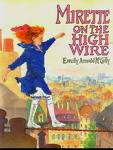 Retell: Mirette works at her mother’s boarding house. When a mysterious stranger asks for a room and takes his meals alone, Mirette is intrigued. One day she discovers the stranger walking across the clothesline. The stranger turns out to be the great Bellini, a famous tightrope walker. Mirette falls in love with the high wire and is determined to walk high above a crowd.
Topics: artists, dreams, Paris
Units of Study: Realistic Fiction, Historical Fiction
Tribes: personal best
Habits of Mind: persistence, striving for accuracy
Reading Skills: interpretation, prediction
Writing Skills: incorporating diaglogue
My Thoughts: Though this book is not a true story, the tightrope walker is based on a real person–a daredevil named Blondin who walked over Niagara Falls on a high wire. I like it when authors describe their inspiration in the author’s note. I plan on using this book when we focus on the Habits of Mind ‘persistence’ and ‘ striving for accuracy.’ The author shows the main character making a lot of mistakes and having someone fine tune her every movement.
 Teachable Texts